The necessity of the Brannock device lies in its ability to capture three distinct dimensions—total foot length, arch length, and width—simultaneously. Unlike simple linear rulers, this tool provides a comprehensive spatial profile of the foot, allowing technicians to match a user's specific anatomy to the appropriate protective boot model using manufacturer conversion tables. This precision is critical for preventing common fit failures, such as uncomfortable friction or excessive internal space that compromises stability.
Protective footwear requires more than a standard shoe size number to ensure safety and performance. The Brannock device bridges the gap between a user's unique foot geometry and technical boot specifications, eliminating the guesswork that leads to poor fit.
Beyond the Single Number
Measuring Arch Length
The Brannock device distinguishes itself by measuring the distance from the heel to the ball of the foot, known as arch length. This is often more critical than total length because it dictates where the foot naturally bends.
Determining True Width
Protective boots often utilize rigid materials that do not stretch, making width a non-negotiable parameter. The device accurately gauges foot width, ensuring the selected boot accommodates the foot without compression.
Total Foot Length
While arch length determines the flex point, total length ensures there is adequate room for the toes. The device captures this measurement to prevent toes from impacting the front of the boot during movement.
Optimizing the Distribution Process
Data-Driven Selection
In a professional distribution setting, "size" is a variable concept. Technicians utilize the data from the Brannock device to consult manufacturer-specific conversion tables. This ensures the chosen boot aligns with the specific mold (last) used by that brand.
Resolving Spatial Issues
A common failure in protective footwear is excessive internal space, which causes the foot to slide inside the boot. By adhering to the precise spatial parameters provided by the device, technicians can select models that hold the foot securely.
Preventing Discomfort
Width discomfort is a primary complaint in specialized footwear. By measuring width explicitly rather than guessing based on length, the sizing process proactively eliminates models that would cause long-term pain.
Understanding the Trade-offs
The Human Element
The Brannock device is a precision instrument, but it relies entirely on the skill of the operator. If the technician does not position the sliders correctly or if the user is not standing with equal weight distribution, the data will be flawed.
Manufacturer Variance
The device provides a standardized measurement, but boot manufacturers do not always adhere to standardized sizing. The measurement must always be cross-referenced with the specific brand’s sizing chart; relying on the device reading alone without conversion can still lead to a poor fit.
Making the Right Choice for Your Safety Program
To ensure your protective footwear program is effective, apply the measurements strategically based on your specific needs.
- If your primary focus is wearer comfort: Prioritize the arch length measurement to ensure the boot's flex point aligns perfectly with the foot's ball, reducing fatigue.
- If your primary focus is reducing returns: Use the width measurement as a hard filter to immediately rule out boot models that cannot accommodate wide or narrow feet.
Accurate measurement is the foundational step in ensuring that protective equipment functions as a safety tool rather than a workplace hazard.
Summary Table:
| Measurement Metric | Why It Matters for Protective Boots | Benefit |
|---|---|---|
| Arch Length | Aligns foot ball to the boot's flex point | Reduces fatigue and prevents blisters |
| Foot Width | Critical for rigid, non-stretch safety materials | Prevents compression and long-term pain |
| Total Length | Ensures adequate toe clearance | Prevents impact injuries during movement |
| Spatial Profile | Matches foot anatomy to manufacturer lasts | Eliminates internal sliding and instability |
Partner with 3515 for Precision-Engineered Footwear Solutions
As a premier large-scale manufacturer serving global distributors and brand owners, 3515 understands that safety starts with a perfect fit. We offer comprehensive production capabilities across all footwear categories, anchored by our flagship Safety Shoes series. Our extensive portfolio includes high-performance work and tactical boots, outdoor gear, training shoes, and sneakers, as well as premium Dress & Formal shoes.
By partnering with us, you gain access to expert manufacturing that respects technical sizing precision, ensuring your bulk requirements meet the highest standards of comfort and protection. Contact us today to discuss your next project and see how our footwear expertise can elevate your brand.
References
- Susan L. Sokolowski, Christine Bettencourt. Examination of current U.S. female firefighting personal protective equipment (PPE) sizing and fitting process challenges: an opportunity to improve safety. DOI: 10.1186/s40691-022-00314-8
This article is also based on technical information from 3515 Knowledge Base .
Related Products
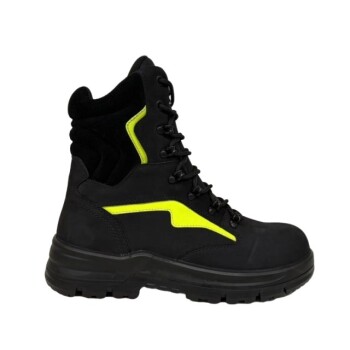
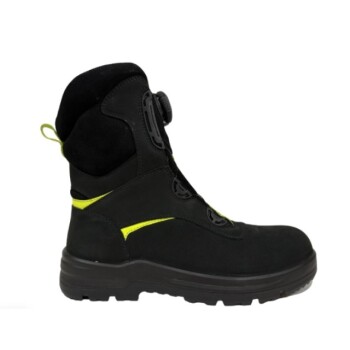
- Premium Wholesale Tactical Style Safety Shoes Boots with Quick Lacing
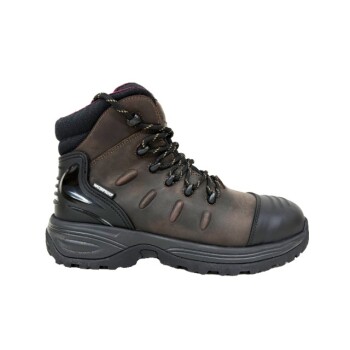
- Wholesale Leather Safety Boots with Customizable Protective Toe
- Premium Grain Leather Safety Boots for Bulk Supply
- Wholesale Customizable Safety Boots Durable & Protective Footwear Manufacturing
- Wholesale Durable Safety Boots | Custom Steel Toe & Puncture-Resistant Manufacturing
People Also Ask
- How are gait analysis research findings applied to the functional design of safety shoes and tactical boots?
- How do quality certification standards for safety shoes reduce perceived risk? Buy Online with Technical Certainty
- How does anthropomorphic design influence material selection? Enhance Footwear Performance through Biological Alignment
- Why is the synchronization of craftsmanship and UX development emphasized for bulk customization of safety shoes?
- How can specialized footwear mitigate safety risks? High-Volume OEM/ODM Solutions since 1951