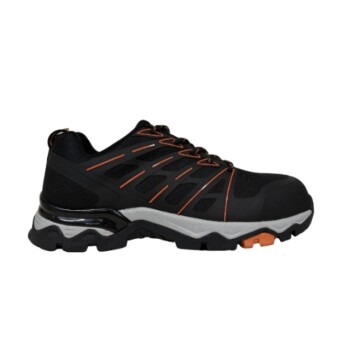
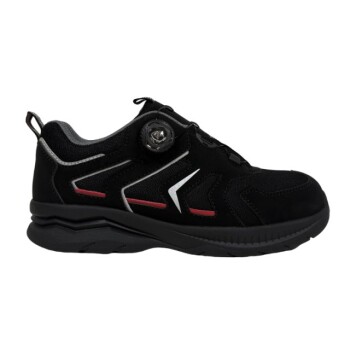
Impact resistance testing is a precise evaluation method where a standardized external load is applied to the toe area of safety footwear to verify its structural integrity. This mechanism utilizes a constant force, specifically testing the boot's capacity to withstand up to 75 pound-force (lbf), ensuring the wearer’s upper foot and toes remain protected against crushing injuries.
Core Insight: The true value of this testing lies in the elimination of variables. By applying a uniform, standardized force, the industry creates an objective benchmark that allows safety managers to compare protection levels confidently across different product lines and brands.
The Principles of Impact Evaluation
Standardized External Loading
The fundamental mechanism of this test involves the application of a standardized external load. Rather than relying on sporadic or estimated data, the testing process applies a specific, constant force directly to the safety shoe.
Protecting the Critical Zone
The test specifically targets the toe area of the footwear. This is the region most susceptible to heavy falling objects, aiming to verify that the protective cap can prevent crushing injuries to the upper foot and toes.
The 'I' Rating Threshold
To meet industry standards, the footwear must demonstrate resistance up to a specific force threshold. According to ASTM standards, work boots that successfully resist a force of 75 pound-force (lbf) are certified and marked with an 'I' label, indicating they meet the required impact criteria.
The Value of Objective Standardization
Eliminating Testing Variables
A primary goal of this mechanism is to eliminate variables in equipment and methodology. By using a standardized load, the test removes subjectivity, ensuring that a pass rating is based on physics rather than interpretation.
Ensuring Comparability
Because the force applied is constant and standardized, the protective quality of footwear becomes highly comparable. This allows buyers to evaluate different product lines and safety categories knowing they were all measured against the exact same performance benchmark.
Understanding the Scope and Limitations
Focused on Specific Impact
It is important to note that this test specifically measures impact resistance regarding crushing force on the toe. It verifies the structural integrity of the toe cap under a specific load (75 lbf) but does not inherently measure resistance to other hazards like punctures or chemical erosion.
The Limits of the Rating
The 'I' label certifies that the boot meets the 75 lbf requirement. While this ensures a high level of protection for standard industrial environments, it represents a specific threshold of protection rather than an infinite capacity to withstand any magnitude of force.
Making the Right Choice for Your Goal
When selecting safety footwear, you must interpret these ratings based on your specific environment.
- If your primary focus is Regulatory Compliance: Ensure the footwear explicitly carries the 'I' label, confirming it meets the ASTM 75 lbf standard.
- If your primary focus is Risk Assessment: Rely on the standardized nature of the test to compare different brands, knowing that their protective baselines are identical.
Impact resistance testing provides the objective data necessary to transform a safety purchase from a guess into a calculated decision.
Summary Table:
| Feature | Specification/Detail |
|---|---|
| Test Target Area | Protective Toe Cap |
| Applied Force | 75 pound-force (lbf) |
| Certification Label | 'I' (Impact) Rating |
| Primary Standard | ASTM Standardized Testing |
| Core Goal | Eliminate variables and prevent crushing injuries |
Partner with 3515 for Certified Safety Excellence
As a large-scale manufacturer serving distributors and brand owners, 3515 offers comprehensive production capabilities for all footwear types, anchored by our flagship Safety Shoes series. Our extensive portfolio covers work and tactical boots, outdoor shoes, training shoes, and sneakers, as well as Dress & Formal shoes to meet diverse bulk requirements.
We ensure every pair of safety boots meets rigorous impact resistance standards, providing your customers with the objective protection they demand. Let us help you elevate your product line with high-performance, certified safety footwear.
Ready to scale your inventory? Contact us today to discuss your bulk manufacturing needs!
References
- Joanna Baj–Korpak, Marek Wochna. Sports activity and changes in physical fitness of Polish children and adolescents: OSF study. DOI: 10.3389/fped.2022.976943
This article is also based on technical information from 3515 Knowledge Base .
Related Products
- Premium Suede Sport Safety Shoes for Wholesale & Bulk Orders
- Premium Lightweight Safety Shoes for Wholesale & Bulk Orders
- Wholesale Anti-Smash & Puncture-Proof Safety Shoes Custom Manufacturing for Brands
- Premium KPU Injection Athletic Style Safety Shoes
- Premium Safety Shoes with Rotating Buckle Safety Sneakers
People Also Ask
- What industries have specific OSHA footwear requirements? Ensure Compliance & Protect Your Workforce
- What are the primary functions of professional safety shoes? Maximize Safety in Water Supply Confined Spaces
- What role do specialized safety shoes play in preventing falls? Engineering Stability in Industrial Environments
- Why are customized foot sensors or professional safety shoes incorporated into biomechanical testing? Precision Insights
- What are the technical advantages of integrating sensors into safety shoes? Achieve Superior Motion Capture Precision