
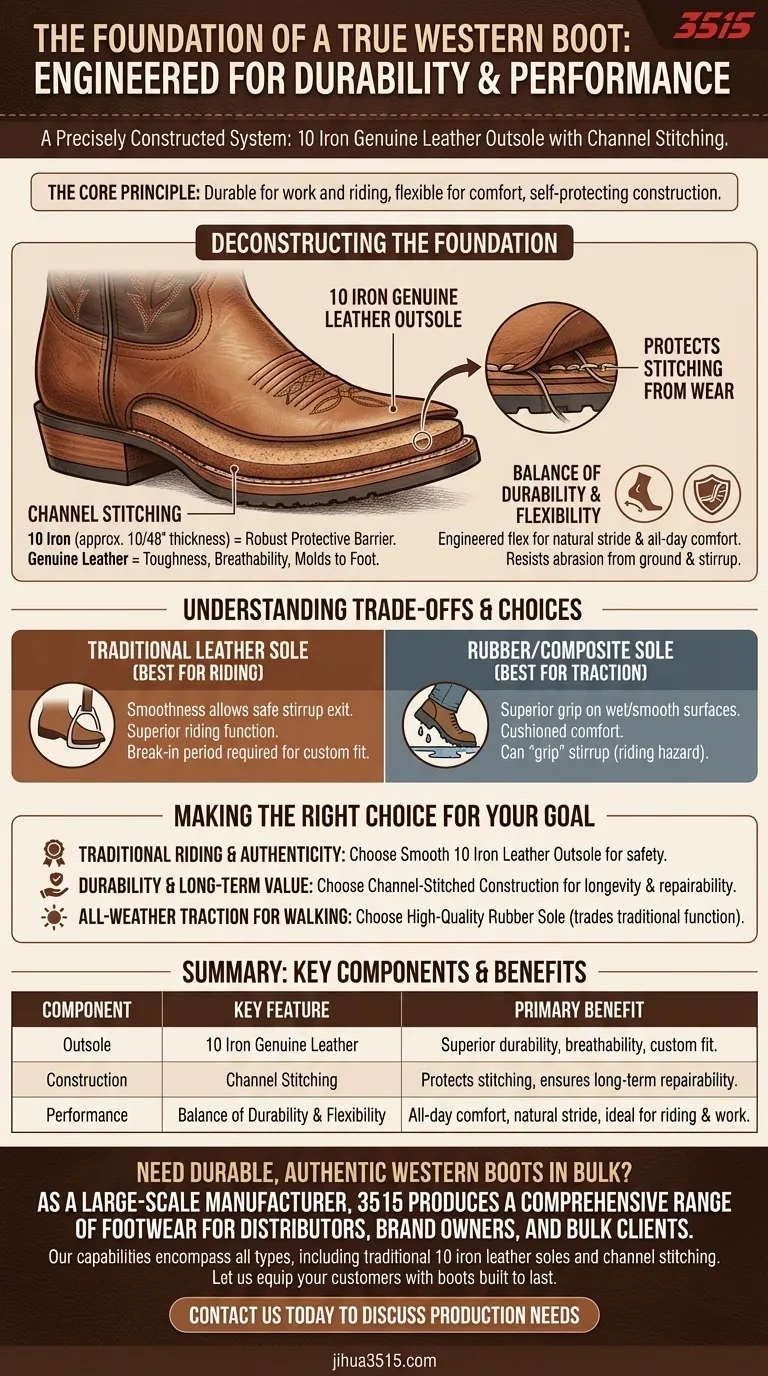
The foundation of a true western boot is a precisely constructed 10 iron genuine leather outsole secured with channel stitching. This specific combination is not arbitrary; it is an engineered system designed to provide a unique balance of rugged durability, essential flexibility, and long-term service life.
The core principle behind a western boot's foundation is creating a sole that is durable enough for the rigors of work and riding, yet flexible enough to be comfortable, all while protecting its own construction from wear and tear.
Deconstructing the Boot's Foundation
To understand why this foundation is so important, we must look at its individual components and how they work together. It's a system where each part serves a distinct and critical purpose.
The Role of the Leather Outsole
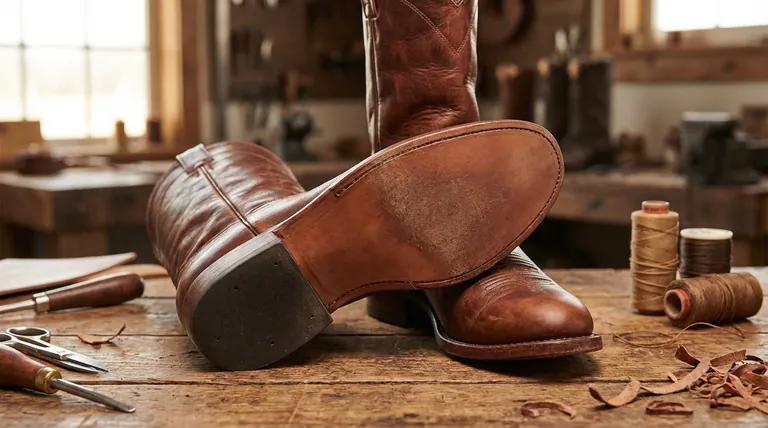
The outsole is the layer that makes direct contact with the ground and the stirrup. Using 10 iron genuine leather is a specific choice for its inherent properties.
"Iron" is a traditional unit of measurement for leather thickness, where one iron equals 1/48th of an inch. A 10 iron sole is therefore robust and substantial, providing a protective barrier.
Genuine leather offers a blend of toughness and breathability that synthetic materials struggle to replicate, molding to the wearer's foot over time.
The Balance of Durability and Flexibility
The thickness of the leather provides exceptional durability against abrasion from walking or the friction of a stirrup.
However, unlike a rigid plank, this leather foundation is engineered to have enough flexibility for a natural stride. This prevents the boot from feeling like a ski boot and is crucial for all-day comfort.
The Critical Detail: Channel Stitching
This is a hallmark of high-quality boot construction. A channel is cut into the leather outsole, and the sole is stitched to the rest of the boot from within that channel.
A leather flap is then sealed over the channel, hiding and protecting the stitching. This prevents the threads from being worn away by contact with the ground, which would cause the sole to detach prematurely.
Understanding the Trade-offs
While the traditional leather foundation is revered, it's essential to understand the context and potential downsides. This construction method represents a specific set of priorities.
Leather vs. Rubber Soles
Many modern boots now feature rubber or composite outsoles. These often provide superior grip on wet or smooth surfaces and may feel more cushioned from day one.
However, a traditional leather sole is superior for riding, as its smoothness allows the foot to slide easily and safely from a stirrup. Rubber can "grip" the stirrup, creating a potential hazard.
The Break-in Period
A 10 iron leather outsole is not instantly comfortable. It requires a break-in period where the thick, sturdy leather slowly molds to the unique shape and flex points of your foot.
This initial stiffness is the trade-off for achieving a truly custom fit and unparalleled long-term comfort.
Making the Right Choice for Your Goal
Understanding the boot's foundation empowers you to select footwear that truly meets your needs, whether they are for function, fashion, or longevity.
- If your primary focus is traditional riding and authenticity: A smooth, 10 iron leather outsole is non-negotiable for proper function and safety in the stirrup.
- If your primary focus is durability and long-term value: Seek out channel-stitched construction, as this is a clear indicator that the boot was built to last and be repaired, not just replaced.
- If your primary focus is all-weather traction for walking: You may consider a high-quality boot with a rubber sole, understanding you are trading traditional riding function for grip.
By recognizing these foundational elements, you can assess a boot's quality and purpose at a glance.
Summary Table:
| Component | Key Feature | Primary Benefit |
|---|---|---|
| Outsole | 10 Iron Genuine Leather | Superior durability and breathability, molds to the foot over time |
| Construction | Channel Stitching | Protects stitching from wear, ensures long-term repairability |
| Performance | Balance of Durability & Flexibility | All-day comfort and natural stride, ideal for riding and work |
Need durable, authentic western boots in bulk? As a large-scale manufacturer, 3515 produces a comprehensive range of footwear for distributors, brand owners, and bulk clients. Our production capabilities encompass all types of western boots, including those with traditional 10 iron leather soles and channel stitching for maximum durability and value. Let us help you equip your customers with boots built to last. Contact us today to discuss your production needs!
Visual Guide
Related Products
- Durable Goodyear Welt Leather Work Boots for Wholesale & Private Label
- High-Traction Suede Tactical Boots Wholesale & Custom Manufacturing
- Durable Leather Tactical Boots Wholesale & Custom Manufacturing for Brands
- Wholesale Durable Leather Work Boots | 8-Inch Goodyear Welt Manufacturer
- High Performance Fire-Retardant Waterproof Safety Boots
People Also Ask
- What is the difference between full-grain and top-grain leather? Premium Material Guide for Boot Manufacturers
- What are the advantages of leather as an upper material for work boots? Unmatched Durability & Custom Comfort
- Why is it important to waterproof leather work boots? Protect Your Investment and Performance
- How should new leather work boots be broken in? A Guide to Comfort and Durability
- What are the advantages of leather uppers in work boots? Unmatched Durability & Protection

















