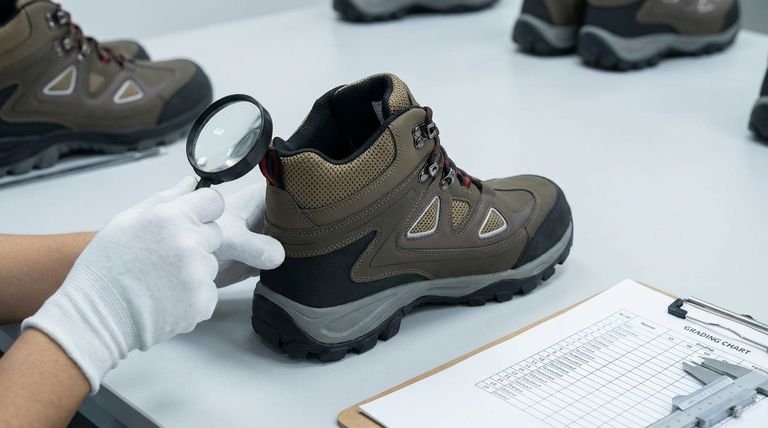
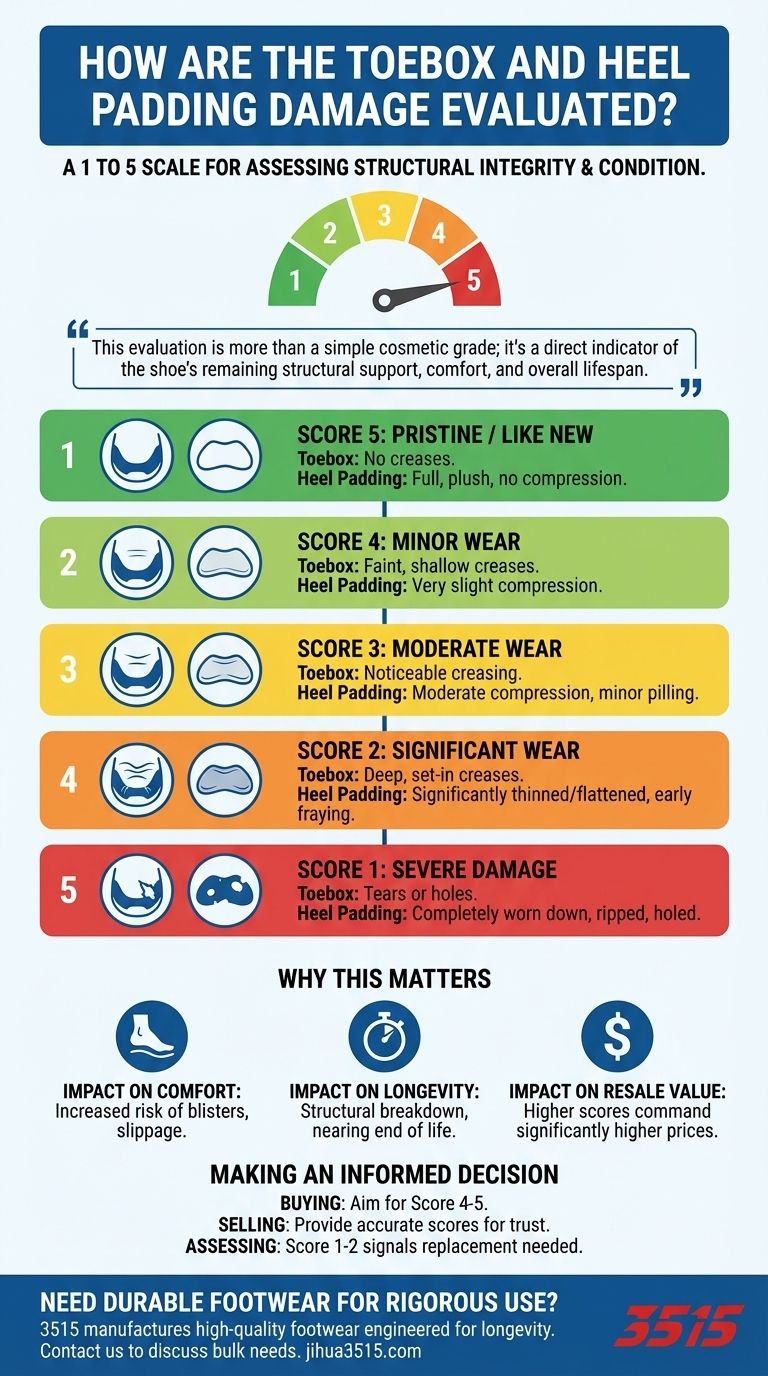
Damage to a shoe's toebox and heel padding is evaluated on a 1 to 5 scale. This system provides a standardized way to quickly assess the structural integrity and cosmetic condition of these critical areas, with a score of 5 representing a pristine, like-new state and a score of 1 indicating severe damage.
This evaluation is more than a simple cosmetic grade; it's a direct indicator of the shoe's remaining structural support, comfort, and overall lifespan. Understanding this scale is key to accurately judging a shoe's true condition and value.
Breaking Down the 1-5 Evaluation Scale
To properly assess a shoe, you must understand the specific criteria that define each level of the scoring system. The evaluation considers factors like creasing, padding compression, and fabric integrity.
Score 5: Pristine / Like New
A score of 5 is reserved for a shoe in perfect condition. The toebox is free of any creases, and the heel padding is full, plush, and shows no signs of compression or wear.
Score 4: Minor Wear
This score indicates the first signs of light use. The toebox may have faint, shallow creases, and the heel padding might show very slight compression, but it remains fully functional and supportive.
Score 3: Moderate Wear
At this level, wear is clearly visible but not yet critical. The toebox will have noticeable creasing, and the heel padding will feel and look moderately compressed, potentially showing minor fabric pilling.
Score 2: Significant Wear
This indicates the shoe's integrity is beginning to be compromised. The toebox will have deep, set-in creases, and the heel padding will be significantly thinned or flattened, offering reduced comfort and support. You might also see early signs of fabric fraying.
Score 1: Severe Damage
A score of 1 means the area has critical structural damage. This can include tears or holes in the toebox fabric, or heel padding that is completely worn down, ripped, or has holes, severely impacting the shoe's function.
Why This Evaluation Matters
Assessing wear in these specific areas is crucial because they are directly linked to the core functions of any shoe: comfort, support, and durability.
Impact on Comfort and Support
The heel padding is essential for locking your foot in place and preventing rubbing. As it compresses and wears down (a lower score), the risk of blisters and heel slippage increases dramatically.
Impact on Longevity
A score of 1 or 2, especially in the heel, is often a sign that the shoe is nearing the end of its usable life. The structural breakdown in these areas typically cannot be reversed and will only worsen with continued use.
Impact on Resale Value
For collectors or resellers, this score is paramount. A shoe with a score of 5 or 4 will command a significantly higher price than one with a score of 3 or below, as buyers prioritize condition and durability.
Understanding the Trade-offs
While the 1-5 scale provides a clear framework, applying it requires context and a degree of objective judgment.
Subjectivity in Scoring
The line between a score of 3 and 2 can sometimes be subjective. It's important to look for multiple signs of wear and consider them together rather than focusing on a single crease or spot of compression.
Material-Specific Wear
Different materials show age differently. A leather toebox will develop creases (Score 3-4), while a mesh toebox might show fraying or discoloration under similar levels of wear. The type of wear must be considered relative to the material.
Making an Informed Decision
Use this grading system to guide your choices, whether you are buying, selling, or simply evaluating your own footwear.
- If you are buying a pre-owned shoe: Aim for a score of 4 or 5 for maximum longevity and treat a score of 3 or below with caution, understanding it has a limited remaining lifespan.
- If you are selling a shoe: Provide an honest and accurate score for both the toebox and heel to build trust with potential buyers and justify your asking price.
- If you are assessing your own shoes: A score of 2 or 1 is a clear signal that the shoe's supportive structures are failing and it may be time for a replacement, especially for performance or high-use footwear.
Understanding this simple scale empowers you to accurately judge a shoe's true condition and value.
Summary Table:
| Score | Toebox Condition | Heel Padding Condition |
|---|---|---|
| 5 | Pristine, no creases | Full, plush, no compression |
| 4 | Faint, shallow creases | Very slight compression |
| 3 | Noticeable creasing | Moderate compression, minor pilling |
| 2 | Deep, set-in creases | Significantly thinned/flattened |
| 1 | Tears or holes | Completely worn down, ripped, or holed |
Need Durable Footwear That Withstands Rigorous Use?
As a large-scale manufacturer, 3515 produces a comprehensive range of high-quality footwear for distributors, brand owners, and bulk clients. Our production capabilities encompass all types of shoes and boots, engineered for superior comfort, support, and longevity—minimizing the wear and tear detailed in this guide.
Let us help you source or create footwear that maintains its structural integrity. Contact 3515 today to discuss your manufacturing needs and ensure your products score high on durability.
Visual Guide
Related Products
- Advanced KPU Athletic Safety Shoe with Steel Toe Cap Anti-Slip Rotary Lacing System
- Wholesale Durable Camouflage Canvas Shoes with High-Traction Cleated Rubber Sole
- Wholesale Modern Perforated Leather Derby Shoes with Chunky Sole for Custom Branding
- Wholesale Modern Business Shoes with Dial Closure System for Bulk Orders
- Wholesale Breathable Training Shoes Custom Athletic Footwear Manufacturer
People Also Ask
- What are the key differences between steel toe and composite toe caps? Choose the Right Safety for Your Job
- What impact do steel toe caps have on toe skin health? Prevent Friction and Pressure in Your Safety Shoes
- What are the primary protective functions of safety shoes with steel toes in the automotive repair industry?
- What type of safety shoe is recommended for workers exposed to heavy machinery? Steel Toe Boots for Ultimate Protection
- How does defining specific friction interface models in FEA assist in predicting safety shoe toe cap failure modes?