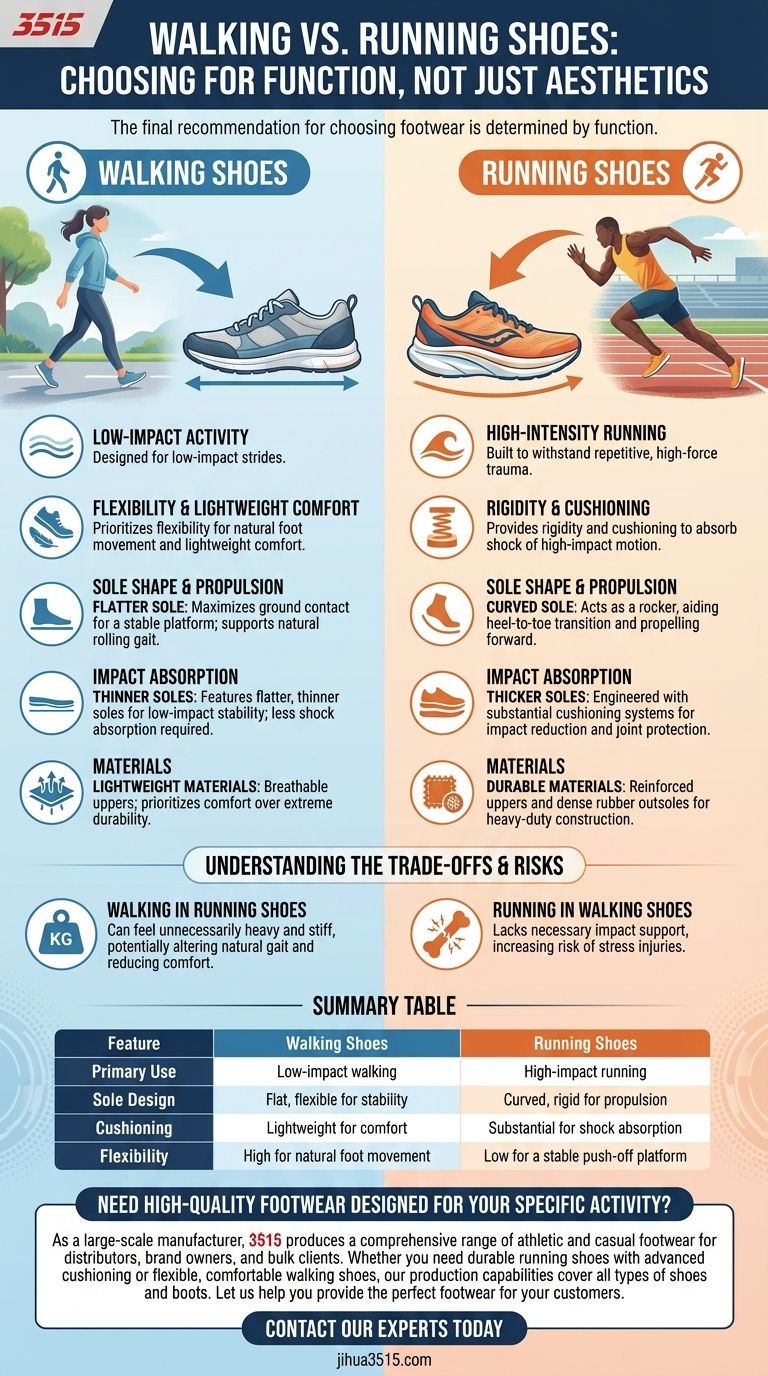
The final recommendation for choosing footwear is determined by function, not aesthetics: you should select walking shoes for low-impact activities and running shoes for high-intensity running.
While they may look similar, the engineering behind them addresses fundamentally different biomechanical needs. Walking shoes prioritize flexibility and lightweight comfort, while running shoes provide the rigidity and cushioning necessary to absorb the shock of high-impact forward motion.
The most critical factor in your decision is the intensity of impact. Walking shoes are designed to allow the foot to flex naturally during low-impact strides, whereas running shoes are built to withstand and absorb the repetitive, high-force trauma of running.
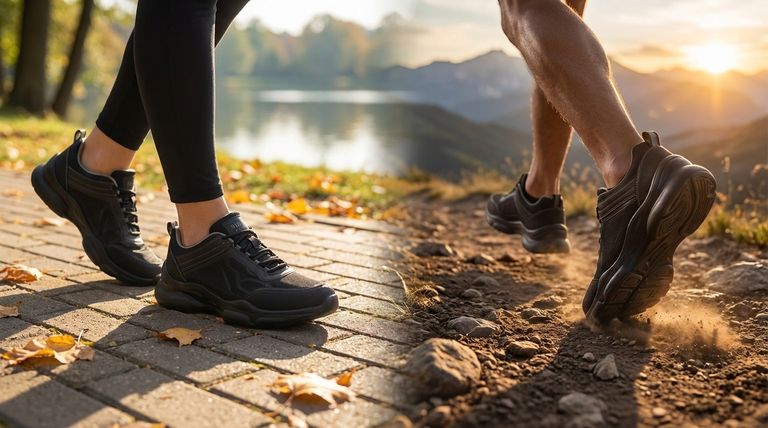
The Biomechanics of Movement
Impact Absorption Requirements
Running generates significantly higher ground reaction forces than walking. Consequently, running shoes are engineered with thicker soles and substantial cushioning systems.
This added material focuses on impact reduction to protect joints from the repeated pounding of a running gait.
Walking shoes, conversely, do not require this level of shock absorption. They feature flatter, thinner soles designed for low-impact stability.
Sole Shape and Propulsion
The shape of the shoe dictates how your foot moves through space.
Running shoes typically feature a curved sole. This curvature acts as a rocker, aiding in the transition from heel to toe and propelling the runner forward efficiently.
Walking shoes utilize a flatter sole. This design maximizes ground contact, providing a stable platform that supports a natural, rolling walking gait rather than a propulsive push-off.
Flexibility vs. Rigidity
To move efficiently, a runner needs a stiff platform to push off against. Therefore, running shoes are constructed to be more rigid.
Walkers need the shoe to bend with the foot. Walking shoes are specifically designed to be softer and more flexible, allowing for unrestricted foot movement with every step.
Understanding the Trade-offs
Durability and Materials
Because running exerts extreme stress on gear, running shoes utilize durable materials like reinforced uppers and dense rubber outsoles.
This heavy-duty construction increases the shoe's weight and rigidity.
Walking shoes prioritize comfort over extreme durability. They use lightweight materials and breathable uppers that are perfectly adequate for walking but would degrade quickly under running conditions.
The Risk of Mismatching
Using the wrong tool for the job introduces unnecessary risks.
Running in walking shoes lacks the necessary impact support, increasing the risk of stress injuries.
Conversely, walking in running shoes can feel unnecessarily heavy and stiff, potentially altering your natural gait and reducing comfort.
Making the Right Choice for Your Goal
To ensure safety and maximize performance, align your purchase with your primary activity.
- If your primary focus is Walking: Choose a shoe with a flat, flexible sole and breathable upper to ensure natural foot movement and lightweight comfort.
- If your primary focus is Running: Prioritize a shoe with a curved, rigid sole and substantial cushioning to provide the necessary shock absorption and forward propulsion.
Ultimately, the "best" shoe is the one engineered specifically for the forces your body will encounter.
Summary Table:
| Feature | Walking Shoes | Running Shoes |
|---|---|---|
| Primary Use | Low-impact walking | High-impact running |
| Sole Design | Flat, flexible for stability | Curved, rigid for propulsion |
| Cushioning | Lightweight for comfort | Substantial for shock absorption |
| Flexibility | High for natural foot movement | Low for a stable push-off platform |
Need high-quality footwear designed for your specific activity?
As a large-scale manufacturer, 3515 produces a comprehensive range of athletic and casual footwear for distributors, brand owners, and bulk clients. Whether you need durable running shoes with advanced cushioning or flexible, comfortable walking shoes, our production capabilities cover all types of shoes and boots. Let us help you provide the perfect footwear for your customers.
Contact our experts today to discuss your manufacturing needs!
Visual Guide
Related Products
- Durable Rubber Sole Outdoor Shoes Wholesale & Custom Manufacturing
- Wholesale Durable Camouflage Canvas Shoes with High-Traction Cleated Rubber Sole
- Premium Suede Sport Safety Shoes for Wholesale & Bulk Orders
- Wholesale Comfortable Business Casual Shoes Custom Manufacturing
- Premium Lightweight Safety Shoes for Wholesale & Bulk Orders
People Also Ask
- What is the function of the sole in outdoor shoes? Find the Perfect Grip and Support
- What role do outdoor shoes and sneakers play in navigating external terrains? Engineered Stability for Every Surface
- How is AI utilized in the design of outdoor and safety footwear? Harnessing Big Data for Market-Driven Shoe Innovation
- Why is durability important when selecting outdoor shoes? A Guide to Safety & Long-Term Value
- What are the key components of outdoor shoes that affect comfort and sturdiness? A Guide to Durable, High-Performance Footwear