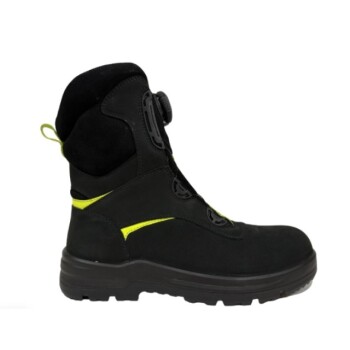
Yes, but the term "proof" requires careful understanding. While boots specifically designed and marketed as "snake bite-proof" are available, their effectiveness relies on specific construction features, not just the fact that they are made of leather. Standard leather boots offer a significant degree of resistance, but they are not a guaranteed safeguard.
True protection from a snake bite doesn't come from simply wearing any leather boot; it comes from wearing footwear specifically engineered for that purpose or by adding dedicated snake gaiters over a sturdy pair of boots. The key is intentional design, not incidental material strength.
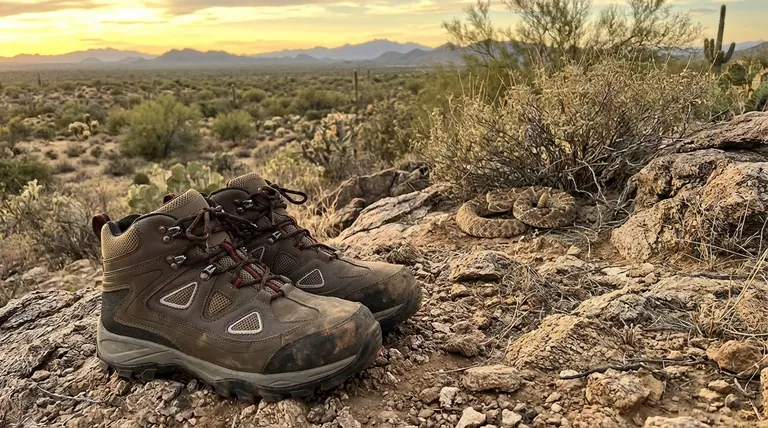
What Makes a Boot "Snake-Resistant"?
True snake boots are a system of materials and design choices working together. Understanding these components is crucial to evaluating whether a boot offers reliable protection.
The Role of Material and Thickness
Most snake fangs cannot penetrate thick, stiff materials. This is why well-constructed leather boots offer a good baseline of protection.
However, dedicated snake boots often use a combination of rugged leather exteriors with liners made of puncture-resistant materials like neoprene or dense synthetic weaves.
Why Height is Non-Negotiable
The vast majority of snake bites occur on the lower extremities, between the ankle and the knee.
For this reason, effective snake boots feature high shafts, typically 16 to 18 inches, to cover this entire vulnerable area. A standard 8-inch work boot leaves much of the lower leg exposed.
The Importance of a Loose Fit
A key defensive factor is the space between the boot material and your leg.
Even if a fang penetrates the outer layer, this gap can prevent it from reaching your skin. Wearing thick pants, like heavy denim, tucked into the boot can provide an additional layer of protection and space.
Can You Trust Standard Boots?
Many people assume their existing heavy-duty boots are sufficient. This is a potentially dangerous assumption, as most are not designed with snakebite prevention in mind.
Cowboy Boots: A Common Misconception
While the thick leather and high shaft of some cowboy boots can deflect a bite, this was never their intended purpose.
Their original design was to protect a rider's leg from the saddle and stirrups. The thickness, stiffness, and quality of leather in cowboy boots vary tremendously, making their protective capability unreliable.
Hunting and Hiking Boots: A Risky Assumption
Similarly, while a sturdy hunting or jungle boot is certainly better than a light trail shoe, it is not a snake boot.
Their construction prioritizes ankle support, waterproofing, and traction. While their robust build may stop a bite from a smaller snake, they are not tested or rated to defend against the fangs of a larger one.
Understanding the Alternatives and Trade-offs
Choosing the right protection involves balancing guaranteed safety with cost and versatility. The most important distinction is between boots that are "resistant" by chance and gear that is protective by design.
The "Proof" vs. "Resistant" Distinction
No piece of apparel can be considered 100% "proof" against every possible scenario. A very large snake with long fangs striking at a weak point, like a zipper or seam, could theoretically succeed.
The goal of a snake boot is to be highly resistant, providing reliable protection against the vast majority of threats you are likely to encounter.
The Case for Snake Gaiters
For many, snake gaiters are a more practical solution. These are separate guards worn over your pants and regular boots.
Gaiters offer tested protection, are often more affordable than specialized boots, and give you the versatility to wear your preferred, broken-in hiking or work boots underneath.
Making the Right Choice for Your Safety
Your decision should be based on your level of risk and desired convenience.
- If your primary focus is maximum, dedicated protection: Purchase a pair of boots specifically manufactured and rated as "snake-proof" with a high, knee-covering shaft.
- If your primary focus is versatility and cost-effectiveness: Combine your existing sturdy boots with a pair of high-quality, well-fitting snake gaiters.
- If you only occasionally enter snake territory: A pair of thick, stiff, high-shaft leather boots offers significant resistance, but you must acknowledge this is not a guaranteed safeguard.
Ultimately, true protection comes from intentional gear choices, not from assumptions about your everyday footwear.
Summary Table:
| Feature | Standard Leather Boots | True Snake-Resistant Boots |
|---|---|---|
| Primary Purpose | General use, durability | Specifically for snake bite defense |
| Protection Level | Basic resistance, not guaranteed | High resistance, tested for snake fangs |
| Key Design | Varies; often shorter shaft | High shaft (16-18 inches), puncture-resistant liner |
| Best For | Low-risk areas, occasional exposure | High-risk environments, maximum protection |
Need reliable, high-quality protective footwear?
As a large-scale manufacturer, 3515 produces a comprehensive range of durable boots for distributors, brand owners, and bulk clients. Our production capabilities encompass all types of work and safety footwear, ensuring you get the right protection for your needs.
Contact us today to discuss your footwear requirements and benefit from our manufacturing expertise.
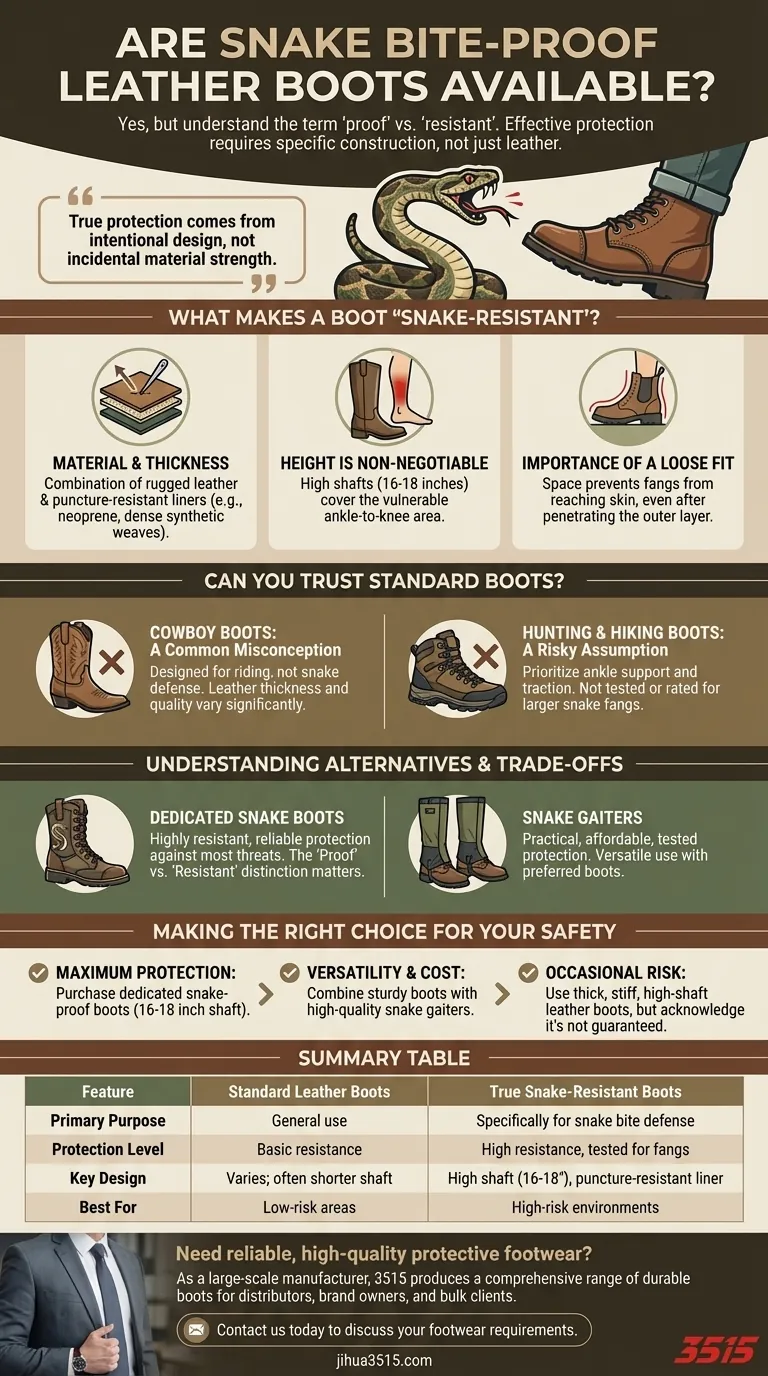
Visual Guide
Related Products
- Premium Grain Leather Safety Boots for Bulk Supply
- Durable Goodyear Welt Leather Work Boots for Wholesale & Private Label
- Durable Leather Work Boots Wholesale Manufacturer & Custom Factory
- Durable Leather Tactical Boots Wholesale & Custom Manufacturing for Brands
- Durable Leather High-Ankle Tactical Boots for Wholesale & Custom Manufacturing
People Also Ask
- What makes durable safety boots? The Ultimate Guide to Long-Lasting Work Footwear
- What materials are commonly used for outsoles in safety boots? A Guide to Durability, Grip, and Comfort
- Why is proper storage important for safety boots? Preserve Protection and Extend Lifespan
- What are the key features of safety boots? Essential Protection for Hazardous Workplaces
- Why is ankle and arch support important in safety footwear? Prevent Injury & Fatigue