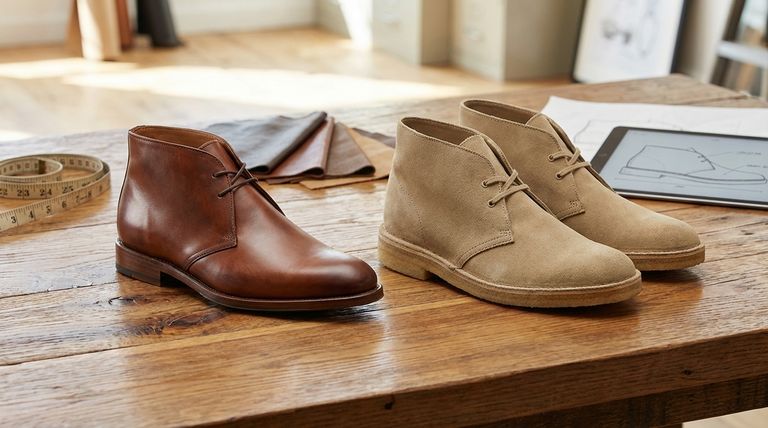
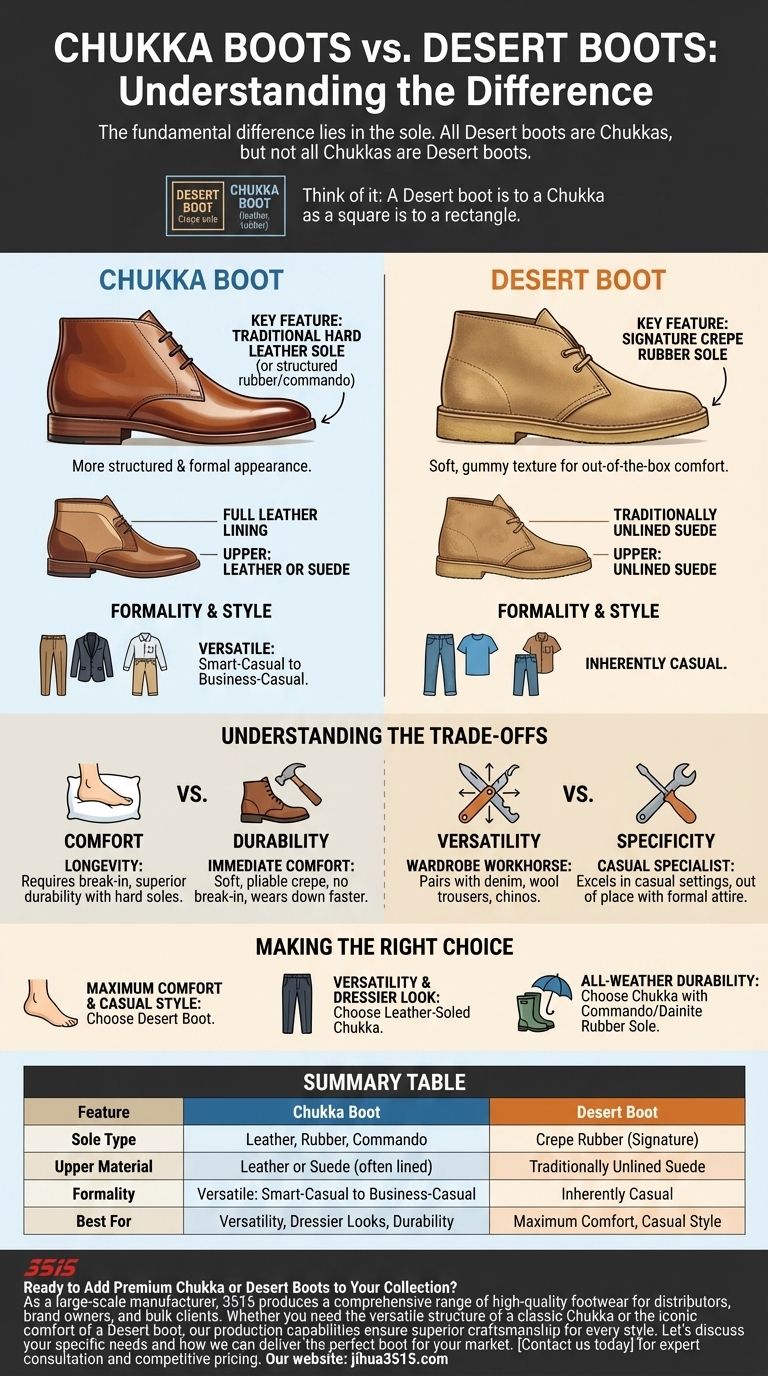
The fundamental difference between a Chukka and a Desert boot lies in the sole. While all Desert boots are a type of Chukka, the reverse is not true. A Desert boot is a specific sub-category defined by its signature crepe rubber sole, whereas the broader Chukka category can feature a variety of soles, most traditionally hard leather or other forms of rubber.
Think of it this way: a Desert boot is to a Chukka boot what a square is to a rectangle. The Desert boot is a very specific type of Chukka, distinguished by its unique sole, materials, and more casual construction.
The Foundation: A Tale of Two Soles
The most reliable way to distinguish between these two boot styles is to look down. The sole is the single greatest point of difference and dictates much of the boot's character.
The Chukka Boot: A Versatile Blueprint
A Chukka boot is a broad category of ankle-high boots. Its defining characteristics are a two or three eyelet lacing system and an upper made from two parts of leather or suede.
The key to its versatility is the sole. A traditional Chukka often features a thin, hard leather sole, which lends it a more structured and formal appearance. Modern variations also use durable rubber or commando soles.
The Desert Boot: A Specific, Casual Icon
The Desert boot is a very specific type of Chukka. Its non-negotiable feature is a crepe rubber sole. This material has a distinct, gummy texture that is noticeably soft and pliable.
This sole was a key part of its original design, popularized by Clarks for British soldiers in North Africa. It was chosen for being lightweight and providing good grip on sand, which also makes it exceptionally comfortable for walking on pavement.
Beyond the Sole: Construction and Material
While the sole is the main differentiator, the uppers and overall construction also reveal key differences in purpose and style.
Upper Materials and Lining
Desert boots are traditionally made from unlined suede, often in a sandy color reflecting their origin. This lack of lining makes them lighter, more breathable, and gives them a soft, unstructured feel.
Chukka boots, on the other hand, are frequently made from polished leather in addition to suede. They are also more likely to feature a full leather lining, which provides more structure, support, and durability.
Structure and Formality
The combined effect of these differences directly impacts formality. The soft crepe sole and unlined suede upper make the Desert boot an inherently casual shoe.
A leather-soled, leather-lined Chukka is far more structured. This gives it a sharper silhouette that can easily be dressed up, bridging the gap between smart-casual and even some business-casual settings.
Understanding the Trade-offs
Choosing between these boots means understanding the functional pros and cons that come with their distinct designs.
Comfort vs. Durability
The crepe sole of a Desert boot offers incredible out-of-the-box comfort. There is virtually no break-in period. However, crepe is porous, gets dirty easily, and can wear down faster than harder soles.
A leather-soled Chukka requires a break-in period but offers superior longevity. Sturdier rubber soles found on other Chukkas provide a middle ground of durability and immediate comfort.
Versatility vs. Specificity
A classic leather Chukka boot is a master of versatility. It pairs just as well with dark denim as it does with wool trousers or chinos, making it a wardrobe workhorse.
The Desert boot has a more specific application. It excels in casual and smart-casual environments but looks out of place with more formal attire.
Making the Right Choice for Your Goal
Ultimately, neither boot is better—they simply serve different purposes. Your choice should be guided by your primary need.
- If your primary focus is maximum comfort and casual style: The Desert boot is your definitive choice, offering a soft ride from the very first wear.
- If your primary focus is versatility and a dressier look: A leather-soled Chukka is the superior option, easily transitioning from jeans to business-casual trousers.
- If your primary focus is all-weather durability: Look for a Chukka boot with a sturdy commando or Dainite rubber sole, as both crepe and traditional leather have limitations in wet conditions.
By understanding these key distinctions, you can select the boot that truly aligns with your style and purpose.
Summary Table:
| Feature | Chukka Boot | Desert Boot |
|---|---|---|
| Sole Type | Leather, Rubber, Commando | Crepe Rubber (Signature) |
| Upper Material | Leather or Suede (often lined) | Traditionally Unlined Suede |
| Formality | Versatile: Smart-Casual to Business-Casual | Inherently Casual |
| Best For | Versatility, Dressier Looks, Durability | Maximum Comfort, Casual Style |
Ready to Add Premium Chukka or Desert Boots to Your Collection?
As a large-scale manufacturer, 3515 produces a comprehensive range of high-quality footwear for distributors, brand owners, and bulk clients. Whether you need the versatile structure of a classic Chukka or the iconic comfort of a Desert boot, our production capabilities ensure superior craftsmanship for every style.
Let's discuss your specific needs and how we can deliver the perfect boot for your market.
Contact us today for expert consultation and competitive pricing.
Visual Guide
Related Products
- Durable Spiked Camouflage Boots Wholesale & Factory Production
- Wholesale High-Traction Camo Boots - Custom Manufacturer for Brands
- High-Traction Suede Tactical Boots Wholesale & Custom Manufacturing
- Durable Leather High-Ankle Tactical Boots for Wholesale & Custom Manufacturing
- Premium Wholesale Tactical Style Safety Shoes Boots with Quick Lacing
People Also Ask
- How does boot height affect waterproofing? Choose the Right Height for Ultimate Protection
- What are the best types of shoes for different gardening conditions? Find Your Perfect Match.
- What role does camouflage play in hunting boots? It's More Than Just a Pattern
- What should you look for to ensure boots are fully waterproof? The Essential 2-Part System
- How does boot construction affect waterproofing? The Science Behind Truly Dry Feet