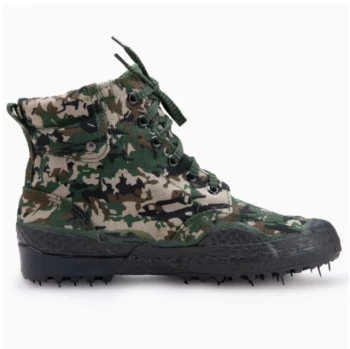
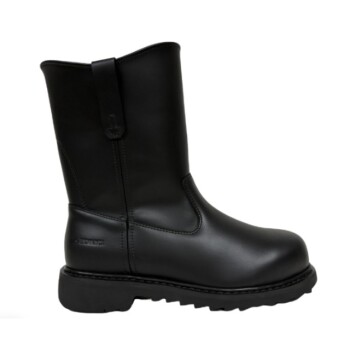
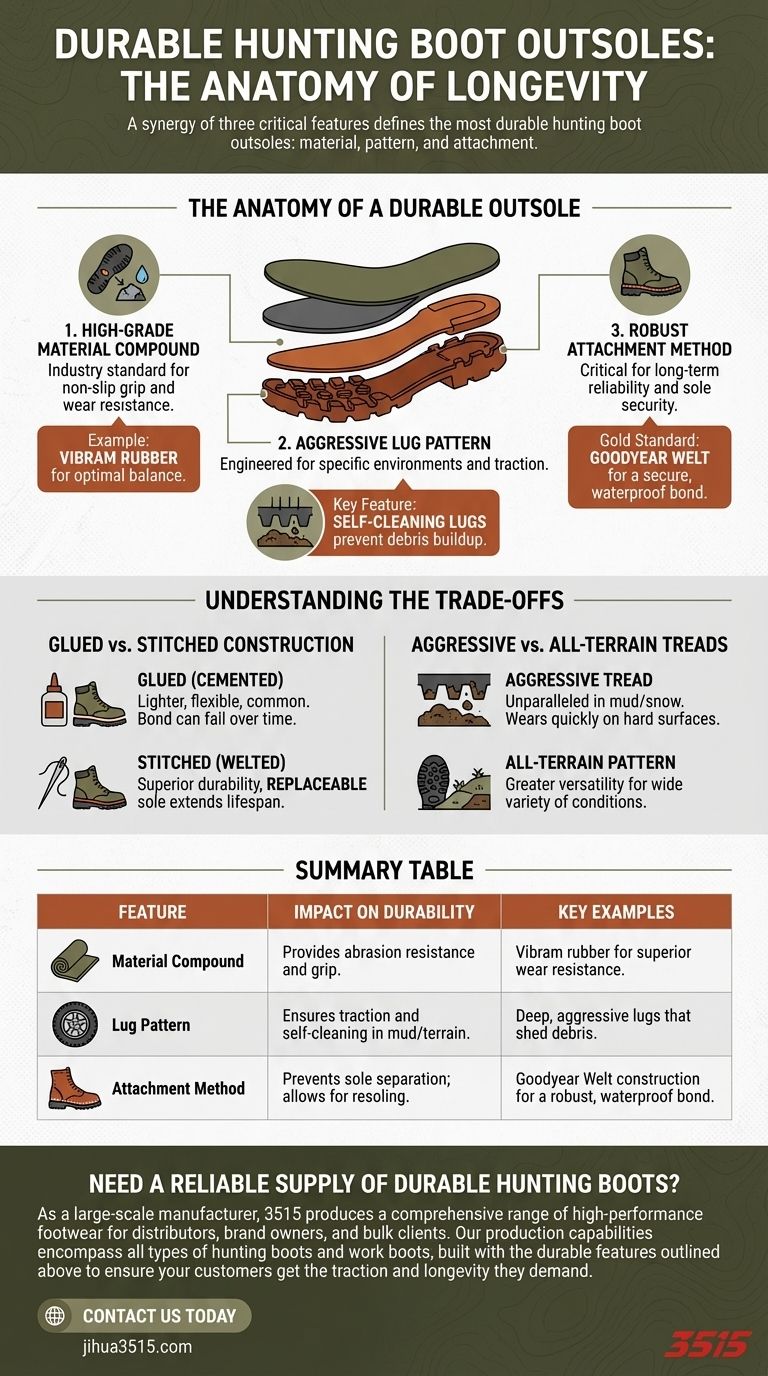
The most durable hunting boot outsoles are defined by a combination of three critical features: a high-grade rubber compound, an aggressive and functional lug pattern, and a robust construction method that securely attaches the sole to the boot. Materials like Vibram rubber provide exceptional grip and wear resistance, while deep, self-cleaning lugs ensure traction in challenging terrain.
The true measure of an outsole's durability isn't a single feature, but the synergy between its material, design, and how it's integrated into the boot's overall construction. A great tread pattern is meaningless if the rubber wears quickly or the sole separates from the upper.
The Anatomy of a Durable Outsole
To properly assess durability, you must look at the outsole as a complete system. Each component plays a distinct role in ensuring longevity and performance in the field.
The Role of Material Compound
The foundation of any durable outsole is the material it's made from. High-quality, non-slip rubber compounds are the industry standard for a reason.
Brands like Vibram have become benchmarks for providing an optimal balance of grip in wet and dry conditions, flexibility, and resistance to abrasion. This ensures the sole doesn't wear down prematurely on rock, gravel, or other rough surfaces.
Lug Pattern and Traction Design
The "tread" of the boot, known as the lug pattern, is engineered for specific environments. Durability and performance are directly linked to this design.
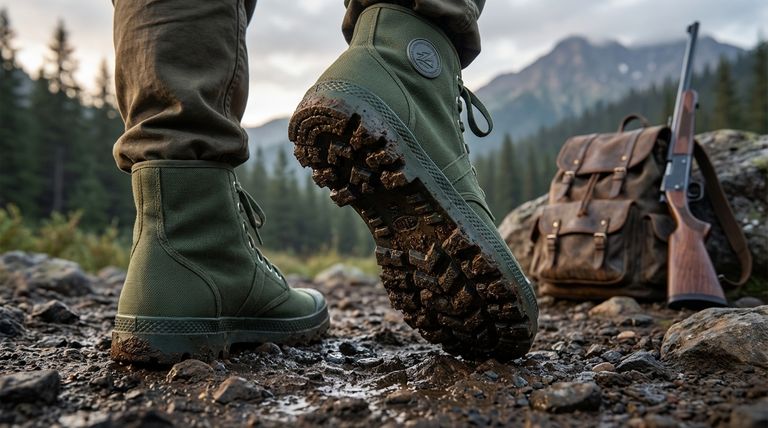
An aggressive, deep lug pattern is essential for traction on soft, muddy, or slippery ground. For maximum effectiveness, look for self-cleaning lugs, which are spaced to shed mud and debris rather than allowing it to build up and reduce grip.
Conversely, outsoles designed for hard-packed or rocky terrain may feature broader contact pads, which increase surface area for better grip and distribute wear more evenly.
The Importance of Attachment Method
A durable outsole is useless if it detaches from the boot. The construction method is arguably the most critical factor for long-term reliability.
Stitched soles, particularly those using a Goodyear Welted Construction, represent the gold standard. This method involves stitching the outsole to the boot's upper, creating a far more robust and water-resistant bond than simply using glue.
Understanding the Trade-offs
Choosing the perfect outsole involves balancing competing characteristics. There is no single design that excels in every possible condition.
Glued vs. Stitched Construction
Glued (or cemented) soles are common on lighter, more flexible boots and are generally less expensive. However, this bond can fail over time, especially with exposure to moisture and high stress.
Stitched and welted boots offer superior durability and have the significant advantage of being replaceable. When the tread wears out, a cobbler can replace the sole, dramatically extending the boot's lifespan.
Aggressive Treads vs. All-Terrain Versatility
Extremely deep, aggressive lugs are unparalleled in mud and snow. However, they can wear more quickly and feel less stable when used extensively on hard, flat surfaces like pavement or packed trails.
A more moderate, all-terrain pattern offers greater versatility if you hunt across a wide variety of ground conditions.
Overall Boot Construction
The outsole does not exist in a vacuum. Its durability is supported by the rest of the boot.
Uppers made from full-grain leather with reinforcements at stress points provide a solid foundation for the sole. Quality hardware and strong stitching throughout the boot are indicators of a product built to last.
Making the Right Choice for Your Hunt
Your selection should be guided by your primary hunting environment and your long-term goals for the footwear.
- If your primary focus is hunting in wet, muddy, or mountainous terrain: Prioritize boots with aggressive, deep, self-cleaning lugs and a Goodyear Welt construction for maximum traction and water resistance.
- If your primary focus is hunting on mixed or hard-packed ground: Look for a versatile lug pattern on a high-quality rubber compound that balances grip with wear resistance.
- If your primary focus is long-term value and repairability: Insist on a boot with stitched or welted construction, as the ability to replace the sole is the ultimate feature for longevity.
Ultimately, investing in a boot with a well-engineered and properly attached outsole provides the reliable foundation you need for every step in the field.
Summary Table:
| Feature | Impact on Durability | Key Examples |
|---|---|---|
| Material Compound | Provides abrasion resistance and grip. | Vibram rubber for superior wear resistance. |
| Lug Pattern | Ensures traction and self-cleaning in mud/terrain. | Deep, aggressive lugs that shed debris. |
| Attachment Method | Prevents sole separation; allows for resoling. | Goodyear Welt construction for a robust, waterproof bond. |
Need a reliable supply of durable hunting boots?
As a large-scale manufacturer, 3515 produces a comprehensive range of high-performance footwear for distributors, brand owners, and bulk clients. Our production capabilities encompass all types of hunting boots and work boots, built with the durable features outlined above to ensure your customers get the traction and longevity they demand.
Contact us today to discuss your specific requirements and leverage our manufacturing expertise for your business.
Visual Guide
Related Products
- Wholesale Waterproof Tactical Boots Custom Suede & High-Traction Soles
- Wholesale Leather Ankle Boots with Lug Soles for Custom Brand Manufacturing
- Wholesale Lightweight Tactical Boots Custom Manufacturer for Desert & Combat Use
- High-Traction Suede Tactical Boots Wholesale & Custom Manufacturing
- Durable Leather Tactical Boots Wholesale & Custom Manufacturing for Brands
People Also Ask
- What waterproof technology is used in tactical boots? Unlock All-Weather Performance & Protection
- What are the advantages and disadvantages of waterproof tactical boots? A Guide to the Key Trade-Offs
- What is the significance of waterproof functionality in tactical boots? Essential for Health & Performance
- What is the role of professional 3D medical imaging software in optimizing tactical boot design and performance?
- What features enhance breathability and comfort in tactical boots? A Guide to Superior Footwear Performance