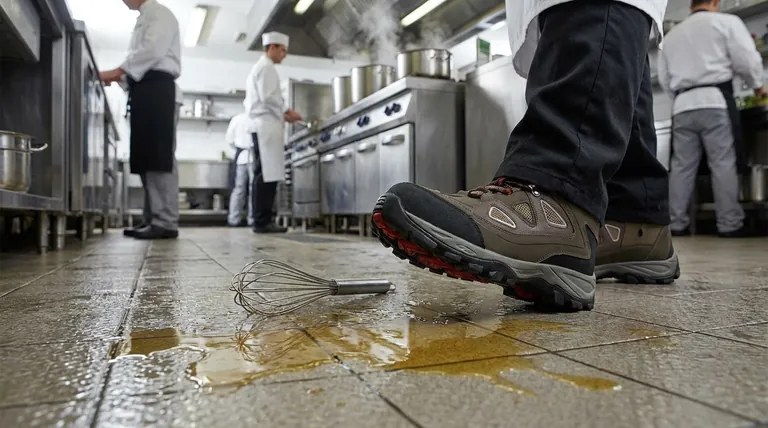
The primary benefit of wearing slip-resistant kitchen shoes is to dramatically reduce the risk of workplace slips and falls. These shoes are an essential piece of personal protective equipment, specifically engineered to provide reliable traction on the wet, greasy, and unpredictable surfaces that define a professional culinary environment. They allow you to move with confidence and focus on your work without the constant threat of a dangerous accident.
Slip-resistant shoes are not merely footwear; they are an engineered safety system. Their specialized sole materials and tread designs are purpose-built to maintain grip on hazardous surfaces, transforming an unstable work environment into a secure foundation for culinary professionals.
How Slip-Resistant Shoes Engineer Safety
A common misconception is that any shoe with a rubber sole is "non-slip." True slip-resistant shoes, however, are designed with specific features that work together to counteract the physics of a slippery floor.
The Science of the Sole
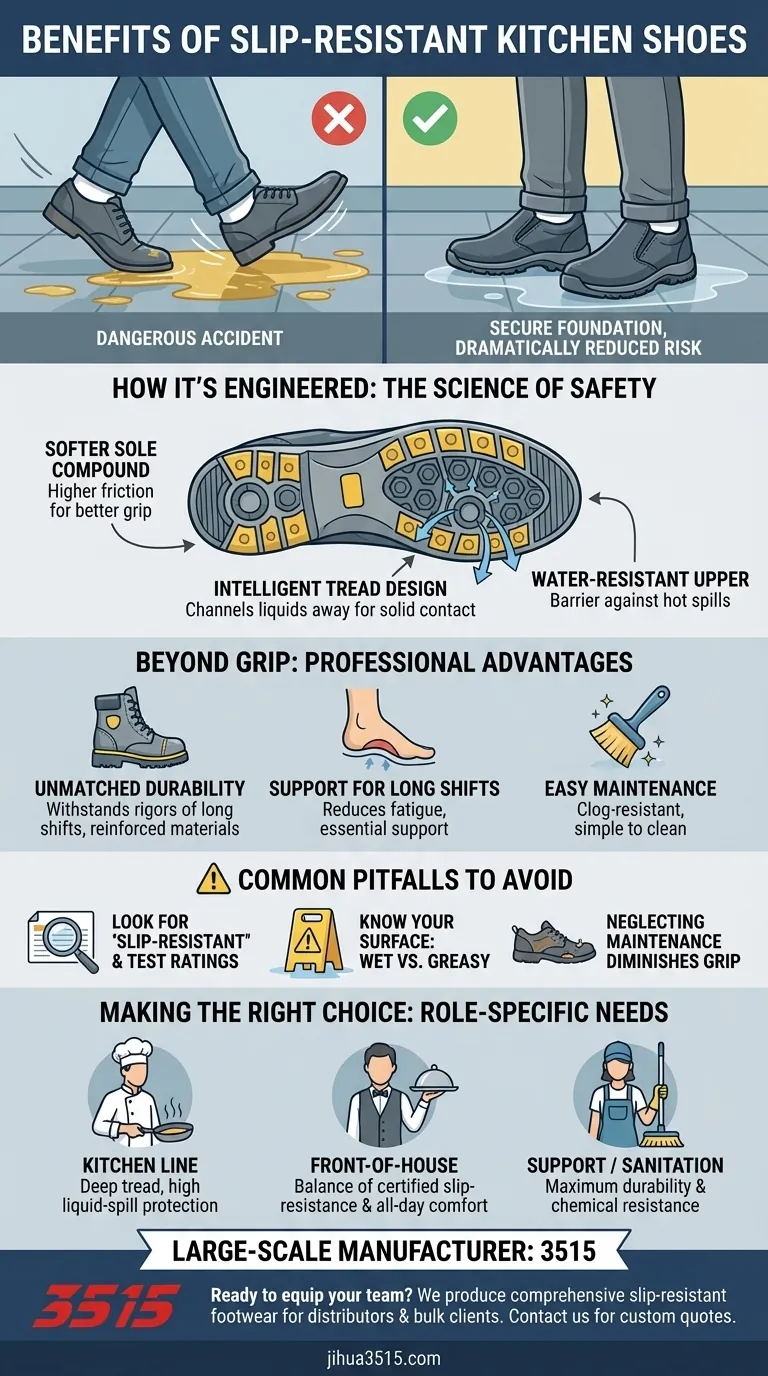
The outsole—the part of the shoe that contacts the floor—is made from a softer rubber or synthetic compound. This material is designed to have a higher coefficient of friction, meaning it creates more grip against the floor surface, even when contaminants like water or oil are present.
Intelligent Tread Design
The most critical feature is the tread pattern. Unlike the simple grooves on a sneaker, slip-resistant shoes use intricate, often circular or hexagonal patterns. These designs are not for aesthetics; they are engineered to actively channel liquids out from under the shoe's sole, ensuring the rubber makes solid contact with the floor.
A Barrier Against Spills
The top part of the shoe, or the "upper," is also built for the kitchen environment. They are typically made from water-resistant leather or synthetic materials. Many also include a protective membrane lining that temporarily shields your feet from hot liquid spills, providing a crucial few seconds to react.
Beyond Grip: Built for the Professional Environment
While preventing falls is their primary function, high-quality kitchen shoes offer benefits that address the other realities of a demanding workplace.
Unmatched Durability
Kitchen shoes are constructed with reinforced materials and sturdy designs, often including reinforced toes. They are built to withstand the rigors of long shifts, constant movement, and the general wear and tear of a fast-paced professional setting in a way that everyday footwear cannot.
Support for Long Shifts
The thick, durable construction is not just for protection; it also provides essential arch and foot support. This is critical for professionals who spend most of their day standing, helping to reduce fatigue and prevent long-term foot problems.
Designed for Easy Maintenance
Many professional kitchen shoes feature clog-resistant outsoles. The tread patterns are designed to prevent food and other debris from getting stuck, making them significantly easier and faster to clean at the end of a shift.
Common Pitfalls to Avoid
To ensure you are getting the protection you need, it's vital to understand the difference between marketing terms and tested performance.
Not All "Non-Slip" is Equal
A shoe labeled "non-slip" or "oil-resistant" may not have undergone formal testing. Look for shoes that are explicitly marked "slip-resistant" and, if possible, refer to industry-standard test ratings. This labeling indicates the shoe has met a specific performance benchmark for traction.
Assuming All Surfaces Are the Same
A shoe that performs well on a wet floor may not perform as well on a greasy one. Understand your primary work environment and choose a shoe specifically rated to handle the most common hazards you face.
Neglecting Shoe Maintenance
The effectiveness of slip-resistant tread diminishes as it wears down or becomes clogged with debris. Regularly inspect your shoes for wear and keep the outsoles clean to ensure they continue to provide maximum protection.
Making the Right Choice for Your Goal
Selecting the correct shoe depends on your specific role and the unique hazards you encounter daily.
- If your primary focus is working a busy kitchen line: Prioritize a shoe with a deep, channel-based tread and excellent liquid-spill protection to handle constant grease and fluid hazards.
- If your primary focus is front-of-house service: Seek a balance between certified slip-resistance and all-day comfort to navigate varied floor surfaces safely for an entire shift.
- If your primary focus is a support or sanitation role: Look for maximum durability and chemical resistance to handle a wide range of cleaning agents and unpredictable conditions.
Ultimately, choosing the right slip-resistant shoe is a fundamental investment in your professional safety and stability.
Summary Table:
| Key Feature | Benefit |
|---|---|
| Engineered Sole & Tread | Channels liquids away for superior grip on slippery surfaces. |
| Durable Construction | Withstands the rigors of long shifts and harsh kitchen environments. |
| Enhanced Support | Reduces foot fatigue for professionals standing all day. |
| Easy to Clean | Clog-resistant designs simplify maintenance and hygiene. |
Ready to equip your team with superior safety and performance?
As a large-scale manufacturer, 3515 produces a comprehensive range of slip-resistant footwear for distributors, brand owners, and bulk clients. Our production capabilities encompass all types of professional kitchen shoes and boots, engineered for maximum safety and durability.
Contact us today to discuss your specific needs and receive a custom quote. Let us help you create a safer, more productive workplace.
Visual Guide
Related Products
- Heavy-Duty Waterproof Nubuck Safety Boots Safety Shoes for Bulk Supply
- Durable High-Traction Canvas Sneakers Wholesale & Custom Manufacturing
- Premium Suede Sport Safety Shoes for Wholesale & Bulk Orders
- Durable Leather Moc Toe Work Boots for Wholesale & Custom Manufacturing
- Durable Goodyear Welt Leather Work Boots for Wholesale & Private Label
People Also Ask
- What primary protective functions do professional safety boots provide in urban solid waste recovery and waste picking processes? Discover Dual-Layer Protection.
- How do safety boots reduce cutting hazards? Essential Protection for Your Workforce
- Which organizations develop safety standards for work boots? Ensure Compliance & Worker Safety
- What are the common types of safety boots and their primary uses? A Guide to Industrial Footwear
- Why is ankle and arch support important in safety footwear? Prevent Injury & Fatigue