
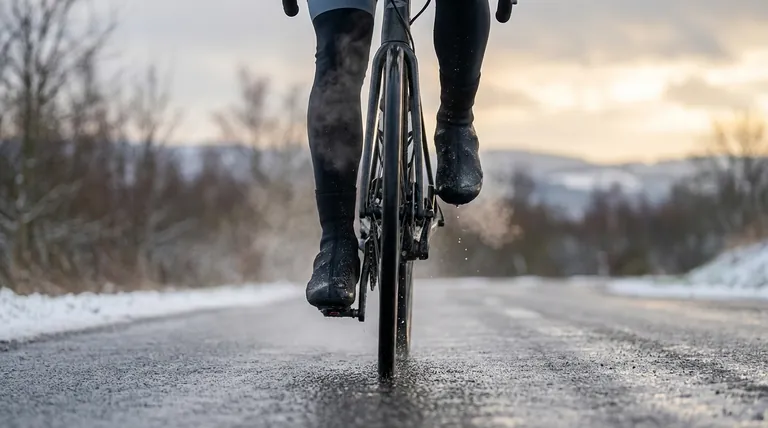
The primary benefit of neoprene booties is their ability to transform your standard cycling shoes into effective winter footwear by providing a thermal barrier that retains warmth, blocks wind, and keeps your feet dry. They are a popular and affordable solution for cyclists looking to extend their riding season into colder, wetter months.
Neoprene booties, also known as overshoes, represent a strategic compromise. They offer a significant upgrade in warmth and weather protection for your existing cycling shoes at a low cost, but it's crucial to understand their practical limitations in durability and fit.
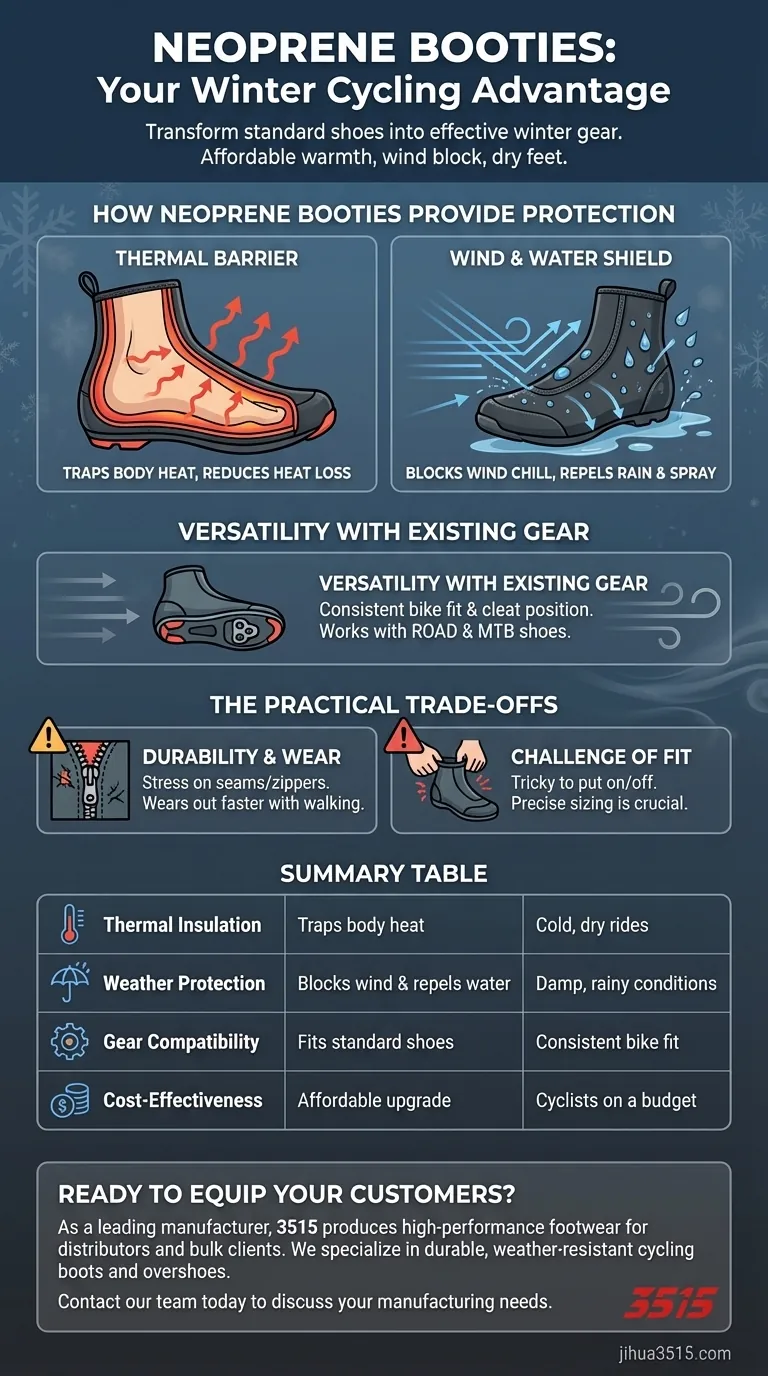
How Neoprene Booties Provide Protection
Neoprene booties function as a protective second skin for your cycling shoes, directly addressing the main causes of cold feet: wind chill and moisture.
The Thermal Barrier
The core material, neoprene, is the same synthetic rubber used in wetsuits. It works by trapping a thin layer of air, which your body then heats.
This captured warmth creates a highly effective insulating barrier against the cold outside air, significantly reducing heat loss from your feet.
The Wind and Water Shield
Winter cycling exposes your feet to constant wind, which rapidly strips away heat. A well-fitted bootie creates a nearly impenetrable windproof shield.
They are also very effective at keeping water from rain and road spray out, a critical factor since wet feet get cold exponentially faster than dry feet. Most designs dry out quickly after a ride.
Versatility with Existing Gear
A key advantage of booties is that they allow you to continue using your normal cycling shoes. This means your bike fit, cleat position, and pedaling feel remain consistent year-round.
They are designed with cutouts on the sole to accommodate both road and mountain bike cleats, making them a versatile accessory for any cyclist.
The Practical Trade-offs
While highly effective, neoprene booties are not without their drawbacks. Understanding these limitations is key to making an informed decision.
Durability and Wear
The snug fit and the process of pulling them on and off can put stress on seams and zippers. Frequent use, especially if you walk in them often, can cause them to wear out relatively quickly.
The Challenge of Fit
Getting booties on and off can be a tricky and strenuous process, especially when they are cold or wet.
Choosing the correct size can also be challenging. Too loose, and they lose thermal efficiency; too tight, and they can be nearly impossible to put on or risk tearing.
Incomplete Protection
Some designs leave the underside of the shoe largely exposed. While this is necessary for cleat engagement, it can be a weak point for water seeping in from below, particularly in very wet conditions.
Are Neoprene Booties Right for You?
Choosing the right foot protection depends entirely on your riding conditions, frequency, and budget.
- If your primary focus is affordable warmth for occasional cold or damp rides: Neoprene booties are an excellent and highly cost-effective solution.
- If your primary focus is maintaining a precise, year-round bike fit: Booties are the ideal choice because they allow you to use your standard, perfectly fitted shoes.
- If your primary focus is maximum protection for harsh, freezing, and consistently wet conditions: You may want to consider dedicated winter-specific cycling boots, which offer superior insulation and waterproofing at a higher cost.
Ultimately, neoprene booties are a valuable piece of kit that empowers you to comfortably handle the demands of winter cycling.
Summary Table:
| Benefit | Key Feature | Ideal For |
|---|---|---|
| Thermal Insulation | Traps body heat to keep feet warm | Cold, dry rides |
| Weather Protection | Blocks wind and repels water | Damp, rainy conditions |
| Gear Compatibility | Fits over standard cycling shoes | Riders wanting consistent bike fit |
| Cost-Effectiveness | Affordable upgrade vs. winter boots | Cyclists on a budget |
Ready to gear up for winter? As a leading manufacturer, 3515 produces high-performance footwear for distributors, brand owners, and bulk clients. We specialize in durable, weather-resistant cycling boots and overshoes designed for extreme conditions. Let us help you equip your customers for year-round riding. Contact our team today to discuss your manufacturing needs.
Visual Guide
Related Products
- Heavy-Duty Waterproof Nubuck Safety Boots Safety Shoes for Bulk Supply
- Lightweight Breathable Training Shoes for Wholesale & Custom OEM Manufacturing
- Durable Leather Moc Toe Work Boots for Wholesale & Custom Manufacturing
- Durable Leather High-Ankle Tactical Boots for Wholesale & Custom Manufacturing
- Durable Leather Work Boots for Wholesale & Custom Manufacturing
People Also Ask
- What primary protective functions do professional safety boots provide in urban solid waste recovery and waste picking processes? Discover Dual-Layer Protection.
- How do safety boots reduce cutting hazards? Essential Protection for Your Workforce
- Which organizations develop safety standards for work boots? Ensure Compliance & Worker Safety
- What are the common types of safety boots and their primary uses? A Guide to Industrial Footwear
- Why is ankle and arch support important in safety footwear? Prevent Injury & Fatigue
















