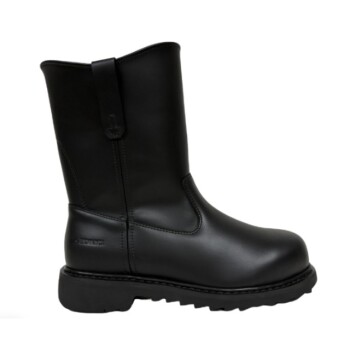
At its core, Goodyear welt construction is a superior method for building footwear. It mechanically stitches a shoe's upper to its sole using a dedicated strip of leather known as a welt. This process, invented by Charles Goodyear Jr. in 1869, creates an exceptionally durable, water-resistant, and endlessly practical shoe, which is why it is widely regarded as the gold standard in quality footwear.
The true significance of a Goodyear welt lies not in its complexity, but in its practicality. This construction method creates footwear that can be repeatedly resoled, transforming a disposable item into a long-term, sustainable investment that molds to your foot over time.
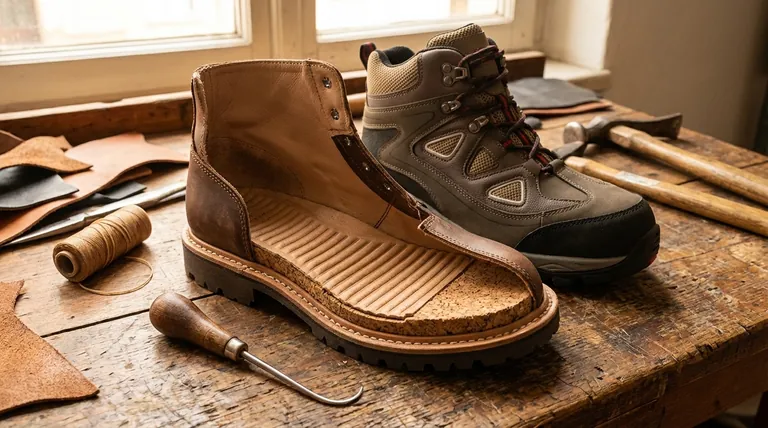
How Goodyear Welt Construction Works
To understand why this method is so revered, you need to understand its distinct process. Unlike simpler methods that rely on glue, a Goodyear welt is a mechanical join.
The Central Component: The Welt
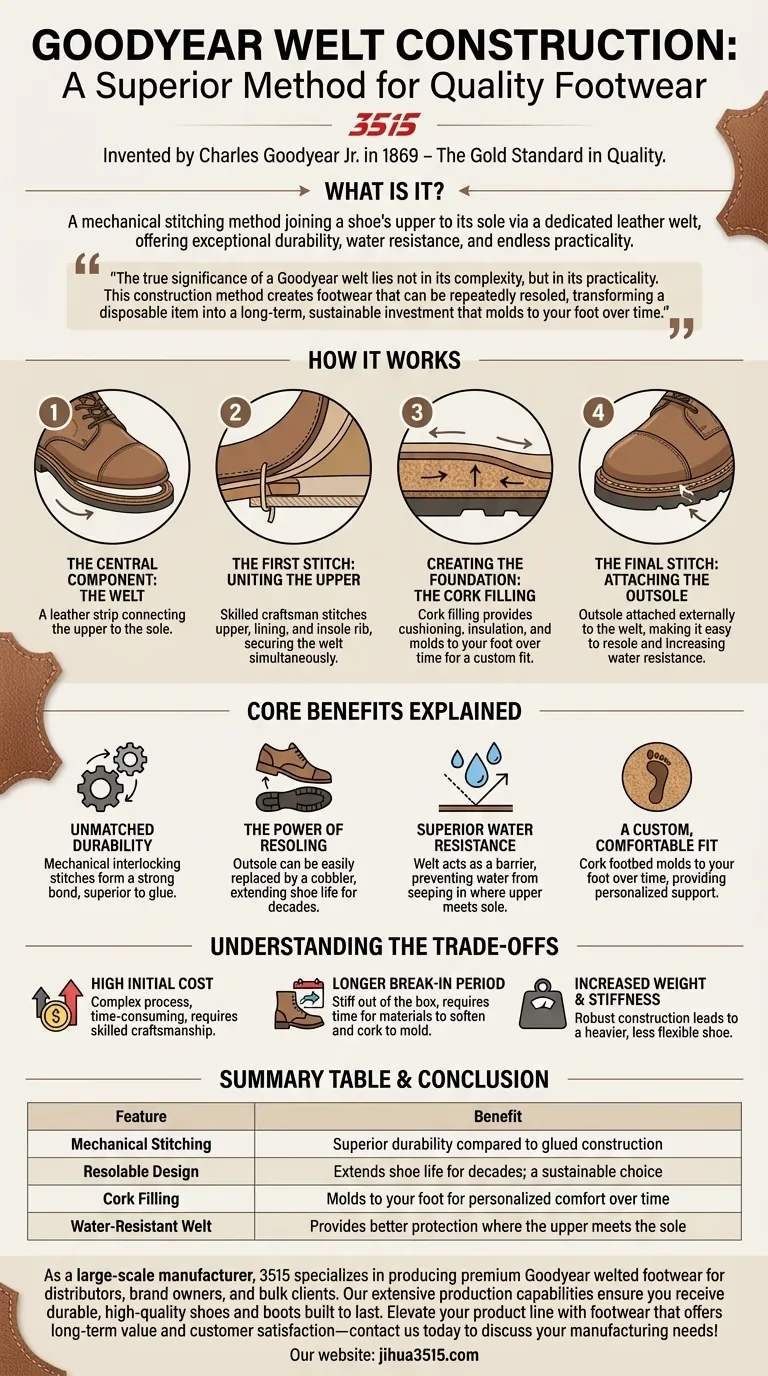
The process is named for the welt, which is a strip of leather that runs along the perimeter of the outsole. This component is the linchpin that connects the upper part of the shoe to the sole.
The First Stitch: Uniting the Upper
A skilled craftsman stitches the upper leather and lining to a "rib" on the insole. Crucially, this same stitch also attaches the welt to the shoe, creating a secure bond between the three parts.
Creating the Foundation: The Cork Filling
This construction process creates a cavity between the insole and the outsole. This space is filled with a layer of cork, which provides cushioning, insulation, and breathability. Over time, this cork filling compresses and molds to the shape of your foot, creating a custom fit.
The Final Stitch: Attaching the Outsole
Finally, the outsole is attached by stitching it directly to the welt. Because this stitch is on the exterior of the shoe and doesn't penetrate the insole, it makes the shoe highly water-resistant and, most importantly, easy to resole.
The Core Benefits Explained
The significance of the Goodyear welt comes from three primary advantages that are a direct result of its construction.
Unmatched Durability
The use of interlocking stitches to form a mechanical bond creates an incredibly strong and reliable shoe. This method is far more durable than construction that relies on cement or glue, which can degrade over time.
The Power of Resoling
This is the most significant advantage. When the outsole wears out, a cobbler can simply cut the stitches holding it to the welt and attach a brand new sole. The shoe's upper remains completely intact, allowing a single pair of high-quality shoes to last for decades.
Superior Water Resistance
The welt acts as a barrier, preventing water from seeping into the shoe where the upper meets the sole. While not fully waterproof, it provides a much higher degree of water resistance than most other construction methods.
A Custom, Comfortable Fit
The cork footbed is a key feature for long-term comfort. As you wear the shoes, your body heat and the pressure of your weight cause the cork to mold perfectly to the contours of your feet, providing personalized arch support.
Understanding the Trade-offs
While considered a premium method, Goodyear welt construction is not without its compromises. It accounts for less than 1% of all shoe production for several reasons.
The High Initial Cost
The process is complex, time-consuming, and requires skilled craftsmanship. This labor-intensive nature results in a significantly higher purchase price compared to mass-produced, cemented footwear.
A Longer Break-in Period
The multiple layers of durable leather, cork, and stitching make Goodyear welted shoes quite stiff out of the box. They require a break-in period for the materials to soften and the cork bed to mold to your foot.
Increased Weight and Stiffness
The robust construction naturally leads to a heavier and less flexible shoe than those made with lighter, more modern methods. This is a trade-off for the extreme durability and support they provide.
Is Goodyear Welted Footwear Right for You?
The decision to invest in Goodyear welted footwear depends entirely on what you value and your intended use.
- If your primary focus is longevity and long-term value: A Goodyear welt is the superior choice, as the ability to resole the footwear ensures it can last for years, often decades.
- If your primary focus is sustainability: This construction is inherently more sustainable, as it allows for repair and reuse rather than disposal.
- If your primary focus is immediate comfort and flexibility: You might prefer a more flexible, cemented construction, but you will be sacrificing durability and the potential for resoling.
- If your primary focus is a minimal budget: The high initial cost of Goodyear welted shoes makes less expensive construction methods a more practical choice for short-term needs.
Ultimately, choosing a Goodyear welt is an investment in craftsmanship that pays dividends in durability, custom comfort, and value over the entire life of the shoe.
Summary Table:
| Feature | Benefit |
|---|---|
| Mechanical Stitching | Superior durability compared to glued construction |
| Resolable Design | Extends shoe life for decades; a sustainable choice |
| Cork Filling | Molds to your foot for personalized comfort over time |
| Water-Resistant Welt | Provides better protection where the upper meets the sole |
As a large-scale manufacturer, 3515 specializes in producing premium Goodyear welted footwear for distributors, brand owners, and bulk clients. Our extensive production capabilities ensure you receive durable, high-quality shoes and boots built to last. Elevate your product line with footwear that offers long-term value and customer satisfaction—contact us today to discuss your manufacturing needs!
Visual Guide
Related Products
- Durable Goodyear Welt Leather Work Boots for Wholesale & Private Label
- Heavy-Duty Goodyear Welted Pull-On Safety Rigger Boot
- Wholesale Durable Leather Work Boots | 8-Inch Goodyear Welt Manufacturer
People Also Ask
- What is the difference between full-grain and top-grain leather? Premium Material Guide for Boot Manufacturers
- What are the advantages of leather as an upper material for work boots? Unmatched Durability & Custom Comfort
- Why is it important to waterproof leather work boots? Protect Your Investment and Performance
- How should new leather work boots be broken in? A Guide to Comfort and Durability
- What are the advantages of leather uppers in work boots? Unmatched Durability & Protection