
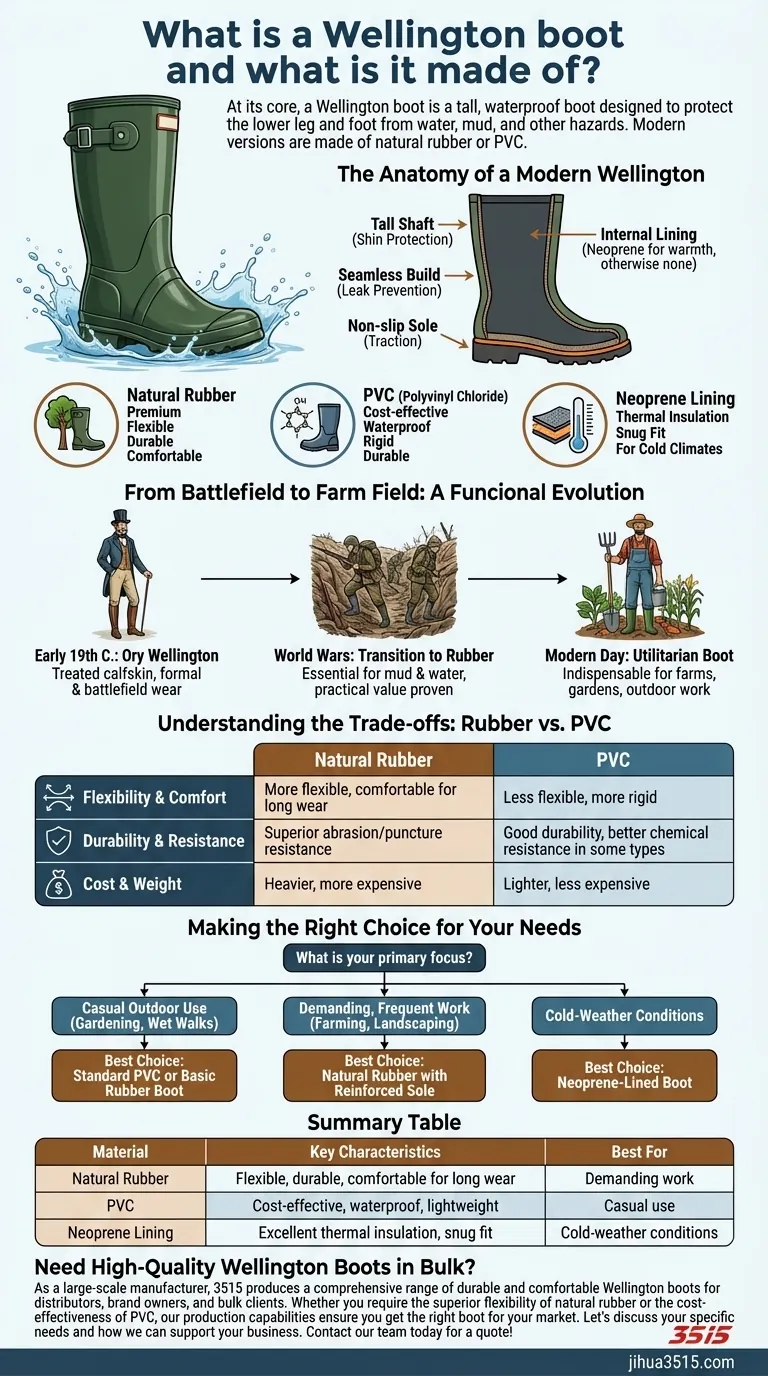
At its core, a Wellington boot is a tall, waterproof boot designed to protect the lower leg and foot from water, mud, and other hazards. While the original 19th-century versions were crafted from leather, the modern Wellington boot is almost exclusively made from natural rubber or a synthetic plastic like polyvinyl chloride (PVC).
The Wellington boot has evolved from a piece of military-inspired leather footwear into an indispensable and versatile tool. Its value is defined not just by its waterproof nature, but by how its specific materials—rubber, PVC, or neoprene—are chosen to meet the demands of a specific environment.
The Anatomy of a Modern Wellington
The construction of a modern "welly" is a direct reflection of its function. The materials are chosen specifically for protection, durability, and ease of maintenance.
Primary Material: Natural Rubber
Premium Wellington boots are typically made from natural rubber. This material is prized for its excellent flexibility, natural waterproofing capabilities, and high resistance to wear and tear, making it comfortable for extended use.
The Synthetic Alternative: PVC
Polyvinyl chloride (PVC) is a common and cost-effective alternative to natural rubber. It provides complete waterproofing and solid durability, though it is often more rigid than rubber.
The Role of Neoprene
In boots designed for colder climates or prolonged use, neoprene is often used as a lining. This synthetic rubber provides excellent thermal insulation and a snug, comfortable fit, enhancing the boot's overall performance.
Core Design Principles
Regardless of the primary material, all Wellingtons share key design features. They have a tall shaft to protect the shins, a seamless build to prevent leaks, and durable, non-slip soles for traction on wet or muddy ground.
From Battlefield to Farm Field: A Functional Evolution
The Wellington boot's journey from an aristocratic fashion item to a practical workhorse is central to its identity.
The Original Leather Wellington
The first Wellington boots were commissioned in the early 19th century and made of treated calfskin leather. They were designed as a modification of the Hessian boot, offering a closer fit and simpler style for battlefield and formal wear.
The Impact of War
The boot’s transition to rubber was solidified during the World Wars. Its waterproof and durable nature made it essential for soldiers navigating the mud and water of trench warfare, proving its immense practical value.
The Modern Utilitarian Boot
Today, the Wellington is a staple in a vast range of settings. It is indispensable on farms, in gardens, and for countless outdoor activities. Its simple, waterproof design means it can be rinsed clean in seconds.
Understanding the Trade-offs: Rubber vs. PVC
Choosing between the two primary materials involves balancing comfort, durability, and cost. There is no single "best" material; the right choice depends on the intended use.
Flexibility and Comfort
Natural rubber is inherently more flexible than PVC. This makes rubber boots more comfortable for walking long distances or wearing for an entire workday, as they move more naturally with the foot.
Durability and Resistance
While both materials are durable, natural rubber generally offers superior resistance to abrasion and punctures. However, certain PVC formulations can provide better resistance to chemicals, making them a preferred choice in some industrial environments.
Cost and Weight
PVC is typically lighter and less expensive to produce than natural rubber. This makes PVC-based Wellington boots a more accessible and budget-friendly option for casual or infrequent use.
Making the Right Choice for Your Needs
Selecting the correct Wellington boot is a matter of matching its material and features to your specific goal.
- If your primary focus is casual outdoor use (gardening, wet walks): A standard PVC or basic rubber boot provides all the waterproof protection you need at an excellent value.
- If your primary focus is demanding, frequent work (farming, landscaping): A natural rubber boot with a reinforced sole offers the superior durability and all-day comfort required for the job.
- If your primary focus is cold-weather conditions: Prioritize a neoprene-lined boot for essential thermal insulation, which standard rubber and PVC do not provide.
Ultimately, the modern Wellington is a purpose-built tool, and understanding its materials is the key to selecting the right one for the task at hand.
Summary Table:
| Material | Key Characteristics | Best For |
|---|---|---|
| Natural Rubber | Flexible, durable, comfortable for long wear | Demanding work (farming, landscaping) |
| PVC | Cost-effective, waterproof, lightweight | Casual use (gardening, infrequent outings) |
| Neoprene Lining | Excellent thermal insulation, snug fit | Cold-weather conditions |
Need High-Quality Wellington Boots in Bulk?
As a large-scale manufacturer, 3515 produces a comprehensive range of durable and comfortable Wellington boots for distributors, brand owners, and bulk clients. Whether you require the superior flexibility of natural rubber or the cost-effectiveness of PVC, our production capabilities ensure you get the right boot for your market.
Let's discuss your specific needs and how we can support your business. Contact our team today for a quote!
Visual Guide
Related Products
- Durable Waterproof Rain Boots | Custom Manufacturer for Wholesale & Brands
- Durable Goodyear Welt Leather Work Boots for Wholesale & Private Label
- Wholesale Durable Leather Work Boots | 8-Inch Goodyear Welt Manufacturer
- Durable Leather Tactical Boots Wholesale & Custom Manufacturing for Brands
- Durable Moc-Toe Wedge Work Boots | Wholesale Manufacturing for Brands
People Also Ask
- What are the main materials for waterproof rain boots? Choose the Right Material for Durability & Comfort
- What is the overall recommendation for choosing rain boot materials? A Guide to Rubber vs. PVC
- How does boot height affect waterproofing? Choose the Right Height for Ultimate Protection
- Why are rain boots more flexible and comfortable than snow boots? The Key Differences Explained
- What are the best types of shoes for different gardening conditions? Find Your Perfect Match.



















