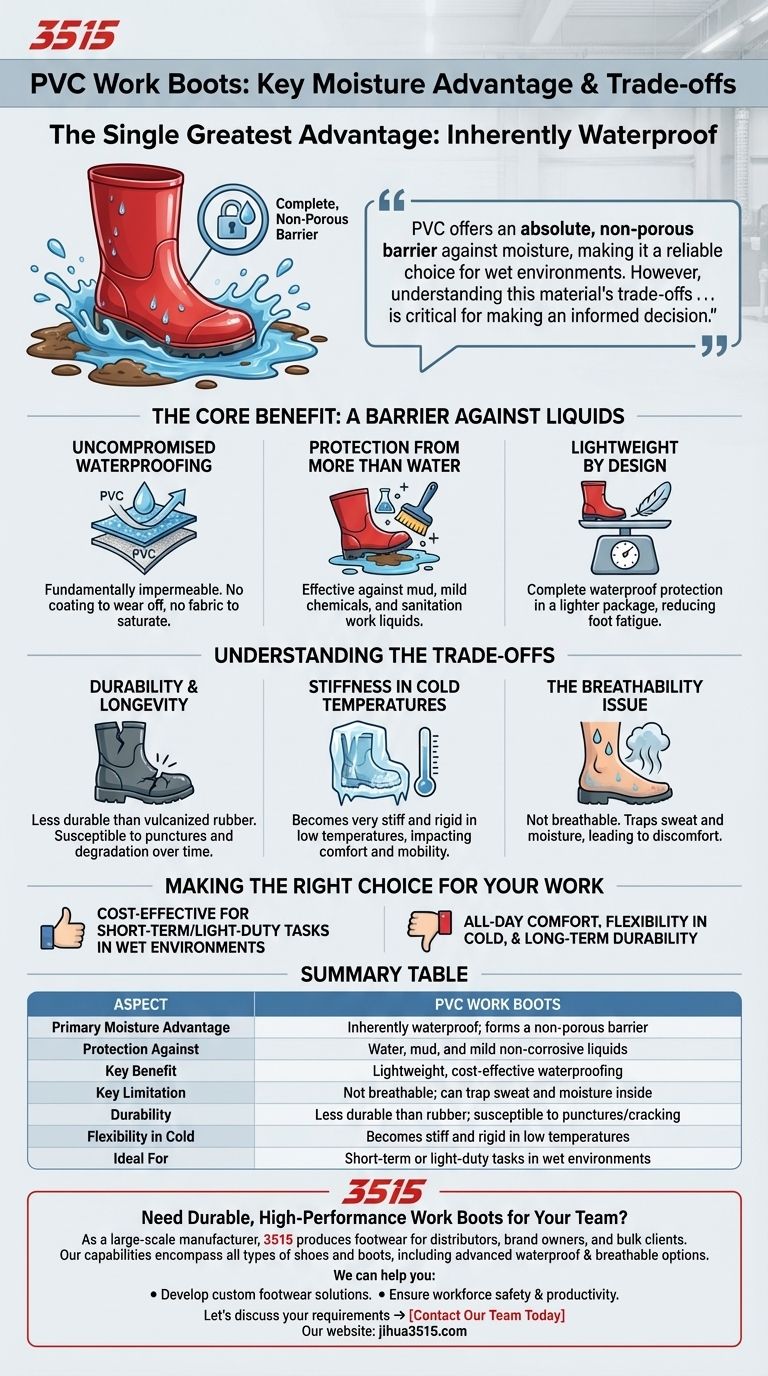
The single greatest advantage of PVC work boots regarding moisture is that they are inherently waterproof. The material itself forms a complete barrier, preventing water and other non-corrosive liquids from penetrating and ensuring your feet remain dry.
PVC offers an absolute, non-porous barrier against moisture, making it a reliable choice for wet environments. However, understanding this material's trade-offs in durability and breathability is critical for making an informed decision.
The Core Benefit: A Barrier Against Liquids
Polyvinyl Chloride (PVC) is a synthetic plastic polymer. Its molecular structure creates a solid, non-porous surface, which is the foundation of its effectiveness in work boots.
### Uncompromised Waterproofing
Unlike treated leather or other water-resistant materials, PVC is not merely coated to repel water; it is fundamentally impermeable. This means there is no coating to wear off and no fabric to eventually become saturated.
### Protection from More Than Water
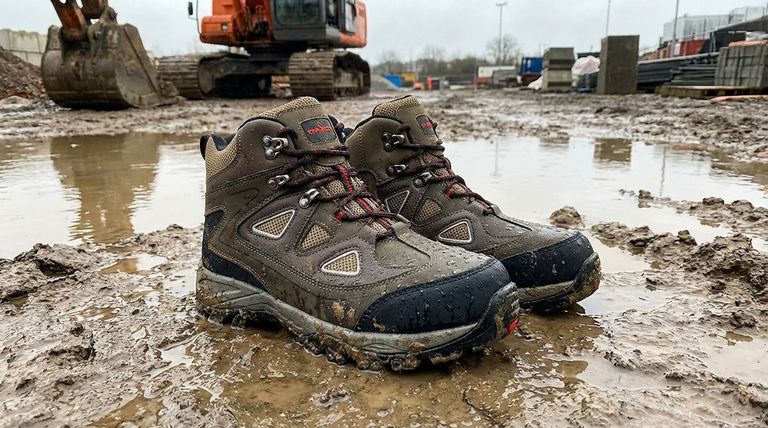
This waterproof quality extends to other non-corrosive liquids. This makes PVC boots highly effective in environments with mud, mild chemicals, or sanitation work, where keeping feet dry and clean is a primary safety concern.
### Lightweight by Design
A key benefit is that this complete waterproof protection is delivered in a lightweight package. This reduces foot fatigue over a workday compared to heavier materials like traditional rubber.
Understanding the Trade-offs
While excellent for waterproofing, PVC is not without its limitations. An objective assessment requires looking at the compromises you make when choosing this material.
### Durability and Longevity
PVC is generally less durable than high-quality vulcanized rubber. It is more susceptible to punctures, cracking, and degradation over time, especially with heavy, abrasive use.
### Stiffness in Cold Temperatures
A significant drawback is a lack of flexibility, which is exacerbated by cold weather. In low temperatures, PVC boots can become very stiff and rigid, impacting comfort and mobility.
### The Breathability Issue
The same non-porous quality that makes PVC waterproof also means it is not breathable. This traps sweat and moisture inside the boot, which can lead to discomfort and foot health issues during long periods of wear.
Making the Right Choice for Your Work
Selecting the right boot material depends entirely on your specific job requirements, environment, and duration of use.
- If your primary focus is cost-effective, waterproof protection for short-term or light-duty tasks: PVC boots are an excellent and economical choice for keeping your feet dry.
- If your primary focus is all-day comfort, flexibility in the cold, and long-term durability: You should weigh the downsides of PVC and consider investing in higher-grade rubber or other specialized materials.
Ultimately, choosing the right work boot is about matching the material's inherent properties to the demands of your job.
Summary Table:
| Aspect | PVC Work Boots |
|---|---|
| Primary Moisture Advantage | Inherently waterproof; forms a non-porous barrier |
| Protection Against | Water, mud, and mild non-corrosive liquids |
| Key Benefit | Lightweight, cost-effective waterproofing |
| Key Limitation | Not breathable; can trap sweat and moisture inside |
| Durability | Less durable than rubber; susceptible to punctures/cracking |
| Flexibility in Cold | Becomes stiff and rigid in low temperatures |
| Ideal For | Short-term or light-duty tasks in wet environments |
Need Durable, High-Performance Work Boots for Your Team?
As a large-scale manufacturer, 3515 produces a comprehensive range of footwear for distributors, brand owners, and bulk clients. Our production capabilities encompass all types of shoes and boots, including advanced waterproof and breathable options tailored to your specific industry needs.
We can help you:
- Source reliable, high-quality work boots that balance protection, comfort, and durability.
- Develop custom footwear solutions for your unique work environments.
- Ensure your workforce has the right gear to stay safe and productive.
Let's discuss your requirements → Contact Our Team Today
Visual Guide
Related Products
- Wholesale Customizable Safety Boots Durable & Protective Footwear Manufacturing
- Wholesale Heavy-Duty Waterproof Steel Toe Work Boots OEM Manufacturer
- Durable Leather Work Boots for Wholesale & Custom Manufacturing
- Durable Leather Work Boots for Wholesale & Custom OEM Manufacturing
- Durable Leather Moc Toe Work Boots for Wholesale & Custom Manufacturing
People Also Ask
- Why are industrial safety boots with steel toes necessary for machine operators? Essential Foot Protection for Safety
- What is the history of steel toe work boots? From German Invention to Modern Safety Standard
- What are the different types of steel toe work boots? Choose the Right Boot for Your Job
- What are the pros and cons of steel toe work boots? A Guide to Maximum Protection vs. Comfort
- What common features do safety toe work boots share regardless of style? Essential Protection Explained