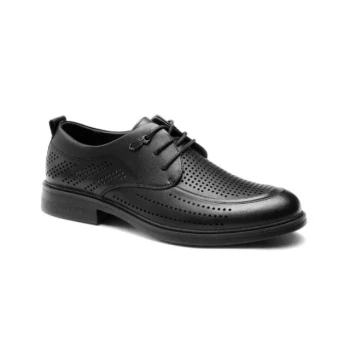
In simple terms, a Goodyear welt is a strip of material—typically leather—that runs around the perimeter of a shoe, acting as a crucial intermediary between the upper (the part that covers your foot) and the outsole (the part that hits the ground). Its purpose is to create an incredibly durable and water-resistant bond that allows the shoe to be taken apart and re-soled multiple times without damaging the upper.
The Goodyear welt is not just a component; it's a construction philosophy. It signifies a shoe built for longevity and repair, representing a long-term investment in footwear rather than a disposable item.
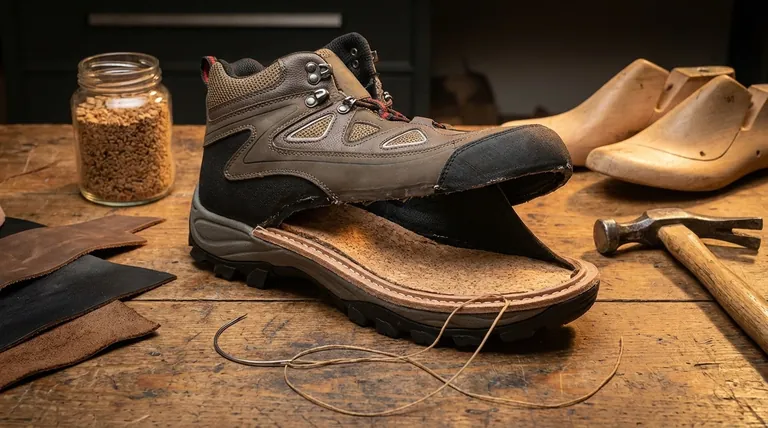
How a Goodyear Welt Works
To understand the value of a Goodyear welt, you must first understand the mechanics of its construction. It is a more complex, labor-intensive method that creates a distinct separation between the shoe's core components.
The Key Components
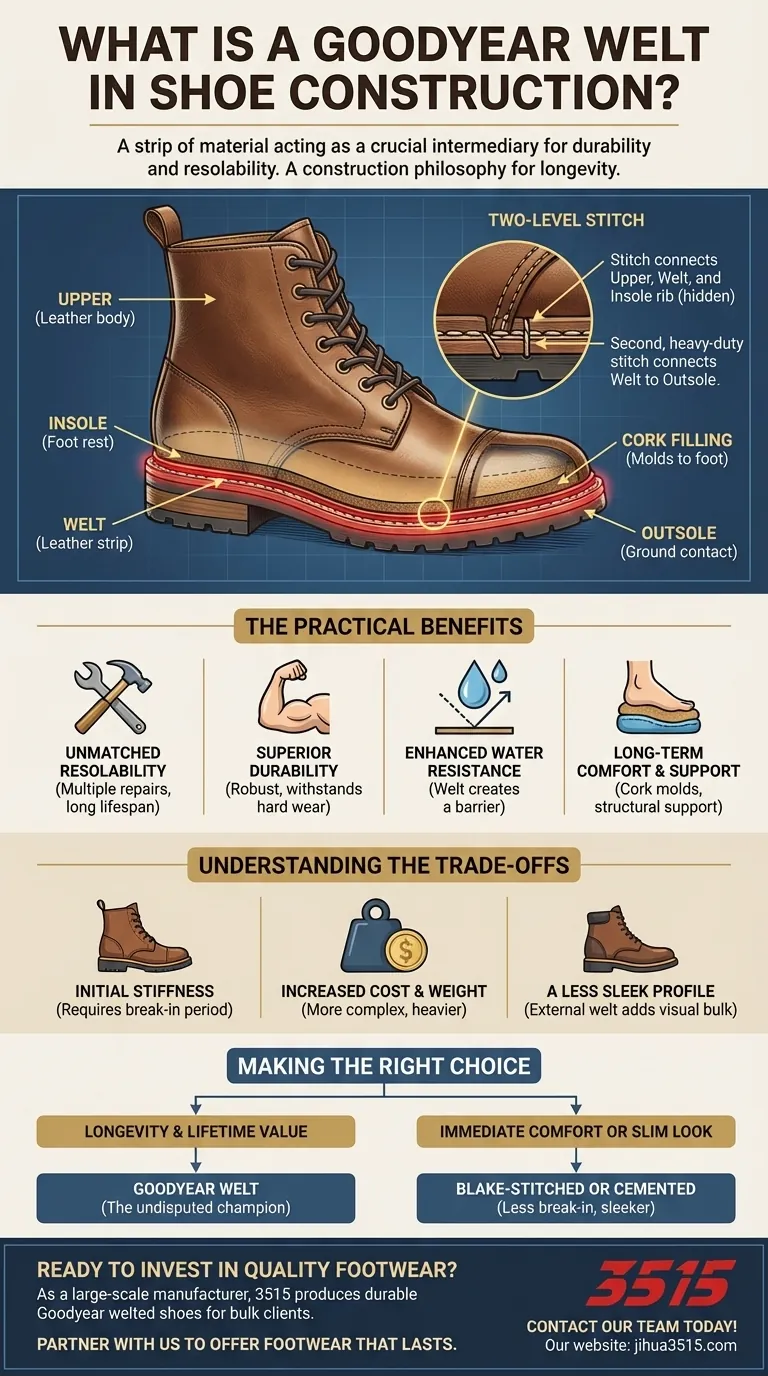
A Goodyear welted shoe is an assembly of several critical parts. The upper is the main leather body of the shoe, while the insole is what your foot rests on. The welt is the leather strip, and a cavity between the insole and outsole is filled with a layer of granulated cork.
The Two-Level Stitch
The magic of the construction lies in two independent stitches. First, the upper is stitched to the welt and a canvas rib cemented to the insole. This stitch is hidden inside the shoe. Second, a separate, heavy-duty stitch attaches the welt to the outsole.
The Role of the Cork Filling
The cork filling is essential. It provides cushioning and breathability, but its most important function is that it gradually molds to the shape of your foot over time, creating a custom-like fit that becomes more comfortable with every wear.
The Practical Benefits of This Construction
Choosing a Goodyear welted shoe is a decision with tangible advantages that manifest over the life of the shoe. These benefits are the reason this centuries-old method remains the gold standard for high-quality footwear.
Unmatched Resolability
This is the primary benefit. Because the outsole is stitched to the welt and not directly to the upper, a cobbler can easily remove the old sole and stitch on a new one. This process can be repeated many times, dramatically extending the shoe's lifespan.
Superior Durability
The two-level stitching system creates an exceptionally strong and secure bond between all parts of the shoe. This robust construction is designed to withstand years of hard wear.
Enhanced Water Resistance
The welt creates a solid barrier between the upper and the outsole, making it significantly more difficult for water to penetrate the shoe from the ground up compared to simpler construction methods.
Long-Term Comfort and Support
While initially firm, the cork footbed and supportive insole create a shoe that offers excellent structure. A metal shank is also typically embedded in the sole to ensure the shoe maintains its shape and provides proper arch support.
Understanding the Trade-offs
No construction method is without its compromises. Being an informed buyer means understanding the potential downsides so you can align your purchase with your priorities.
Initial Stiffness
Goodyear welted shoes are famously stiff out of the box. The multiple layers and durable materials require a "break-in" period for the leather to soften and the cork to mold to your foot.
Increased Cost and Weight
The complexity and material requirements of this construction method result in a higher initial purchase price. The additional layers also make the shoe heavier and less flexible than cemented or Blake-stitched alternatives.
A Less Sleek Profile
The external welt adds a small amount of visual bulk around the edge of the sole. This results in a more substantial and less streamlined silhouette compared to shoes where the sole is attached more directly.
Making the Right Choice for Your Goal
Ultimately, the best shoe construction depends entirely on what you value most.
- If your primary focus is longevity and lifetime value: A Goodyear welt is the undisputed champion, as the ability to resole it makes it a multi-decade investment.
- If your primary focus is immediate comfort and flexibility: You may prefer a Blake-stitched or cemented shoe, which requires little to no break-in period.
- If your primary focus is a slim, low-profile look: The sleeker profile of a Blake-stitched shoe might be a better fit for your aesthetic.
Choosing a Goodyear welted shoe is a commitment to quality, durability, and the principle of owning fewer, better things.
Summary Table:
| Feature | Benefit |
|---|---|
| Resolability | Can be resoled multiple times, extending lifespan |
| Durability | Robust construction withstands years of hard wear |
| Water Resistance | Welt creates a barrier against moisture from the ground |
| Long-Term Comfort | Cork footbed molds to your foot for a custom fit |
Ready to Invest in Quality Footwear?
As a large-scale manufacturer, 3515 produces a comprehensive range of durable Goodyear welted shoes and boots for distributors, brand owners, and bulk clients. Our production capabilities encompass all types of footwear built for longevity and performance.
Partner with us to offer your customers footwear that lasts.
Contact our team today to discuss your manufacturing needs and discover how we can bring value to your business.
Visual Guide
Related Products
- Durable Goodyear Welt Leather Work Boots for Wholesale & Private Label
- Wholesale Durable Leather Work Boots | 8-Inch Goodyear Welt Manufacturer
- Wholesale Durable & Breathable Training Shoes for Custom Brands
- Lightweight Breathable Training Shoes for Wholesale & Custom OEM Manufacturing
- Custom OEM Training Shoes Wholesale Manufacturer Durable & Breathable
People Also Ask
- What is the difference between full-grain and top-grain leather? Premium Material Guide for Boot Manufacturers
- What are the advantages of leather as an upper material for work boots? Unmatched Durability & Custom Comfort
- Why is it important to waterproof leather work boots? Protect Your Investment and Performance
- How should new leather work boots be broken in? A Guide to Comfort and Durability
- What are the advantages of leather uppers in work boots? Unmatched Durability & Protection