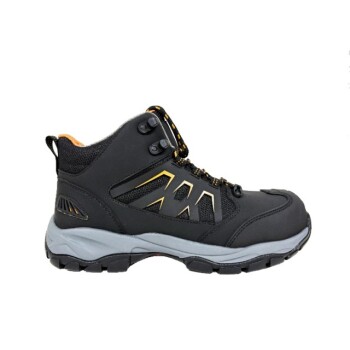
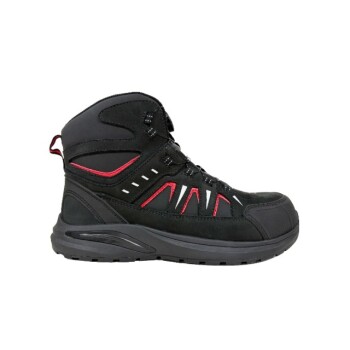
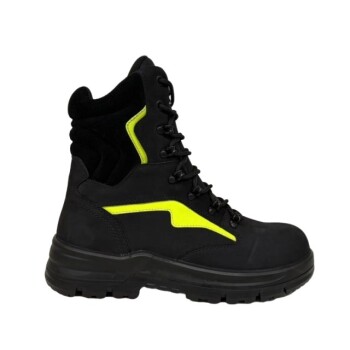
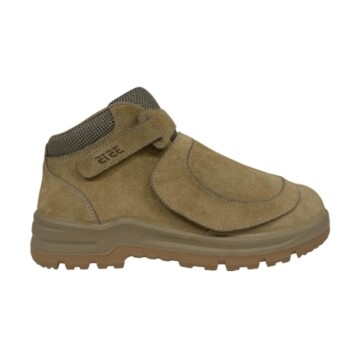
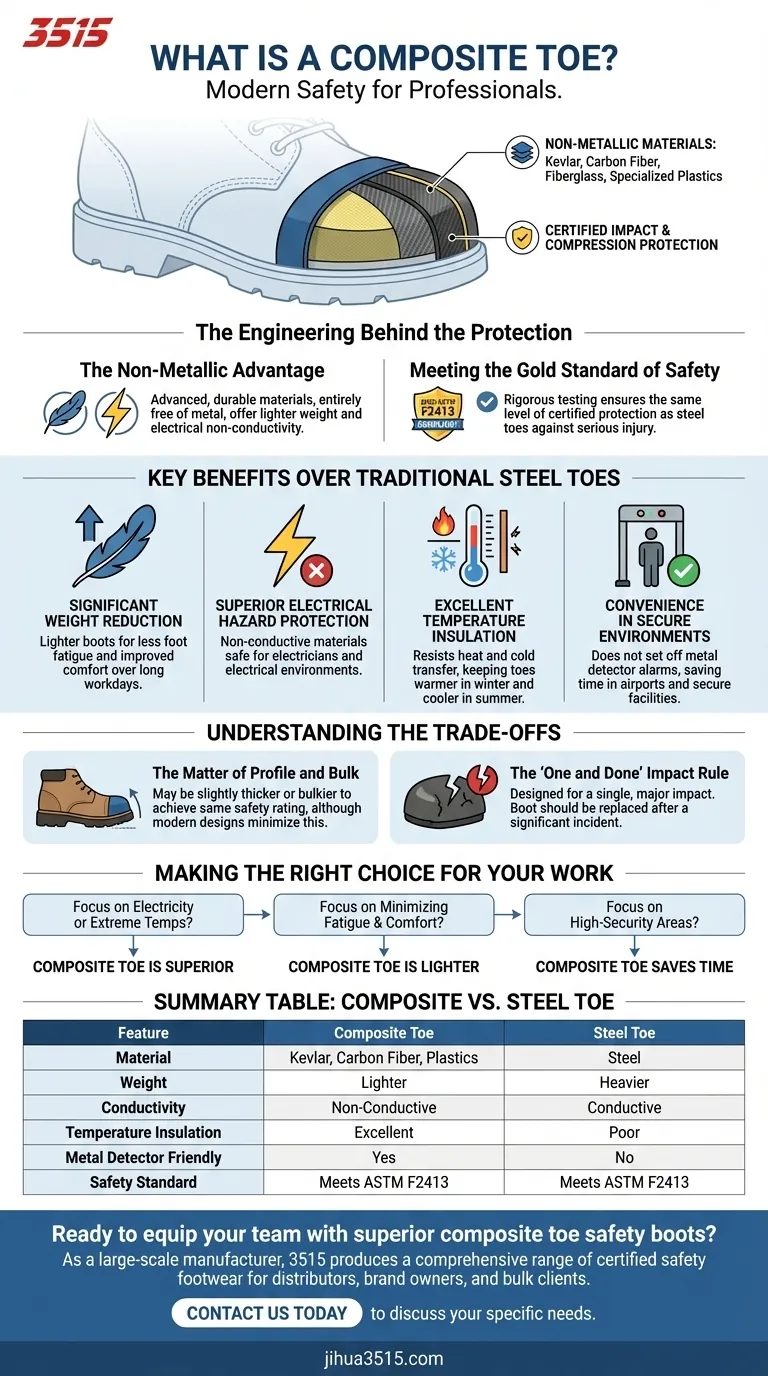
A composite toe is a modern safety toe cap for work boots and shoes that provides certified impact and compression protection using non-metallic materials. Unlike traditional steel toes, these caps are engineered from a blend of materials like Kevlar, carbon fiber, fiberglass, and specialized plastics.
The core purpose of a composite toe is to offer the same level of certified safety as a steel toe, but in a lighter, non-conductive, and temperature-resistant package. It's not about being "stronger" or "weaker," but about providing protection with a different set of material properties.
The Engineering Behind the Protection
A common misconception is that non-metallic materials are inherently less protective. However, composite toes are engineered to meet the exact same safety standards required of steel toes.
The Non-Metallic Advantage
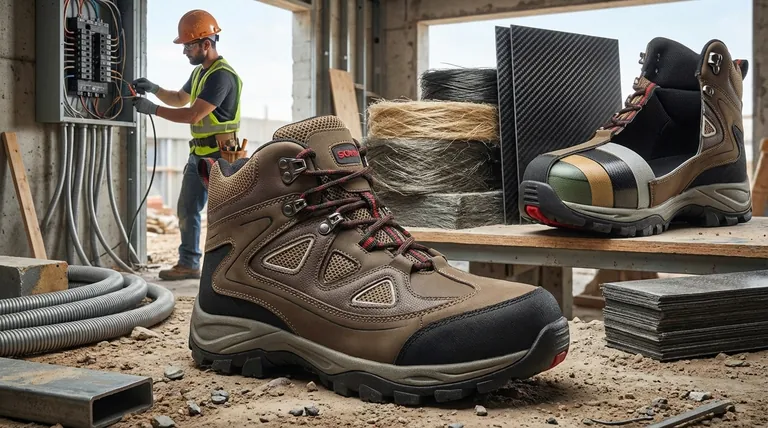
Composite toe caps are made from a variety of advanced, durable materials. This can include Kevlar, a high-strength synthetic fiber; carbon fiber, known for its exceptional strength-to-weight ratio; and other specialized plastics and fiberglass.
The key is that these materials are entirely free of metal.
Meeting the Gold Standard of Safety
All legitimate safety footwear, whether composite or steel toe, must meet the same ANSI/ASTM F2413 safety requirements. This standard tests for specific levels of impact and compression resistance, ensuring the toe cap can protect you from serious injury.
When you choose a certified composite toe boot, you are getting a verified level of protection, not a weaker alternative.
Key Benefits Over Traditional Steel Toes
Choosing a composite toe is about selecting a specific set of advantages that align with your work environment and physical needs.
Significant Weight Reduction
The most immediate benefit is a noticeable reduction in weight. Lighter boots lead to less foot fatigue over a long workday, improving comfort and reducing strain.
Superior Electrical Hazard Protection
Because composite materials do not conduct electricity, they are the preferred choice for electricians and anyone working in environments with a risk of electrical shock.
Excellent Temperature Insulation
Metal is an excellent conductor of heat and cold. Composite materials are not. This means in extreme cold, your toes stay warmer, and in high heat, they stay cooler, providing a significant comfort advantage.
Convenience in Secure Environments
For professionals who frequently pass through metal detectors—such as in airports, government buildings, or secure facilities—composite toes offer the convenience of not setting off alarms.
Understanding the Trade-offs
No material is perfect for every situation. Being an informed professional means understanding the limitations as well as the benefits.
The Matter of Profile and Bulk
To achieve the same ASTM safety rating as steel, a composite toe cap must often be slightly thicker or bulkier. While modern designs have minimized this, a steel toe cap can sometimes offer a slimmer profile in the boot.
The "One and Done" Impact Rule
All safety toe caps, regardless of material, are designed to protect you from a single, major impact. After a significant incident where the toe cap has done its job, the boot should be replaced, as the structural integrity of the cap may be compromised.
Making the Right Choice for Your Work
Your specific job function and environment should be the deciding factor in choosing your safety footwear.
- If your primary focus is working around electricity or in extreme hot/cold temperatures: A composite toe is the technically superior and safer choice.
- If your primary focus is minimizing daily fatigue and maximizing comfort: The lighter weight of a composite toe boot offers a clear advantage for long days on your feet.
- If your primary focus is working in a high-security area with metal detectors: Composite toes will save you significant time and hassle.
Ultimately, understanding these material differences empowers you to select safety footwear that serves as a tool, not just a requirement.
Summary Table:
| Feature | Composite Toe | Steel Toe |
|---|---|---|
| Material | Kevlar, Carbon Fiber, Plastics | Steel |
| Weight | Lighter | Heavier |
| Conductivity | Non-Conductive | Conductive |
| Temperature Insulation | Excellent | Poor |
| Metal Detector Friendly | Yes | No |
| Safety Standard | Meets ASTM F2413 | Meets ASTM F2413 |
Ready to equip your team with superior composite toe safety boots?
As a large-scale manufacturer, 3515 produces a comprehensive range of certified safety footwear for distributors, brand owners, and bulk clients. Our production capabilities encompass all types of composite toe boots designed for maximum comfort, protection, and performance.
Contact us today to discuss your specific needs and discover how we can provide the perfect safety footwear solution for your business.
Visual Guide
Related Products
- Wholesale Durable Safety Boots Manufacturer Customizable Steel Toe Work Boots
- Safety Footwear Wholesale Manufacturer for Custom OEM/ODM Production
- Puncture-Resistant Velcro Safety Boots for Wholesale & Custom Manufacturing
- Wholesale Mesh Steel Toe Safety Shoes with Dial Closure Factory Production
- Wholesale Durable Breathable Safety Boots Custom OEM Manufacturer
People Also Ask
- What are the pros and cons of steel toe work boots? A Guide to Maximum Protection vs. Comfort
- What are the different types of steel toe work boots? Choose the Right Boot for Your Job
- What is the history of steel toe work boots? From German Invention to Modern Safety Standard
- How much weight can steel toe work boots withstand? Unpacking the 3,372 lb. Safety Standard
- What are some common myths about steel toe work boots? Debunked for Modern Workers