Beyond simple discomfort, wearing ill-fitting work boots can trigger a cascade of health problems that extend from your feet to your lower back. These issues range from immediate problems like blisters and foot pain to chronic conditions affecting your ankles, knees, and overall posture due to improper body alignment.
The core issue with ill-fitting boots is that they disrupt your body's natural biomechanics. By failing to properly support your foot, they force your ankles, knees, and hips to compensate, leading to strain and pain throughout your body's entire kinetic chain.
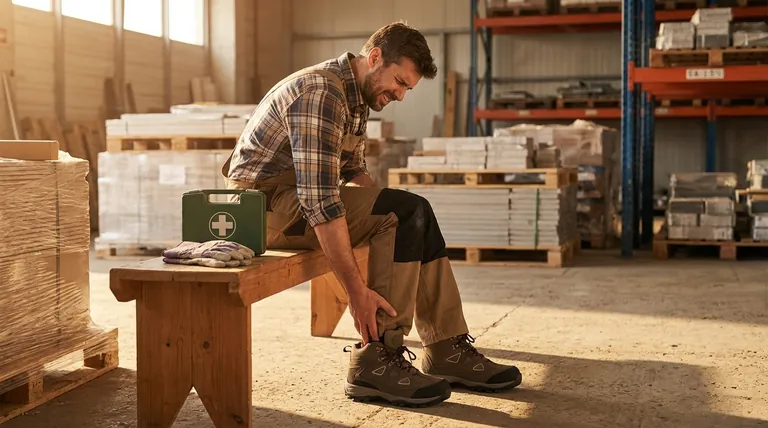
The Immediate Impact: Localized Foot Problems
When your boots don't fit correctly, the first signs of trouble appear directly on your feet. These issues are often dismissed as minor annoyances, but they are warning signs of a larger problem.
Blisters, Corns, and Calluses
Boots that are too loose allow your foot to slide, creating friction that leads to painful blisters. Conversely, boots that are too tight create constant pressure points, causing the skin to thicken into protective corns and calluses.
Aggravated Foot Conditions
A poor fit can worsen pre-existing conditions. Tight toe boxes can exacerbate bunions and hammertoes, while inadequate arch support can trigger intense heel pain from plantar fasciitis.
The Ripple Effect: Problems Beyond Your Feet
The most serious consequences of ill-fitting footwear are not isolated to your feet. An unstable foundation inevitably affects the entire structure it supports.
Ankle and Achilles Tendon Strain
Boots lacking proper heel and ankle support force the small stabilizing muscles around the joint to overwork. This leads to chronic ankle instability and can cause inflammation and strain of the Achilles tendon.
Knee Pain and Misalignment
Your foot's position dictates the alignment of your leg. Improper support can cause your foot to roll inward (overpronation) or outward, which misaligns the knee joint and places unnatural stress on its ligaments and cartilage, resulting in persistent knee pain.
Hip and Lower Back Pain
This chain reaction continues up to your hips and back. An altered gait from foot discomfort forces a subtle tilt in your pelvis, creating an imbalance that puts significant strain on your lower back muscles and sacroiliac (SI) joint.
Understanding the Trade-offs: Too Tight vs. Too Loose
Finding the right fit involves avoiding two common pitfalls, each with its own set of problems. It's not just about size, but about the specific shape and support your foot needs.
The Dangers of Boots That Are Too Tight
Constrictive boots can do more than just cause pressure sores. They can restrict blood circulation to your feet and even compress nerves, leading to numbness, tingling, or a condition known as Morton's neuroma.
The Dangers of Boots That Are Too Loose
While they may feel comfortable initially, overly loose boots are a major hazard. The lack of support increases the risk of rolled ankles and falls, and the constant foot movement inside the boot causes fatigue and friction-related injuries.
Making the Right Choice for Your Health
Selecting the right work boot is a critical investment in your long-term health and daily well-being. Your choice should be guided by your specific needs and work environment.
- If your primary focus is preventing immediate pain: Ensure there is a thumb's width of space between your longest toe and the end of the boot, and that your heel does not slip excessively.
- If your primary focus is long-term joint health: Prioritize boots with excellent arch support and a firm heel counter to maintain proper body alignment from the ground up.
- If your primary focus is all-day comfort and safety: Choose a boot that is snug but not restrictive, providing stability without compromising circulation or movement.
Properly fitted work boots are not a luxury; they are a foundational piece of personal protective equipment for your entire body.
Summary Table:
| Health Problem Area | Common Issues Caused by Ill-Fitting Boots |
|---|---|
| Feet | Blisters, Corns, Calluses, Aggravated Bunions, Plantar Fasciitis |
| Ankles & Tendons | Chronic Ankle Instability, Achilles Tendon Strain |
| Knees | Pain, Misalignment, Ligament Stress |
| Hips & Back | Lower Back Pain, Pelvic Imbalance, SI Joint Strain |
| Overall Safety | Increased Risk of Falls, Foot Fatigue, Nerve Compression |
Don't Let Footwear Compromise Your Team's Health and Productivity
As a large-scale manufacturer, 3515 produces a comprehensive range of safety footwear designed for optimal fit, support, and protection. We understand that ill-fitting boots are more than just uncomfortable—they are a direct risk to worker health and safety.
We provide distributors, brand owners, and bulk clients with:
- Ergonomic Designs: Boots engineered to support proper body alignment and reduce strain.
- Multiple Widths & Sizes: Ensuring a precise fit for every worker to prevent the problems outlined above.
- Durable Support Systems: Featuring firm heel counters and excellent arch support for long-term joint health.
Invest in footwear that protects your most valuable asset—your people.
Contact 3515 today for a consultation on safe, comfortable, and high-performance work boots tailored to your needs.
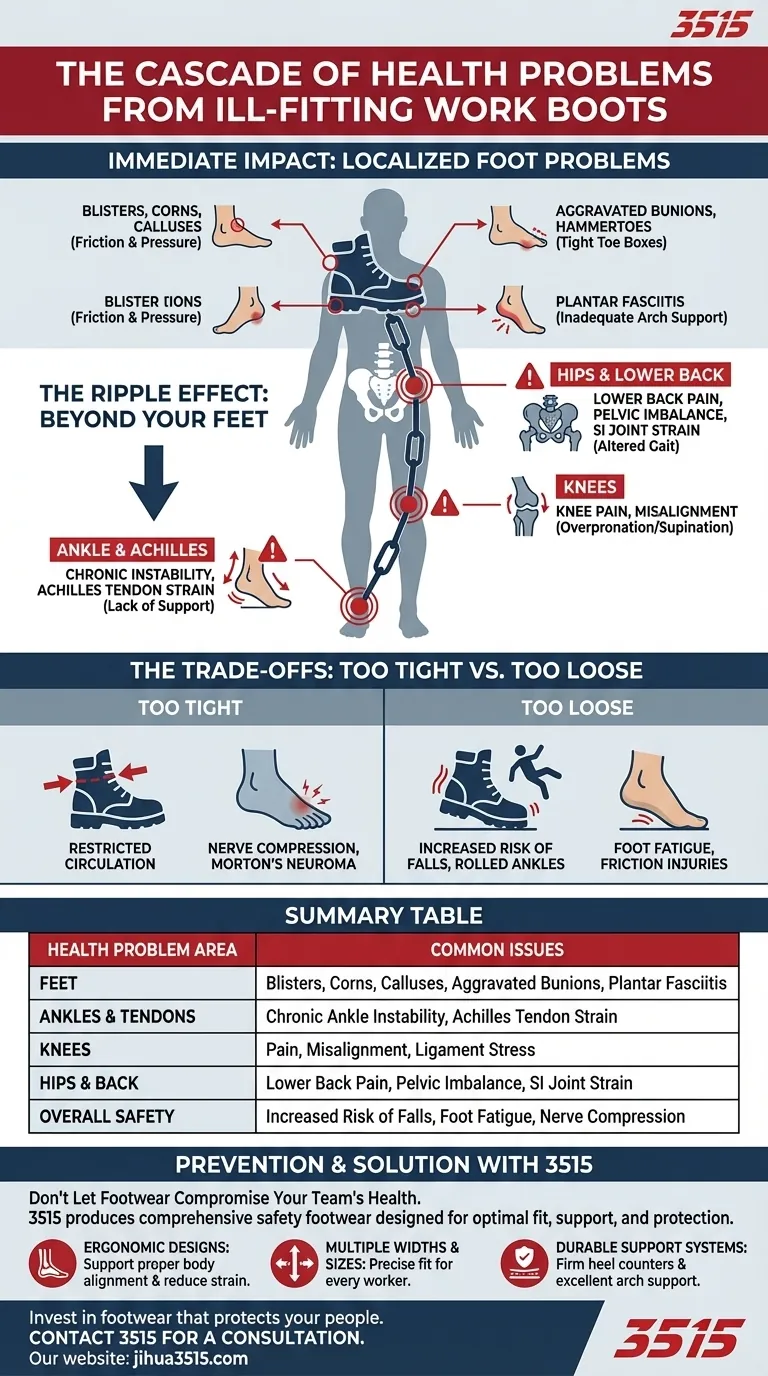
Visual Guide
Related Products
- Durable Leather Work Boots for Wholesale & Custom Manufacturing
- Durable Leather Work Boots for Wholesale & Custom OEM Manufacturing
- Durable Leather Work Boots Wholesale Manufacturer & Custom Factory
- Durable Leather Moc Toe Work Boots for Wholesale & Custom Manufacturing
- Wholesale Durable 6-Inch Work Boots | Custom & Private Label Manufacturer
People Also Ask
- What is the difference between full-grain and top-grain leather? Premium Material Guide for Boot Manufacturers
- What are the common workplace hazards that can be mitigated with the right work boots? Protect Your Workforce
- What are the common foot issues workers face due to uncomfortable work boots? Prevent Pain & Deformities
- What are the advantages of leather versus synthetic work boots? A Guide to Choosing the Right Material
- What are the key components of modern work boots? Engineered for Ultimate Durability and Comfort