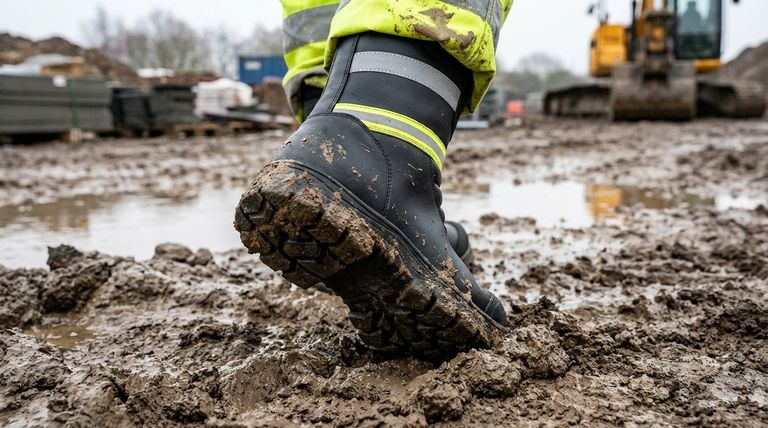
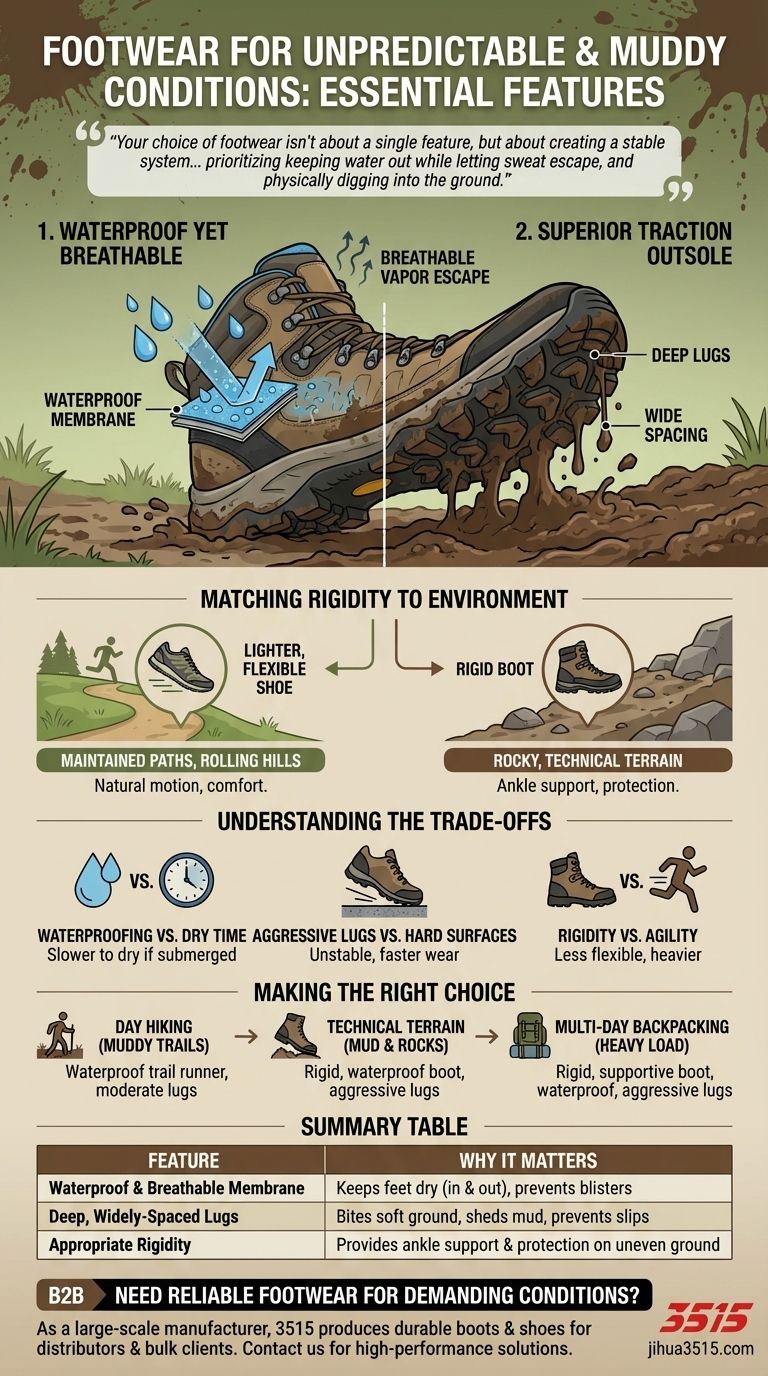
For unpredictable or muddy conditions, the most important footwear features are a waterproof yet breathable membrane combined with an outsole that has deep, widely-spaced lugs for superior traction. These elements work together to keep your feet dry and stable when the ground is soft and unreliable.
Your choice of footwear isn't about a single feature, but about creating a stable system for your foot. In mud, this system must prioritize two things above all: keeping water out while letting sweat escape, and physically digging into the ground to prevent slips.
Deconstructing the Essential Features
To navigate challenging terrain with confidence, you must understand the "why" behind each core feature. The right shoe is more than the sum of its parts; it's a tool designed for a specific environment.
The Critical Role of Waterproofing and Breathability
A waterproof membrane is your first line of defense, preventing external moisture like mud and water from soaking your feet. This is critical for preventing blisters, discomfort, and heat loss.
However, waterproofing alone is not enough. A breathable design allows sweat vapor to escape, which is equally important for keeping your feet dry from the inside and maintaining a stable temperature.
Understanding Traction: It's All in the Lugs
The rubber indentations on your outsole, known as lugs, are the key to grip in soft conditions. Their design directly impacts your stability.
Pay close attention to lug depth. Deeper lugs are non-negotiable for mud as they bite into the soft ground, providing a secure anchor with every step.
Equally important is the lug pattern. Lugs that are spaced farther apart are more effective because they shed mud easily, preventing the outsole from caking up and becoming slick.
Matching Footwear Rigidity to Your Environment
The type of terrain hidden beneath the mud dictates how much stiffness and support you need. A shoe that is perfect for a muddy field may be inadequate for a rocky, wet trail.
When to Choose a Lighter, Flexible Shoe
For maintained paths, grassy terrain, or rolling hills that are muddy, a lighter shoe with a more flexible sole is often suitable. This allows for a more natural foot motion and greater comfort over less demanding ground.
When a Rigid Boot is Non-Negotiable
For hard, rocky, or technically difficult terrain, a rigid boot is essential. The stiffness protects your foot from sharp objects hidden under the mud and provides crucial ankle support on uneven surfaces.
This principle also applies to backpacking. When carrying a heavy load, a rigid shoe or boot that properly supports the foot is paramount to prevent fatigue and injury.
Understanding the Trade-offs
No single shoe is perfect for every condition. Choosing the right footwear involves balancing competing characteristics to best suit your primary activity.
Waterproofing vs. Dry Time
While a waterproof membrane excels at keeping water out, it can significantly increase how long a shoe takes to dry if it does get fully submerged. Non-waterproof shoes, by contrast, will get wet easily but drain and dry much faster.
Aggressive Lugs vs. Hard Surfaces
The deep, soft-rubber lugs that provide incredible grip in mud can feel unstable or wear down very quickly when used on hard surfaces like pavement or rock slabs.
Rigidity vs. Agility
A highly rigid boot offers maximum protection and support, which is critical for carrying heavy loads or traversing rough terrain. However, this comes at the cost of weight and flexibility, making them feel clunky for faster, lighter travel.
Making the Right Choice for Your Goal
Select your footwear based on the most demanding conditions you realistically expect to face.
- If your primary focus is day hiking on muddy but established trails: A waterproof trail runner or a light hiking shoe with moderately deep lugs offers a great balance of protection, comfort, and grip.
- If your primary focus is navigating rocky, technical terrain with mud: A rigid, over-the-ankle waterproof boot with deep, aggressive lugs is necessary for stability and protection.
- If your primary focus is multi-day backpacking: A rigid, supportive boot is your top priority to manage the load, with waterproofing and aggressive lugs being essential secondary features.
Ultimately, choosing the right footwear empowers you to move through challenging environments with safety and confidence.
Summary Table:
| Feature | Why It Matters for Muddy Conditions |
|---|---|
| Waterproof & Breathable Membrane | Keeps external water out while allowing sweat vapor to escape, preventing blisters and discomfort. |
| Deep, Widely-Spaced Lugs | Bites into soft ground and sheds mud effectively to prevent slipping and maintain grip. |
| Appropriate Rigidity | Provides necessary ankle support and protection on rocky or uneven terrain hidden under mud. |
Need reliable footwear for demanding conditions? As a large-scale manufacturer, 3515 produces a comprehensive range of durable boots and shoes for distributors, brand owners, and bulk clients. Our production capabilities encompass all types of footwear designed for superior traction and weather protection. Let us provide the durable, high-performance footwear your customers need. Contact our team today to discuss your requirements!
Visual Guide
Related Products
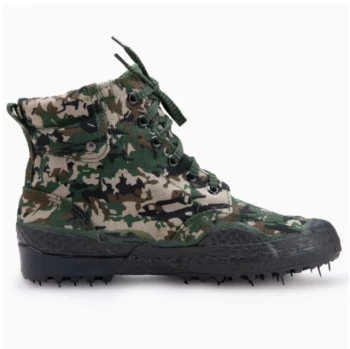
- Durable Spiked Camouflage Boots Wholesale & Factory Production
- Wholesale Lightweight Tactical Boots Custom Manufacturer for Desert & Combat Use
- Durable Mid-Cut Tactical Boots for Wholesale & Private Label
- Wholesale Waterproof Tactical Boots Custom Suede & High-Traction Soles
- Wholesale High-Traction Camo Boots - Custom Manufacturer for Brands
People Also Ask
- How does boot height affect waterproofing? Choose the Right Height for Ultimate Protection
- What are the best types of shoes for different gardening conditions? Find Your Perfect Match.
- What role does camouflage play in hunting boots? It's More Than Just a Pattern
- What should you look for to ensure boots are fully waterproof? The Essential 2-Part System
- How does boot construction affect waterproofing? The Science Behind Truly Dry Feet