
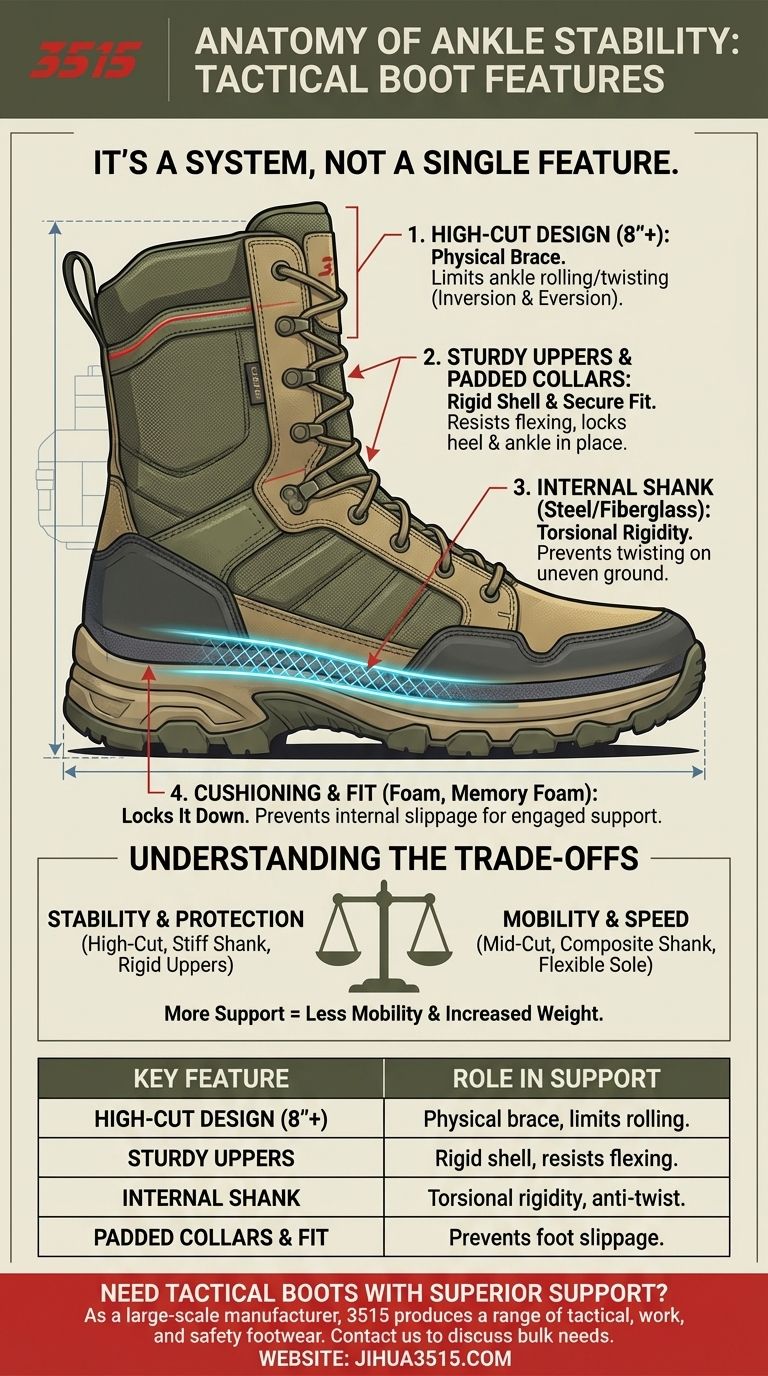
At its core, ankle support in tactical boots comes from a system of features working together. The most critical are a high-cut design that physically braces the joint, sturdy upper materials that resist flexing, and an internal shank that provides structural rigidity from the sole up.
The key takeaway is that true ankle stability isn't about a single feature, but about how the boot's height, material stiffness, and internal sole structure combine to create a supportive exoskeleton for your foot and ankle.
The Anatomy of Ankle Stability
To understand what makes a boot stable, you need to look at its construction as a complete system designed to prevent unwanted movement, especially on unpredictable terrain.
The Foundation: Boot Height and Cut
A high-cut or mid-cut design is the most visible ankle support feature. Boots that are 8 inches or higher extend well past the ankle joint.
This height acts as a physical brace, limiting the ankle's ability to roll or twist outwards or inwards (inversion and eversion sprains), which are the most common ankle injuries.
Structural Integrity: Uppers and Reinforcements
The materials used for the boot's upper are critical. Sturdy uppers, often made from a combination of full-grain leather and durable synthetics, create a rigid shell.
This structure is enhanced by reinforced stitching and padded collars, which not only add to the boot's durability but also help lock the heel and ankle securely in place.
The Hidden Framework: Shanks and Midsoles
Inside the boot, between the insole and the outsole, lies a crucial component: the shank. This is a semi-rigid piece of material, often steel or fiberglass.
The shank provides torsional rigidity, preventing the boot from twisting under the stress of uneven ground or a heavy load. This foundational stability is essential for preventing the foot from shifting in a way that could injure the ankle.
Locking it Down: Cushioning and Fit
No amount of structural support will work if the boot doesn't fit properly. Features like padded collars, foam midsoles, and memory foam insoles do more than provide comfort.
They help fill empty space and conform to your foot, creating a snug, secure fit that prevents your foot from sliding inside the boot. A secure fit ensures that the boot's supportive structures are properly engaged with your ankle.
Understanding the Trade-offs
Selecting a tactical boot involves balancing competing needs. Maximum support is not always the best choice for every situation.
Stability vs. Mobility
There is a direct trade-off between ankle support and ankle flexibility. A very stiff, high-cut boot offers maximum protection against sprains but can limit your natural range of motion, which may feel cumbersome in certain situations.
Weight and Fatigue
Features that add stability—like thick leather, reinforced uppers, and steel shanks—also add weight. Over long distances, the extra energy required to lift heavier boots can contribute to fatigue.
The Risk of a Poor Fit
A boot that is too tight or too loose negates all of its supportive features. An improper fit can cause blisters, hot spots, and joint stress, creating new problems while failing to solve the primary goal of stability.
Making the Right Choice for Your Goal
Your specific mission dictates the level of ankle support you need. Consider your most common activities to determine the right balance of features.
- If your primary focus is carrying heavy loads or navigating rugged, uneven terrain: Prioritize an 8-inch or higher boot with a stiff shank and reinforced leather uppers for maximum stability.
- If your primary focus is agility and movement over mixed terrain: A mid-cut boot with a composite shank offers a good balance between support and flexibility.
- If your primary focus is comfort and speed on mostly flat surfaces: Extreme ankle support may be unnecessary; a lighter boot with good cushioning and a more flexible sole will likely be more comfortable.
Ultimately, the right tactical boot provides a system of support that allows you to move with confidence, regardless of the terrain.
Summary Table:
| Key Feature | Role in Ankle Support |
|---|---|
| High-Cut Design (8"+) | Acts as a physical brace to limit ankle rolling and twisting. |
| Sturdy Uppers (Leather/Synthetics) | Creates a rigid shell that resists flexing and locks the ankle in place. |
| Internal Shank (Steel/Fiberglass) | Provides torsional rigidity, preventing the boot from twisting on uneven ground. |
| Padded Collars & Secure Fit | Fills space to prevent foot slippage, ensuring supportive features are engaged. |
Need tactical boots that deliver superior ankle support and stability?
As a large-scale manufacturer, 3515 produces a comprehensive range of tactical, work, and safety footwear for distributors, brand owners, and bulk clients. Our production capabilities encompass all types of boots, engineered with the precise combination of high-cut designs, durable materials, and internal shanks detailed above to protect your teams on any terrain.
Contact us today to discuss your specific needs and discover how we can provide the durable, supportive footwear your customers require.
Visual Guide
Related Products
- Durable Leather Tactical Boots Wholesale & Custom Manufacturing for Brands
- High-Traction Suede Tactical Boots Wholesale & Custom Manufacturing
- Durable Leather High-Ankle Tactical Boots for Wholesale & Custom Manufacturing
- Durable Mid-Cut Tactical Boots for Wholesale & Private Label
- Wholesale Waterproof Tactical Boots Custom Suede & High-Traction Soles
People Also Ask
- What specialized protections do tactical boots offer? Maximize Endurance with High-Performance Footwear
- What features should law enforcement officers look for in tactical boots? Essential Guide for Safety & Performance
- Importance of Professional Tactical Boots in Loess Gully Regions: Ensure Safety and Precision for Field Monitoring
- What is rucking, and why are tactical boots suitable for it? Discover the Ultimate Footwear for Heavy Loads
- What makes the traction of tactical boots superior? Unlock the Science of Unbeatable Grip















