At the core of any safety shoe's defense against workplace hazards are its protective toe caps. These reinforced components, typically made from steel, alloy, or composite materials, are specifically engineered to withstand significant impact from falling objects and resist crushing forces from heavy equipment, preventing catastrophic foot injuries.
The essential feature for impact and compression protection is the safety toe cap. However, the choice of material—steel, alloy, or composite—involves critical trade-offs in weight, conductivity, and comfort that determine the right shoe for a specific environment.
The Anatomy of Impact Protection: The Safety Toe Cap
The safety toe is the single most important component for shielding your feet from impact and compression. It acts as a rigid, protective shell integrated into the front of the shoe.
The Fundamental Role
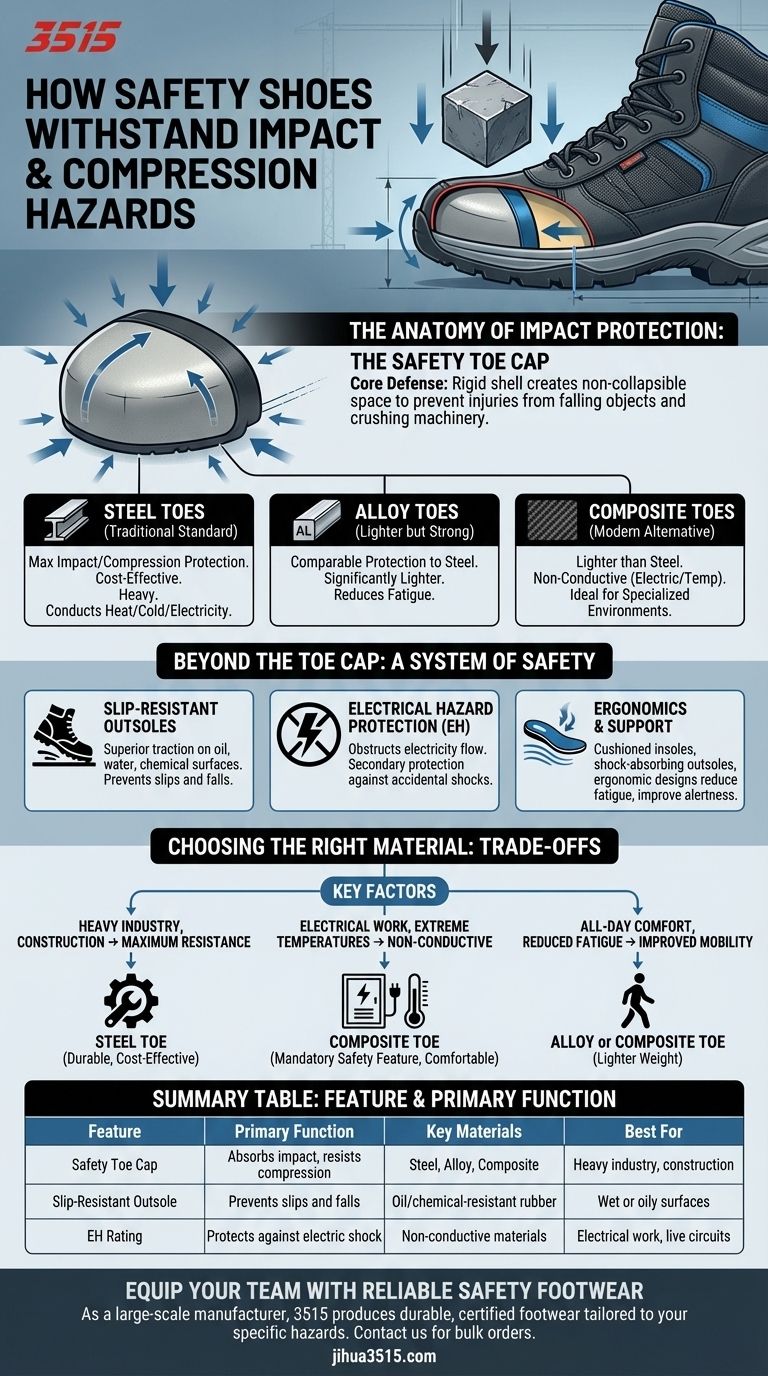
A safety toe is designed to create a non-collapsible space around your toes. When a heavy object falls or a piece of machinery rolls over the foot, this cap distributes the force and prevents the front of the shoe from caving in.
Steel Toes: The Traditional Standard
Steel is the original material for safety toes. It offers an exceptionally high level of protection against impact and compression and is often the most cost-effective option.
Alloy Toes: Lighter but Strong
Materials like aluminum are used to create alloy toes. These provide comparable protection to steel but are significantly lighter, which helps reduce foot fatigue over a long workday.
Composite Toes: The Modern Alternative
Composite toes are made from non-metal materials like thermoplastics, carbon fiber, or Kevlar. They are much lighter than steel and do not conduct electricity or heat, making them ideal for certain specialized environments.
Beyond the Toe Cap: A System of Safety
While the toe cap handles direct impact, a truly effective safety shoe incorporates other features that contribute to overall protection and prevent accidents in the first place.
Slip-Resistant Outsoles
The sole of a safety shoe is critical. Durable outsoles made from materials resistant to oil, water, and chemicals provide superior traction, which is crucial for preventing slips and falls on hazardous surfaces.
Electrical Hazard Protection
Many safety shoes are rated for Electrical Hazard (EH) protection. This means their construction and materials are designed to obstruct the flow of electricity, offering a secondary source of protection against accidental shocks.
Ergonomics and Support
Safety is also about endurance. Cushioned insoles, shock-absorbing outsoles, and ergonomic designs ensure comfort during long hours. A comfortable worker is less fatigued and therefore more alert and less prone to accidents.
Understanding the Trade-offs
Choosing the right safety toe material is not just about protection; it's about balancing key factors specific to your job.
Weight vs. Fatigue
Steel is the heaviest option, which can lead to greater fatigue by the end of a shift. Lighter composite and alloy toes can make a noticeable difference in all-day comfort and mobility.
Conductivity and Environment
If you work around live electrical circuits, a non-metallic composite toe is a mandatory safety feature. Likewise, because steel readily conducts temperature, composite toes are far more comfortable in extremely hot or cold conditions.
Bulk and Fit
To achieve the same safety rating as steel, a composite toe cap may need to be slightly thicker or bulkier. This can sometimes affect the overall profile and fit of the shoe, making it important to try them on.
Making the Right Choice for Your Workplace
Your specific hazard environment and daily tasks should dictate your choice of safety footwear.
- If your primary focus is maximum impact resistance in heavy industry: A steel toe shoe often provides the highest level of protection and is a durable, cost-effective choice.
- If your primary focus is working around electricity or in extreme temperatures: A non-conductive composite toe is the essential choice for your safety and comfort.
- If your primary focus is all-day comfort and reducing fatigue: Lighter-weight alloy or composite toes can significantly decrease strain and improve mobility.
Choosing the right safety shoe is about matching its specific protective technology to the precise risks of your job.
Summary Table:
| Feature | Primary Function | Key Materials | Best For |
|---|---|---|---|
| Safety Toe Cap | Absorbs impact, resists compression | Steel, Alloy, Composite | Heavy industry, construction |
| Slip-Resistant Outsole | Prevents slips and falls | Oil/chemical-resistant rubber | Wet or oily surfaces |
| Electrical Hazard (EH) Rating | Protects against electric shock | Non-conductive materials | Electrical work, live circuits |
Need to equip your team with reliable safety footwear? As a large-scale manufacturer, 3515 produces a comprehensive range of safety shoes and boots for distributors, brand owners, and bulk clients. Our production capabilities ensure you get durable, certified footwear tailored to your specific workplace hazards—from steel and composite toes to EH-rated designs. Contact us today to discuss your bulk order requirements and protect your workforce with quality you can trust.
Visual Guide
Related Products
- Premium Suede Sport Safety Shoes for Wholesale & Bulk Orders
- Premium Lightweight Safety Shoes for Wholesale & Bulk Orders
- Wholesale Anti-Smash & Puncture-Proof Safety Shoes Custom Manufacturing for Brands
- Premium KPU Injection Athletic Style Safety Shoes
- Premium Safety Shoes with Rotating Buckle Safety Sneakers
People Also Ask
- What industries have specific OSHA footwear requirements? Ensure Compliance & Protect Your Workforce
- What are the primary functions of professional safety shoes? Maximize Safety in Water Supply Confined Spaces
- What role do specialized safety shoes play in preventing falls? Engineering Stability in Industrial Environments
- Why wear protective masks, gloves, and safety shoes in 5S Shine? Elevate Safety and Discipline
- How do gait analysis algorithms ensure accuracy in footwear? Master Step Length Precision for Boots & Sneakers