
For extended outdoor use, the comfort of a Wellington boot is determined by sophisticated features engineered directly into its foundation. The most critical of these are a multi-density rubber sole and an integrated shock-absorbing cushion, which work together to reduce fatigue and provide stable support for hours of continuous wear.
True all-day comfort in a Wellington boot comes from a sophisticated sole system that manages impact, provides stability, and supports the natural movement of your foot, transforming it from basic protection into high-performance gear.
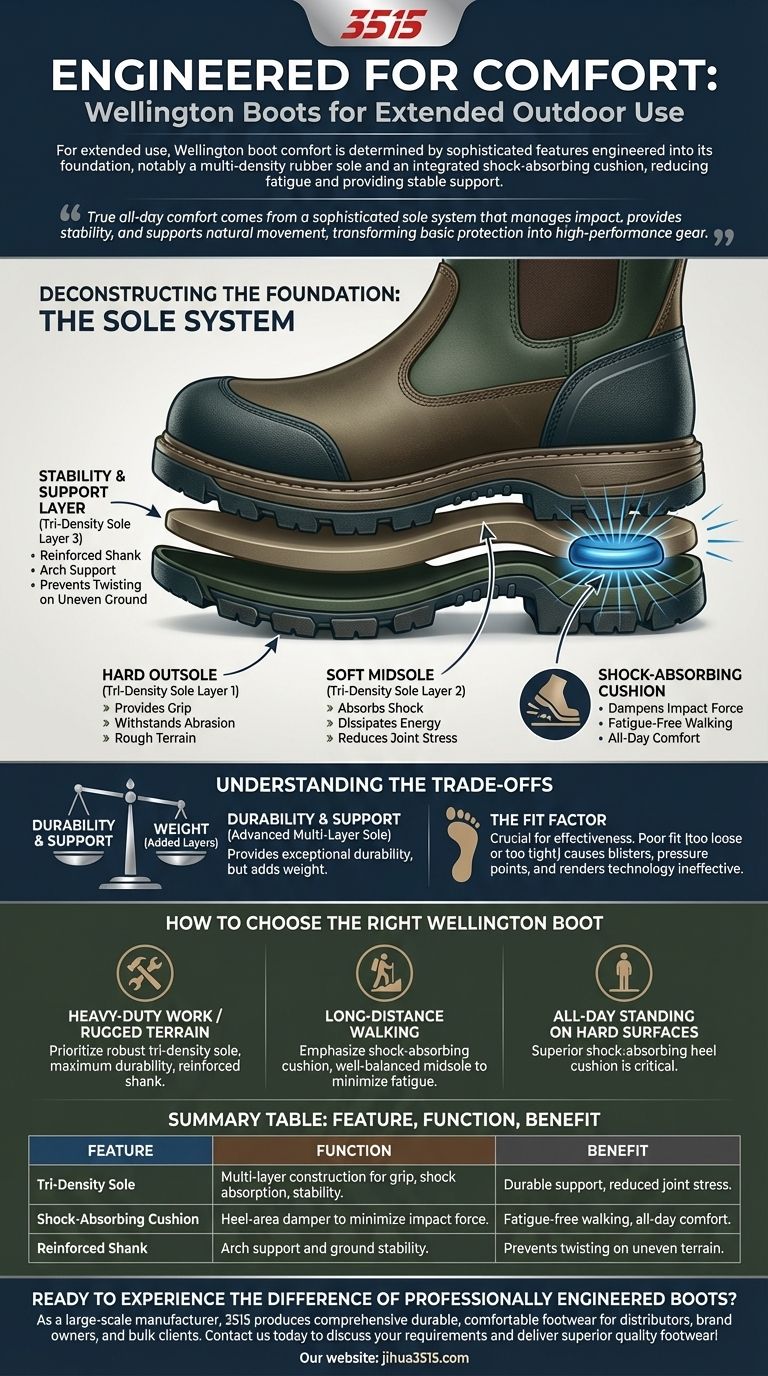
Deconstructing the Foundation: The Sole System
A Wellington boot's comfort for extended use isn't about softness alone; it's about engineered support. The sole is the most important component, acting as the interface between your body and the ground.
The Role of a Tri-Density Sole
A tri-density rubber sole is a layered system where each layer serves a distinct purpose. This multi-part construction provides a blend of durability, stability, and comfort that a single layer of rubber cannot.
The first layer, the outsole, is made of hard, high-resistance rubber. Its primary job is to provide grip and withstand abrasion from rough terrain.
The second layer, the midsole, is typically a softer, lower-density material. This layer is crucial for absorbing the shock of each step, dissipating energy that would otherwise travel up your joints.
The third layer, closest to your foot, is designed for stability and support. It often features a reinforced shank to support your arch and prevent the boot from twisting on uneven ground.
The Science of Shock Absorption
Every step you take sends an impact force through your foot, ankle, knee, and hip. Over thousands of steps, this repetitive stress is a primary cause of fatigue and discomfort.
A dedicated shock-absorbing cushion, often integrated into the heel area of the midsole, acts as a damper. It compresses upon impact to absorb the initial jolt, providing a noticeably smoother and less taxing walking experience.
This feature is what enables fatigue-free walking. By minimizing the cumulative impact on your body, the boot allows you to stay on your feet longer without the associated aches and pains.
Understanding the Trade-offs
Choosing a boot with advanced comfort features involves balancing competing factors. Understanding these compromises is key to selecting the right tool for the job.
Durability vs. Weight
Advanced, multi-layered sole systems provide exceptional durability and support. However, these additional layers of high-density rubber inevitably add weight to the boot.
For some users, this extra weight can contribute to a different kind of fatigue over very long distances, even if impact absorption is excellent.
The Fit Factor
No amount of technology can compensate for a poor fit. A boot that is too loose will cause your foot to slide, leading to blisters, while a boot that is too tight will create pressure points and restrict circulation.
The most technically advanced features are rendered ineffective if the boot does not match the unique shape of your foot, including your arch height and foot width.
How to Choose the Right Wellington Boot
Your ideal boot depends entirely on the demands of your specific activity. Use the intended application to guide your decision.
- If your primary focus is heavy-duty work or rugged terrain: Prioritize a robust tri-density sole with maximum durability and a reinforced shank for stability.
- If your primary focus is long-distance walking: Look for a boot that emphasizes its shock-absorbing cushion and a well-balanced midsole to minimize fatigue from repetitive impact.
- If your primary focus is all-day standing on hard surfaces: A superior shock-absorbing heel cushion is the most critical feature to look for.
By understanding the technology under your feet, you can select a boot that actively supports your activity instead of one you simply have to endure.
Summary Table:
| Feature | Function | Benefit |
|---|---|---|
| Tri-Density Sole | Multi-layer construction for grip, shock absorption, and stability. | Durable support and reduced joint stress. |
| Shock-Absorbing Cushion | Heel-area damper to minimize impact force. | Fatigue-free walking and all-day comfort. |
| Reinforced Shank | Arch support and ground stability. | Prevents twisting on uneven terrain. |
Ready to experience the difference of professionally engineered Wellington boots?
As a large-scale manufacturer, 3515 produces a comprehensive range of durable, comfortable footwear for distributors, brand owners, and bulk clients. Our production capabilities encompass all types of boots designed for extended outdoor use, ensuring your customers get the support and comfort they need.
Contact us today to discuss your specific requirements and let us help you deliver superior quality footwear!
Visual Guide
Related Products
- Durable Waterproof Rain Boots | Custom Manufacturer for Wholesale & Brands
- Durable Goodyear Welt Leather Work Boots for Wholesale & Private Label
- Wholesale Durable Leather Work Boots | 8-Inch Goodyear Welt Manufacturer
- High-Traction Suede Tactical Boots Wholesale & Custom Manufacturing
- Premium Wholesale Tactical Style Safety Shoes Boots with Quick Lacing
People Also Ask
- What are the main materials for waterproof rain boots? Choose the Right Material for Durability & Comfort
- What is the overall recommendation for choosing rain boot materials? A Guide to Rubber vs. PVC
- How does boot height affect waterproofing? Choose the Right Height for Ultimate Protection
- Why are rain boots more flexible and comfortable than snow boots? The Key Differences Explained
- What are the best types of shoes for different gardening conditions? Find Your Perfect Match.



















