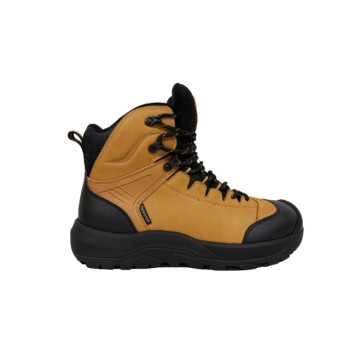
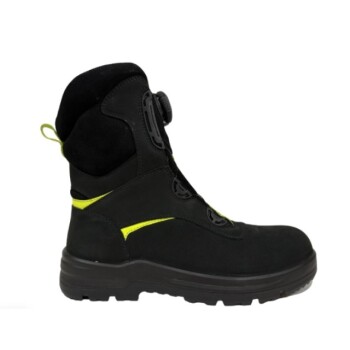
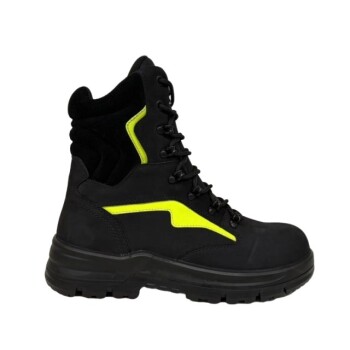
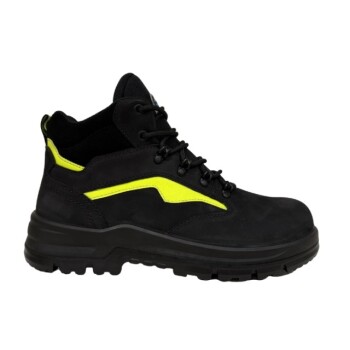
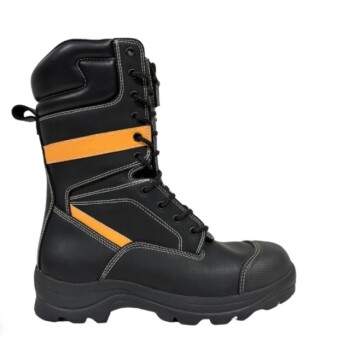
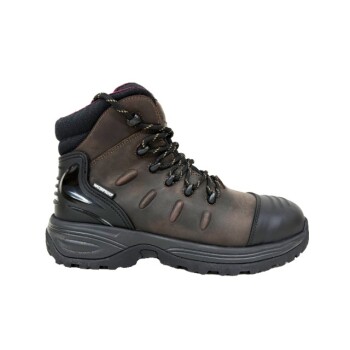
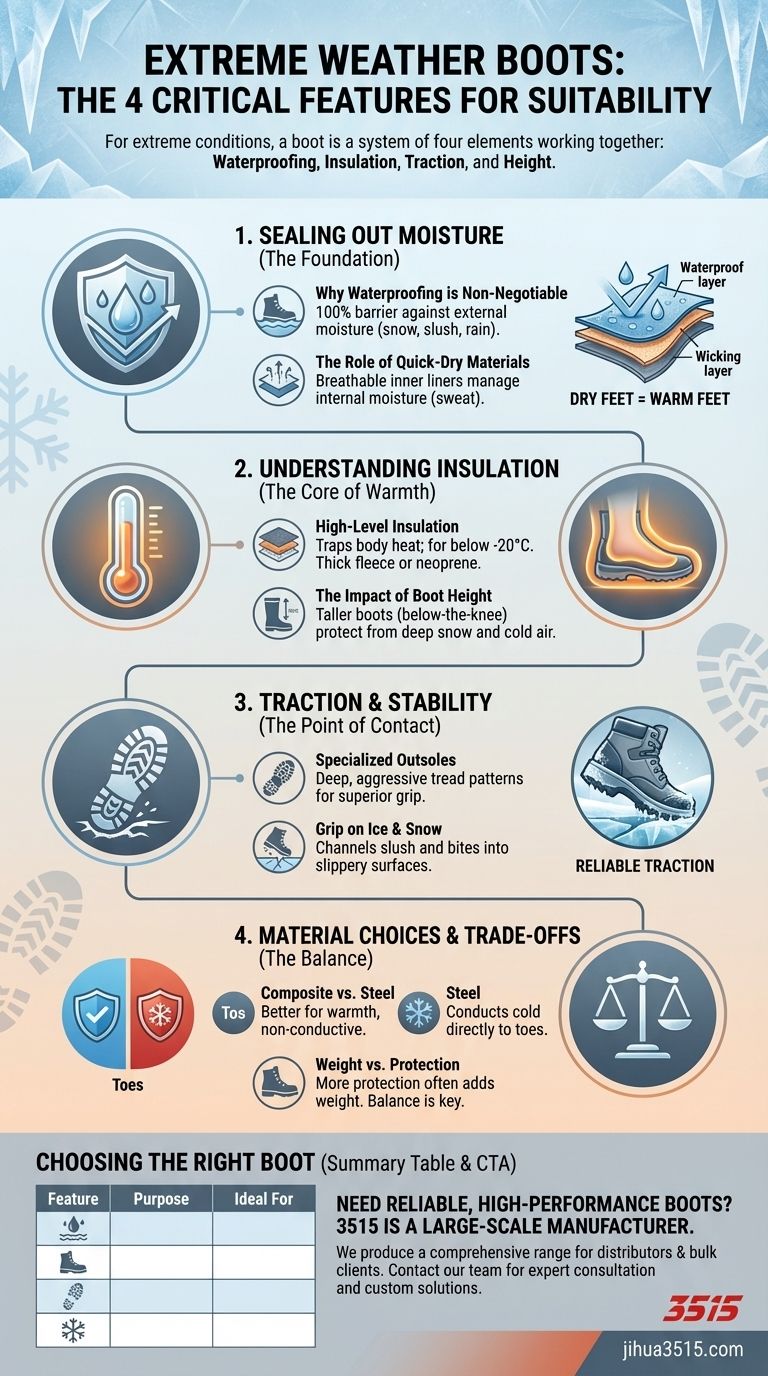
To be suitable for extreme weather, a boot must combine four critical features: a completely waterproof barrier to keep feet dry, a high level of thermal insulation to maintain warmth, a specialized outsole with deep treads for superior traction on ice and snow, and sufficient height to protect against deep snow and cold air. The effectiveness of the boot depends on how well these elements work together.
The challenge of extreme weather footwear isn't just about adding more material; it's about creating a system. A truly effective boot balances total moisture protection with thermal regulation and critical ground grip, recognizing that failure in any one of these areas compromises your safety.
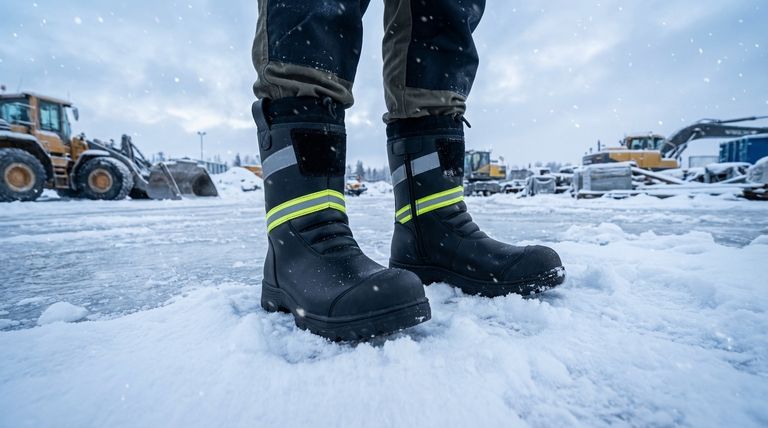
The Foundation: Sealing Out Moisture
Your first line of defense against the cold is staying dry. Wet feet lose heat exponentially faster than dry feet, creating a significant risk for conditions like trench foot and frostbite.
Why Waterproofing is Non-Negotiable
Waterproof construction is designed to completely prevent the penetration of external moisture from snow, slush, or rain. Materials and construction methods that create a 100% waterproof barrier are essential, not just optional "water-resistant" treatments.
The Role of Quick-Dry Materials
Even with a waterproof exterior, your feet can get wet from sweat. High-performance boots often incorporate materials that are not only waterproof but also breathable or have quick-dry properties to help manage internal moisture and prevent discomfort.
The Core of Warmth: Understanding Insulation
Insulation works by trapping a layer of air, which your body then warms. This thermal barrier slows the rate at which heat escapes, keeping your feet warm even in freezing temperatures.
Types and Levels of Insulation
For extreme cold (below -20°C), boots require a high level of insulation throughout the lining. This can be achieved with materials like thick fleece linings or advanced synthetics like neoprene, which provide significant thermal protection without excessive bulk.
The Impact of Boot Height
Taller boots, such as below-the-knee lace-ups or tall snow boots, offer enhanced warmth. Their height provides more coverage, protecting a larger area of your lower leg from exposure and preventing snow from getting inside the boot.
The Point of Contact: Traction and Stability
In icy and snowy conditions, maintaining your footing is a primary safety concern. The design of the boot's outsole is just as critical as its insulation.
Outsole Design for Grip
Boots designed for extreme weather feature specialized outsoles with deep, aggressive tread patterns. These designs function like winter tires, channeling away slush and biting into ice and packed snow to provide reliable traction and prevent slips.
Understanding the Trade-offs: Material Choices Matter
The materials used in a boot's construction have a significant impact on its performance in extreme temperatures, especially when safety features are involved.
Composite vs. Steel Toes
For safety boots, the choice of toe cap material is crucial. Steel is a highly conductive material, meaning it transfers cold directly to your toes. Composite materials, in contrast, do not conduct cold efficiently, making them a far superior choice for maintaining warmth in insulated boots.
Weight vs. Protection
Building a boot for extreme conditions often involves a trade-off between protection and weight. Features like thick insulation, tall shafts, and rugged outsoles add significant protection but also increase the boot's overall weight and can reduce flexibility.
Choosing the Right Boot for Your Conditions
Your specific environment dictates which features you should prioritize. Use your primary challenge as the guide for your selection.
- If your primary focus is extreme cold (below -20°C): Prioritize boots with the highest level of thermal insulation, a below-the-knee height, and composite safety toes if required.
- If your primary focus is wet, slushy, and icy conditions: Ensure the boot is 100% waterproof and features an outsole with a deep, aggressive tread pattern designed for slippery surfaces.
- If your primary focus is active work in variable winter weather: Look for a balanced boot that combines moderate insulation, reliable waterproofing, and lightweight, breathable materials to manage sweat.
Ultimately, selecting the right boot is about matching its specific design features to the precise hazards of your environment.
Summary Table:
| Key Feature | Purpose | Ideal For |
|---|---|---|
| Waterproof Barrier | Keeps feet dry from external moisture | Wet, slushy conditions |
| High-Level Insulation | Traps body heat to maintain warmth | Extreme cold (below -20°C) |
| Deep-Tread Outsole | Provides superior grip on ice and snow | Icy, slippery surfaces |
| Sufficient Height | Protects against deep snow and cold air | All extreme weather scenarios |
Need reliable, high-performance boots for extreme conditions?
As a large-scale manufacturer, 3515 produces a comprehensive range of insulated and waterproof footwear for distributors, brand owners, and bulk clients. Our production capabilities encompass all types of safety and occupational boots designed to meet the highest standards of protection, warmth, and durability.
Let us help you equip your workforce or customer base with footwear that stands up to the toughest environments. Contact our team today for expert consultation and custom manufacturing solutions.
Visual Guide
Related Products
- Premium Insulated Safety Boots and Shoes for Wholesale & Bulk Orders
- Premium Wholesale Waterproof Safety Boots High Performance Protection for Industrial Markets
- High Performance Fire-Retardant Waterproof Safety Boots
- Durable Waterproof Rain Boots | Custom Manufacturer for Wholesale & Brands
- Premium Waterproof High-Cut Industrial Safety Boots for Wholesale and Bulk Orders
People Also Ask
- What are the recommended insulation ratings for mild winter conditions? A Guide for Active & Stationary Workers
- How does insulation thickness correlate with temperature ranges? A Guide to Choosing the Right Warmth
- What insulation level is needed for severe cold and stationary work? 1200g or Higher is Essential
- What safety advantages do insulated boots offer beyond warmth? Dielectric Protection & Superior Grip
- How does fleece lining contribute to the warmth of insulated boots? Trapping Air for Superior Cold Protection