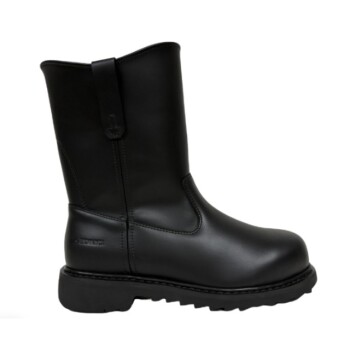
The ideal backpacking boot is a specialized tool engineered for a single purpose: to carry you and a heavy pack safely over challenging terrain for multiple days. The best boots are defined by a high cut for ankle support, a stiff midsole for stability under load, durable and waterproof materials, and an outsole with aggressive traction.
A backpacking boot's primary job is not just to protect your feet, but to function as a suspension and support system for your entire body. Its key features—stiffness, support, and durability—are engineered to manage the added stress of a heavy pack over long distances.
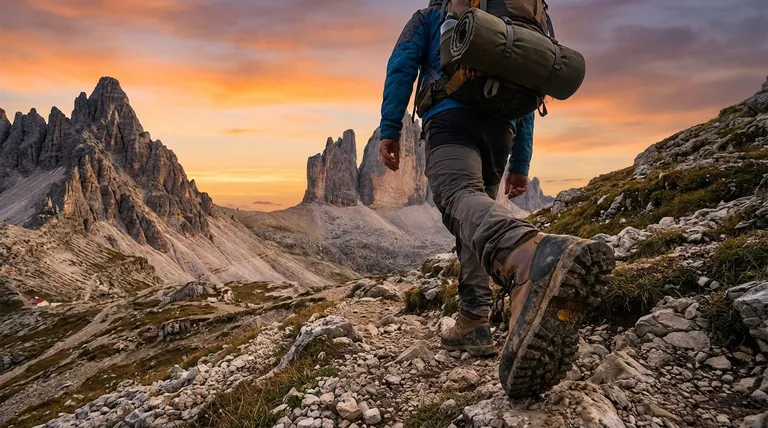
The Foundation: Stability for Heavy Loads
When you're carrying a heavy backpack, your center of gravity is higher and your joints are under significantly more stress. The boot's core structure is designed to counteract this, creating a stable platform for every step.
The High-Cut Collar for Ankle Support
A high cut that wraps above the ankle is a hallmark of a true backpacking boot. This design helps prevent ankle twists and sprains, which are far more likely when carrying a heavy load on uneven ground.
The Stiff Midsole's Role
The midsole is the layer between the outsole and your foot. In backpacking boots, it is intentionally stiff. This stiffness prevents your foot from flexing over every rock and root, reducing foot fatigue over long days.
Think of it as the chassis of a truck—it's built to bear weight and distribute it evenly, protecting your joints from the constant impact.
The Outsole for Superior Traction
The outsole, or the part of the boot that contacts the ground, must provide reliable grip. A good backpacking boot features deep, aggressive lugs made from durable rubber compounds to ensure traction on surfaces ranging from slick mud to loose rock.
The Armor: Durability and Protection
Backpacking boots are built to withstand the abuse of multi-day trips in the backcountry. Their materials and construction are chosen for long-term protection against both the elements and the terrain.
Upper Materials: Leather vs. Synthetics
The boot's upper protects your foot from rocks, water, and debris. Full-grain leather is the classic choice, offering exceptional durability, water resistance, and protection.
Many modern boots use a combination of leather and synthetic fabric panels. This hybrid approach reduces weight and break-in time while still providing durability in high-wear areas.
Waterproofing is Non-Negotiable
Keeping your feet dry is crucial for preventing blisters and maintaining comfort on the trail. Most backpacking boots feature a waterproof, breathable membrane (like Gore-Tex) to block external moisture while allowing some sweat to escape.
Keeping Debris Out
Small rocks and dirt inside your boot can quickly lead to painful hot spots. Features like a gusseted tongue (a tongue attached to the uppers on both sides) and a snug collar create a seal to keep debris out.
Understanding the Trade-offs
Choosing the right boot means understanding its inherent compromises. No single boot is perfect for every situation.
Weight vs. Support
The robust materials and stiff soles that provide critical support also add weight. A heavier boot offers more protection and stability but requires more energy to lift with every single step you take.
Stiffness vs. Comfort
While essential for carrying a load, a stiff boot can feel clumsy on flat, easy trails and almost always requires a break-in period. They are less comfortable "out of the box" than more flexible hiking shoes.
Waterproofing vs. Breathability
A waterproof membrane is a barrier. While designed to be breathable, it will never be as airy as a non-waterproof boot. In hot, dry climates, this can lead to sweaty feet, which can also cause blisters.
Making the Right Choice for Your Goal
Select a boot based on the weight you'll carry and the terrain you'll face.
- If your primary focus is carrying heavy loads (40+ lbs) or traversing rugged, off-trail terrain: Prioritize a high-cut boot with a very stiff midsole and durable leather uppers for maximum support.
- If your primary focus is multi-day trips with moderate loads (25-40 lbs) on established trails: A mid-weight boot with a leather/synthetic upper provides an excellent balance of support, weight, and comfort.
- If your primary focus is hiking in primarily hot, dry conditions: Consider boots that emphasize breathability, potentially with non-waterproof options, to keep your feet cool and dry from the inside out.
Investing in the right boot is the foundation of a safer, more comfortable backcountry experience.
Summary Table:
| Key Feature | Purpose |
|---|---|
| High-Cut Collar | Prevents ankle twists and sprains under heavy loads |
| Stiff Midsole | Reduces foot fatigue and provides stability on uneven terrain |
| Durable Upper (Leather/Synthetic) | Protects against rocks, water, and debris |
| Aggressive Outsole | Ensures reliable traction on mud, rock, and loose surfaces |
| Waterproof Membrane | Keeps feet dry and prevents blisters in wet conditions |
Ready to equip your customers with the best backpacking boots? As a large-scale manufacturer, 3515 produces a comprehensive range of durable, high-performance footwear for distributors, brand owners, and bulk clients. Our production capabilities encompass all types of boots, including specialized backpacking models designed for heavy loads and rugged terrain. Let us help you deliver reliable, comfortable footwear that enhances your customers' outdoor experiences. Contact us today to discuss your manufacturing needs!
Visual Guide

Related Products
- Durable Rubber Sole Outdoor Shoes Wholesale & Custom Manufacturing
- Wholesale High-Traction Camo Boots - Custom Manufacturer for Brands
- Wholesale Lightweight Tactical Boots Custom Manufacturer for Desert & Combat Use
- Wholesale Waterproof Tactical Boots Custom Suede & High-Traction Soles
- High Performance Fire-Retardant Waterproof Safety Boots
People Also Ask
- What is the function of the sole in outdoor shoes? Find the Perfect Grip and Support
- What role do outdoor shoes and sneakers play in navigating external terrains? Engineered Stability for Every Surface
- How is AI utilized in the design of outdoor and safety footwear? Harnessing Big Data for Market-Driven Shoe Innovation
- Why is durability important when selecting outdoor shoes? A Guide to Safety & Long-Term Value
- What are the key components of outdoor shoes that affect comfort and sturdiness? A Guide to Durable, High-Performance Footwear