
Choosing the right horse riding boots is a critical decision that directly impacts your safety, comfort, and effectiveness in the saddle. The most important factors to consider are your primary riding discipline, the fit of the boot, the material it's made from, and the design of its sole and heel.
Your riding boot is not just footwear; it is a specialized piece of equipment designed for communication with your horse and for your protection. The ideal boot aligns perfectly with your specific riding style while ensuring a secure and comfortable fit.
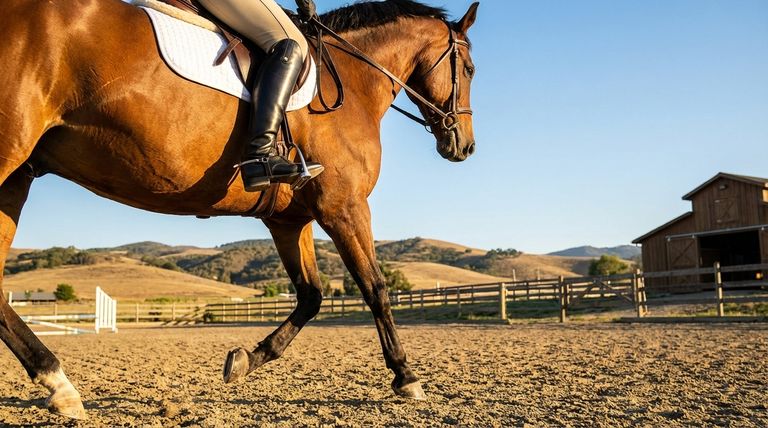
The Foundation: Aligning Boots with Your Riding Discipline
The single most important factor in your choice is the type of riding you do. Boots are highly specialized tools designed for different equestrian sports.
For English Riders: Tall Boots and Paddock Boots
English riding disciplines, like dressage and jumping, have specific requirements. The most common choice is a tall boot that reaches just below the knee, providing a stable leg position and a clean look.
Alternatively, many riders start with paddock boots, which are ankle-height. For proper leg protection and grip, these must be paired with half-chaps, which are leather or synthetic coverings that zip up the calf.
For Dressage and Show Jumping
Dressage boots are very stiff to encourage a long, still leg for precise communication. In contrast, show jumping boots have more flexible ankles and often feature laces ("field boots") to allow for a shorter stirrup length and more movement.
For Western Riders: A Different Functionality
Western riding boots are designed for a different saddle and riding style. They typically have a higher, angled heel (Cuban heel) to prevent the foot from slipping through a wider Western stirrup and a taller shaft to protect from brush.
Deconstructing the Boot: Core Components to Scrutinize
Once you know the style you need, you must examine the specific features of the boot itself.
The Critical Importance of a Perfect Fit
Your boot should feel snug through the calf and ankle without pinching or cutting off circulation. A boot that is too loose will rub and prevent clear communication, while one that is too tight is painful and unsafe.
Material Matters: Leather vs. Synthetic
Leather is the traditional choice for its durability, breathability, and ability to mold to your leg over time. It offers superior performance but requires regular care and a larger initial investment.
Synthetic materials are often more affordable, waterproof, and easier to clean. While they may not offer the same longevity or custom fit as leather, modern synthetics are an excellent option for beginners or those riding in wet conditions.
The Sole: Your Connection and Safety Net
The sole is arguably the most important safety feature. It must have a heel of at least 1 to 1.5 inches to prevent your foot from accidentally sliding all the way through the stirrup, which is a major cause of serious accidents.
The tread should be minimal or smooth. A deep, heavy tread found on hiking boots can get dangerously wedged in the stirrup during a fall.
Understanding the Trade-offs
There is no single "best" boot. Every choice involves balancing competing priorities.
Comfort vs. Performance
A highly specialized boot, like a stiff dressage boot, offers maximum performance but can be uncomfortable for walking. A more versatile paddock boot is excellent for work around the barn but offers less support in the saddle than a tall boot.
Durability vs. Budget
High-quality leather boots are a significant investment but can last for many years with proper care. Synthetic boots are more budget-friendly but will likely need to be replaced sooner and may not provide the same level of performance.
Specialization vs. Versatility
Owning a boot specifically for your discipline will always yield the best results. However, a beginner or casual rider may find a more versatile option, like a paddock boot and half-chap combination, to be more practical and economical.
Making the Right Choice for Your Goal
Select your boots based on a clear understanding of your needs and priorities.
- If your primary focus is competitive English riding: A dedicated pair of tall leather boots specific to your discipline (dressage or jumping) is the correct choice.
- If your primary focus is lessons and casual riding: A quality pair of paddock boots paired with well-fitting half-chaps offers the best combination of versatility and value.
- If your primary focus is barn work with some riding: Look for a durable, waterproof paddock boot with a sole designed for both walking traction and stirrup safety.
Investing in the right pair of boots is an investment in your safety, your skill, and your partnership with your horse.
Summary Table:
| Factor | Key Considerations | Best For |
|---|---|---|
| Riding Discipline | English (Tall Boots/Paddock Boots), Western (Cuban Heel) | Discipline-specific performance |
| Fit | Snug through calf and ankle, no pinching | Clear communication and safety |
| Material | Leather (durable, molds to leg) vs. Synthetic (affordable, waterproof) | Longevity vs. budget and conditions |
| Sole & Heel | 1-1.5 inch heel, minimal tread | Prevents stirrup accidents |
| Comfort vs. Performance | Stiff boots for performance, flexible for versatility | Competitive riders vs. casual riders |
Ready to equip yourself with the perfect riding boots?
As a large-scale manufacturer, 3515 produces a comprehensive range of equestrian footwear for distributors, brand owners, and bulk clients. Our production capabilities encompass all types of riding boots—from specialized English tall boots and durable paddock boots to authentic Western styles—ensuring superior safety, comfort, and performance for every discipline.
We help you provide your customers with boots that enhance their riding experience and protect their investment. Contact us today to discuss your specific needs and discover how we can support your business with high-quality, reliable footwear solutions.
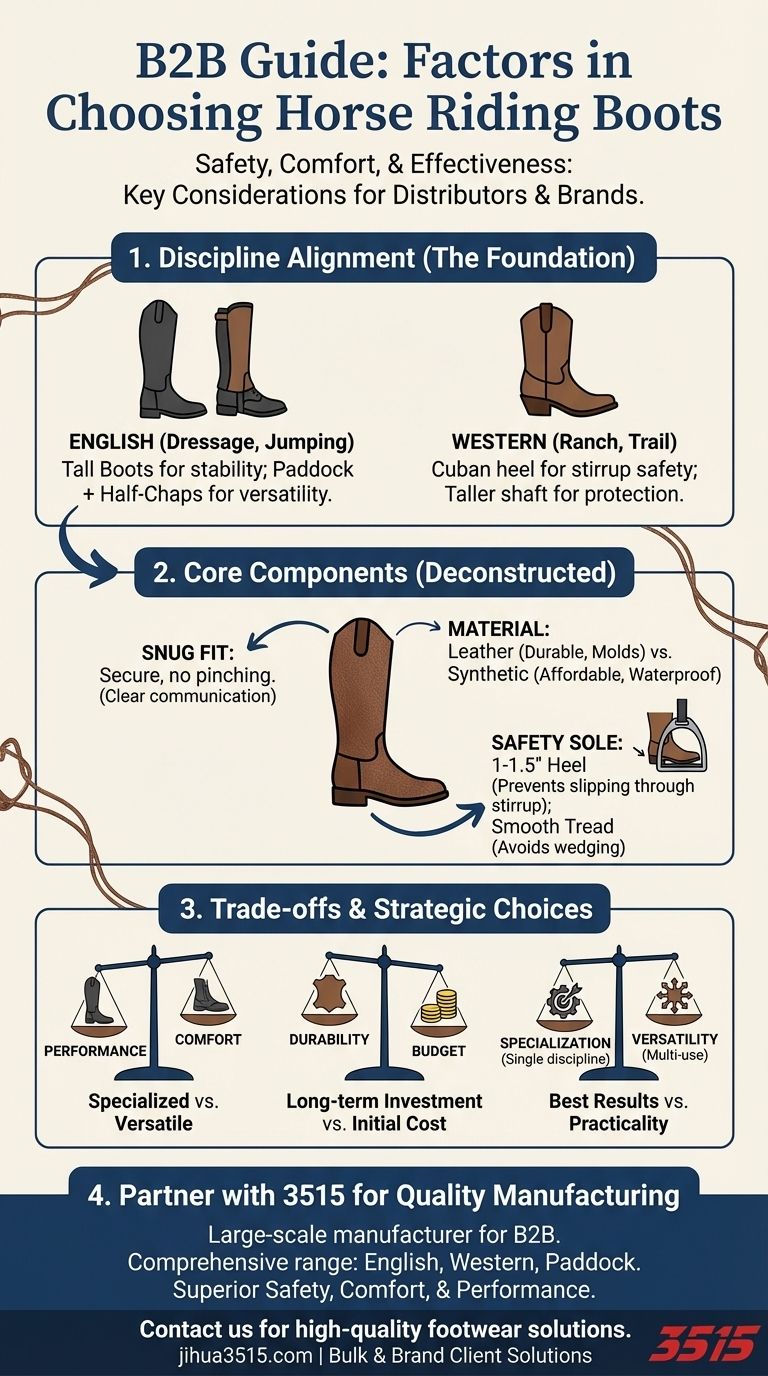
Visual Guide
Related Products
- Wholesale Tactical Boots High-Traction & Reflective for Bulk & Brand Orders
- Durable Goodyear Welt Leather Work Boots for Wholesale & Private Label
- Wholesale High-Traction Camo Boots - Custom Manufacturer for Brands
- Durable Leather High-Ankle Tactical Boots for Wholesale & Custom Manufacturing
- Durable Leather Tactical Boots Wholesale & Custom Manufacturing for Brands
People Also Ask
- How do tactical boots protect against injuries? Discover the Integrated Safety System
- What features should law enforcement officers look for in tactical boots? Essential Guide for Safety & Performance
- Are tactical boots suitable for hiking? Discover the Ultimate Footwear for Rugged Trails
- How is the compatibility of polymer materials demonstrated in smart footwear? Enhancing Tactical & Training Performance
- What boots do navy SEALs run in? Discover the Mission-Driven Footwear Philosophy



















