The decision between Goodyear welted and cemented shoes hinges on a clear trade-off between long-term value and upfront cost. Your choice will be guided by four primary factors: desired longevity, budget, comfort preferences, and specific style requirements. Goodyear welted shoes are built for durability and can be resoled multiple times, while cemented shoes offer initial affordability and greater design flexibility.
Choosing between these construction methods is less about which is "better" and more about aligning the shoe's purpose with your personal priorities. It is a decision between a long-term, repairable investment and a flexible, cost-effective option for more immediate use.
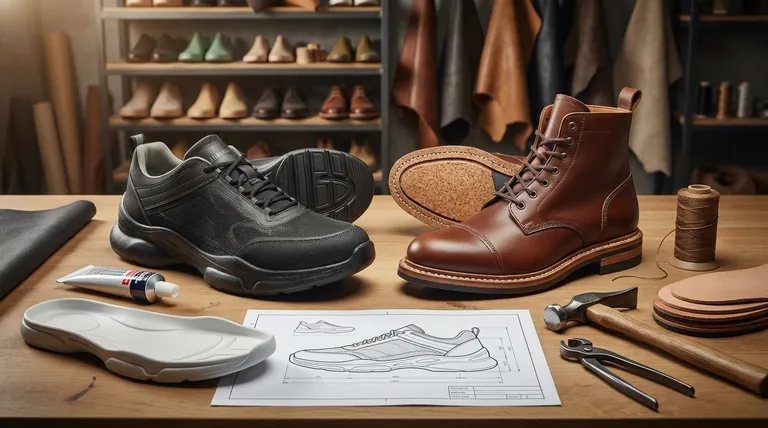
How Construction Dictates Performance
The fundamental difference between these shoes lies in how the sole is attached to the upper part of the shoe. This single distinction creates a cascade of effects on durability, comfort, and cost.
The Goodyear Welt: Built for Longevity
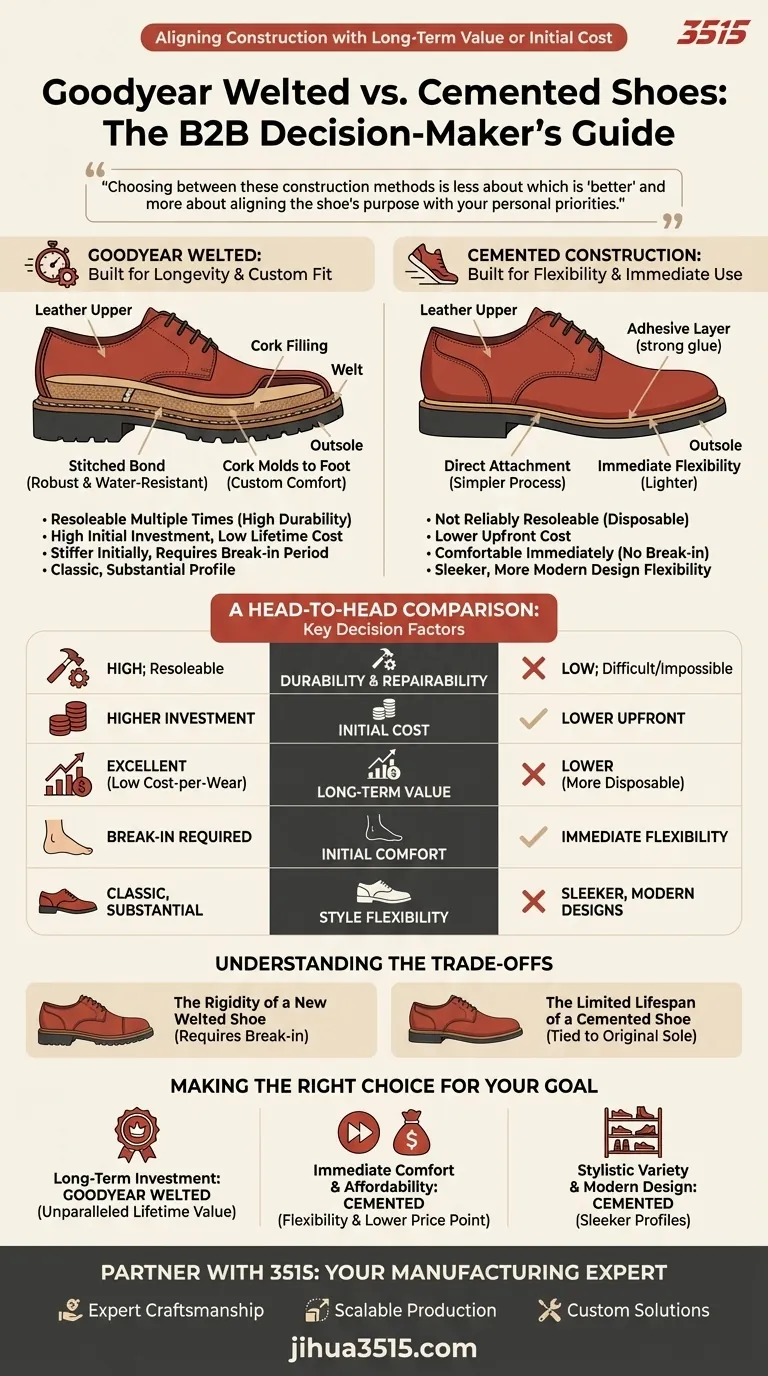
A Goodyear welt is a strip of leather stitched around the bottom edge of the shoe's upper. This welt is then stitched to the outsole, creating an incredibly robust and water-resistant bond.
This method leaves a gap between the insole and outsole, which is filled with a material like cork. Over time, this cork filling molds to the unique shape of your foot, creating a custom-like fit.
The key advantage is that the outsole is stitched to the welt, not directly to the upper. This allows a cobbler to remove an old sole and attach a new one without compromising the shoe's structure.
Cemented Construction: Built for Flexibility
Cemented construction is a simpler, more common method where the sole is attached directly to the upper using a strong adhesive. There is no stitching connecting the two.
This process is less labor-intensive, which significantly reduces the initial cost of the shoe. It also results in a lighter and more flexible shoe right out of the box.
The direct-attachment method allows for sleeker profiles, thinner soles, and a wider variety of toe shapes and styles that are more difficult to achieve with a welt.
Key Decision Factors: A Head-to-Head Comparison
Understanding the construction methods makes it easier to evaluate the practical differences that will influence your choice.
Durability and Repairability
Goodyear welted shoes are the clear winner for long-term durability. Their ability to be resoled multiple times means a high-quality leather upper can last for decades with proper care.
Cemented shoes cannot be reliably resoled. Once the original sole wears out, the shoe's life is effectively over, making them a more disposable option.
Initial Cost vs. Lifetime Value
Cemented shoes have a much lower upfront cost due to the simpler manufacturing process. This makes them an accessible choice for many buyers.
A Goodyear welted shoe is a long-term investment. While the initial price is higher, the cost-per-wear can become significantly lower over time if you resole them instead of buying new pairs.
Comfort and Break-in Period
Cemented shoes are often more comfortable immediately, as their construction offers greater flexibility from the very first wear.
Goodyear welted shoes typically have a stiffer feel initially and require a break-in period. However, as the cork footbed conforms to your foot, many find they offer superior long-term comfort and support.
Style and Design Flexibility
The cemented method allows for a wider range of designs. This includes thinner, more elegant soles and more varied toe shapes, like sharp chisel or almond toes.
Goodyear welted shoes tend to have a more substantial and uniform sole profile. While classic and handsome, they generally offer less stylistic variety than their cemented counterparts.
Understanding the Trade-offs
Neither method is perfect; each comes with compromises that are important to acknowledge.
The Rigidity of a New Welted Shoe
The primary downside of a Goodyear welt is the initial stiffness. The layers of leather, welt, and cork create a robust but rigid structure that absolutely requires a break-in period to become comfortable.
The Limited Lifespan of a Cemented Shoe
The convenience and low cost of a cemented shoe come at the price of longevity. No matter how well you care for the upper, the shoe's lifespan is permanently tied to its original sole.
Making the Right Choice for Your Goal
Your final decision should be based on a clear understanding of what you need the shoe to do.
- If your primary focus is a long-term investment: A Goodyear welted shoe is the superior choice, as its repairability offers unparalleled lifetime value.
- If your primary focus is immediate comfort and affordability: A cemented shoe provides flexibility and a lower price point right from the start.
- If your primary focus is stylistic variety and modern design: Cemented construction offers the flexibility needed for sleeker, more varied shoe profiles.
Ultimately, aligning the shoe's construction with your personal needs for value, style, and comfort will ensure you make the most satisfying choice.
Summary Table:
| Factor | Goodyear Welted | Cemented Construction |
|---|---|---|
| Durability & Repairability | High; can be resoled multiple times | Low; difficult or impossible to resole |
| Initial Cost | Higher upfront investment | Lower upfront cost |
| Long-Term Value | Excellent cost-per-wear over time | Lower; more disposable |
| Initial Comfort | Requires a break-in period | More comfortable and flexible immediately |
| Style Flexibility | Classic, substantial profile | Sleeker, more modern designs |
Ready to find the perfect footwear for your customers?
As a large-scale manufacturer, 3515 produces a comprehensive range of footwear for distributors, brand owners, and bulk clients. Our production capabilities encompass all types of shoes and boots, including both durable Goodyear welted and cost-effective cemented constructions.
Partner with us to access:
- Expert Craftsmanship: Leverage our deep manufacturing expertise.
- Scalable Production: Meet any volume requirement with consistent quality.
- Custom Solutions: Develop footwear tailored to your market's specific needs for durability, style, and price point.
Contact our team today to discuss your project and discover how we can help you build a successful footwear line.
Visual Guide
Related Products
- Durable Goodyear Welt Leather Work Boots for Wholesale & Private Label
- Wholesale Durable Leather Work Boots | 8-Inch Goodyear Welt Manufacturer
- Wholesale Durable & Breathable Training Shoes for Custom Brands
- Wholesale Breathable Training Shoes Custom Athletic Footwear Manufacturer
- Custom OEM Training Shoes Wholesale Manufacturer Durable & Breathable
People Also Ask
- What is the difference between full-grain and top-grain leather? Premium Material Guide for Boot Manufacturers
- What are the advantages of leather as an upper material for work boots? Unmatched Durability & Custom Comfort
- Why is it important to waterproof leather work boots? Protect Your Investment and Performance
- How should new leather work boots be broken in? A Guide to Comfort and Durability
- What are the advantages of leather uppers in work boots? Unmatched Durability & Protection