
At their core, tactical boots are engineered using a combination of traditional and modern materials, primarily full-grain leather, nylon fabrics, and specialized polymers. This blend is not accidental; each component is selected to provide a specific balance of durability, flexibility, breathability, and protection against the elements.
The construction of a tactical boot is a deliberate engineering choice. Understanding that it's a system of materials—balancing the ruggedness of leather with the lightweight breathability of synthetics—is the key to selecting the right tool for your specific environment and needs.
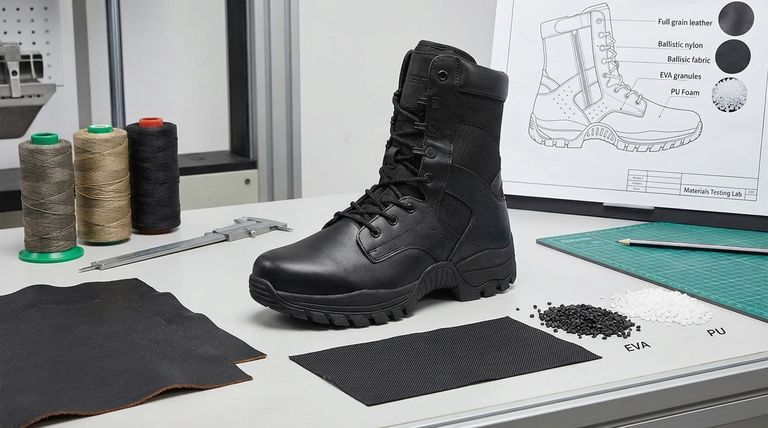
The Anatomy of a Tactical Boot: Upper Materials
The "upper" is everything above the sole. Its material composition dictates the boot's durability, weight, and ability to breathe.
Full-Grain Leather
Full-grain leather is the gold standard for durability and support. It offers excellent resistance to abrasion and provides a strong, structured frame for the foot.
This material is often used in high-wear areas like the heel, toe, and eyelet stays, where structure and toughness are paramount.
Nylon and Synthetic Fabrics
Nylon is prized for its light weight and exceptional breathability. It allows heat and moisture to escape, which is critical for comfort during extended use.
You will typically find nylon panels integrated into the sides and tongue of the boot, reducing overall weight and increasing flexibility compared to an all-leather design.
Ballistic Nylon
For areas requiring extreme abrasion resistance without the weight of leather, manufacturers often use ballistic nylon. This dense, tough fabric is designed to withstand significant wear and tear.
The Foundation: Midsole Construction
The midsole is the critical layer between your foot and the outsole, responsible for cushioning and stability. The material choice here directly impacts comfort and fatigue.
EVA (Ethylene-Vinyl Acetate)
EVA is a lightweight and flexible foam that provides excellent cushioning. It feels soft underfoot, making it ideal for absorbing shock during high-impact activities.
This material is common in boots designed for agility and speed, where minimizing weight is a primary goal.
PU (Polyurethane)
Polyurethane, or PU, is a denser and more durable foam compared to EVA. It offers a firmer, more stable platform underfoot.
While slightly heavier, PU midsoles resist compression over time, providing more consistent support throughout the life of the boot.
Climate Control: Linings and Membranes
Inside the boot, specialized liners manage moisture and temperature, providing a final layer of protection.
Waterproof Membranes
To keep feet dry from external moisture, many boots incorporate a waterproof and breathable membrane, with GORE-TEX being the most well-known.
This technology uses a microporous material that blocks water molecules from entering but allows smaller water vapor (sweat) molecules to escape, preventing moisture buildup.
Understanding the Material Trade-Offs
No single material is perfect for every situation. Choosing a tactical boot involves understanding the inherent compromises in its design.
Durability vs. Breathability
An all-leather boot offers maximum durability but can be heavy and hot. A boot with large nylon panels will be significantly more breathable and lighter but may offer less long-term abrasion resistance.
Cushioning vs. Stability
A soft EVA midsole provides excellent shock absorption but can feel less stable on uneven terrain. A firmer PU midsole delivers superior stability and durability but offers less plush cushioning.
Waterproofing vs. Dry-Climate Performance
A waterproof membrane is essential in wet environments. However, in hot, arid climates, even the most "breathable" waterproof liner can trap heat and sweat more than a non-waterproof boot, potentially leading to discomfort.
Making the Right Choice for Your Goal
Your primary use case should dictate the ideal material combination for your boots.
- If your primary focus is maximum durability and support for heavy loads: Choose a boot with a predominantly full-grain leather upper and a stable PU midsole.
- If your primary focus is lightweight performance in hot weather: Look for a boot with extensive nylon panels for breathability and a cushioned EVA midsole.
- If your primary focus is all-weather reliability: A boot combining leather and nylon with a proven waterproof membrane like GORE-TEX is your most versatile option.
Ultimately, selecting the right boot means matching its material properties to the demands of your environment.
Summary Table:
| Boot Component | Common Materials | Key Properties |
|---|---|---|
| Upper | Full-Grain Leather, Nylon, Ballistic Nylon | Durability, Breathability, Abrasion Resistance |
| Midsole | EVA (Ethylene-Vinyl Acetate), PU (Polyurethane) | Cushioning, Stability, Longevity |
| Lining | Waterproof Membranes (e.g., GORE-TEX) | Weather Protection, Moisture Management |
Ready to equip your team with superior tactical footwear?
As a large-scale manufacturer, 3515 produces a comprehensive range of tactical boots for distributors, brand owners, and bulk clients. Our expertise in material selection and construction ensures optimal performance, durability, and comfort for any environment.
Contact us today to discuss your specific needs and discover how we can be your trusted manufacturing partner.
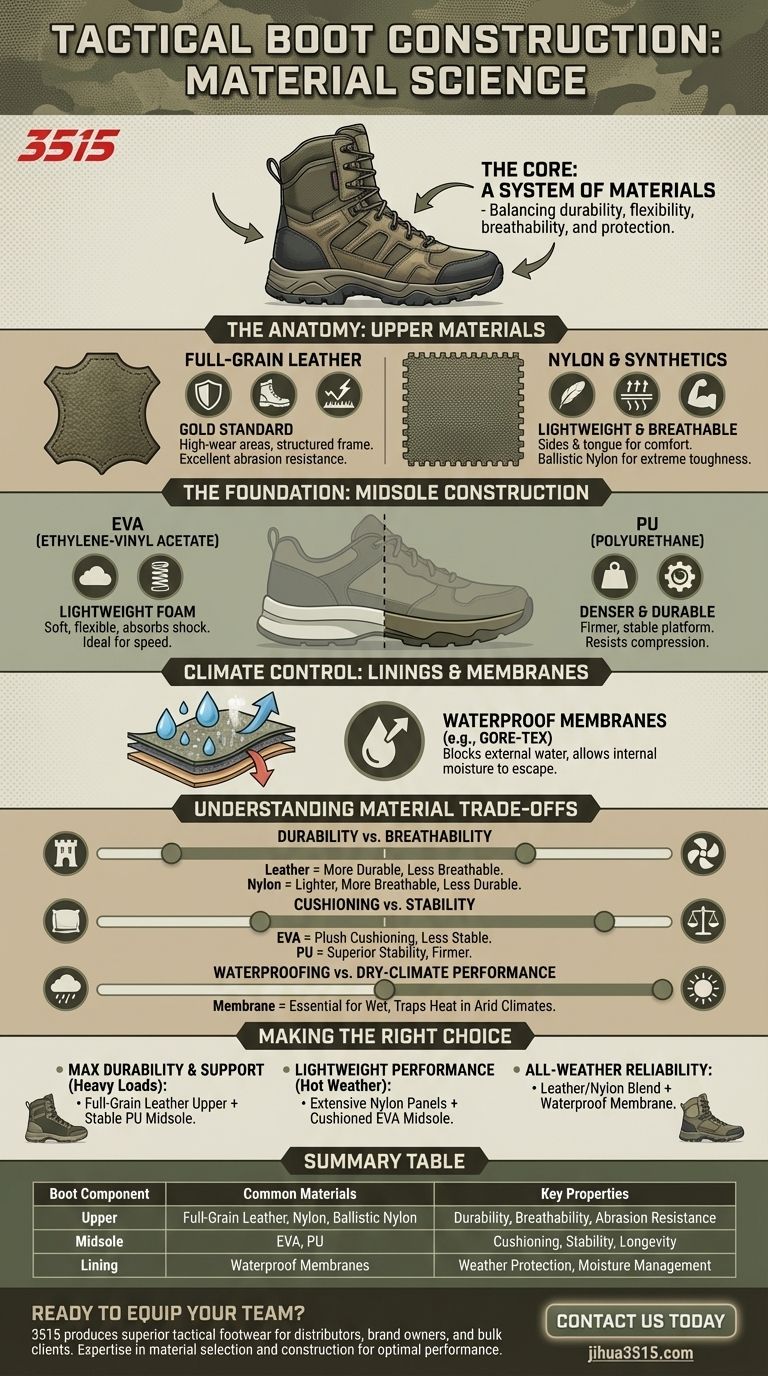
Visual Guide
Related Products
- Durable Leather Tactical Boots Wholesale & Custom Manufacturing for Brands
- High-Traction Suede Tactical Boots Wholesale & Custom Manufacturing
- Durable Leather High-Ankle Tactical Boots for Wholesale & Custom Manufacturing
- Durable Mid-Cut Tactical Boots for Wholesale & Private Label
- Wholesale Waterproof Tactical Boots Custom Suede & High-Traction Soles
People Also Ask
- What specialized protections do tactical boots offer? Maximize Endurance with High-Performance Footwear
- What features should law enforcement officers look for in tactical boots? Essential Guide for Safety & Performance
- Importance of Professional Tactical Boots in Loess Gully Regions: Ensure Safety and Precision for Field Monitoring
- What is rucking, and why are tactical boots suitable for it? Discover the Ultimate Footwear for Heavy Loads
- What makes the traction of tactical boots superior? Unlock the Science of Unbeatable Grip













