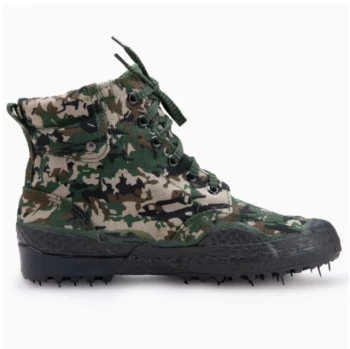
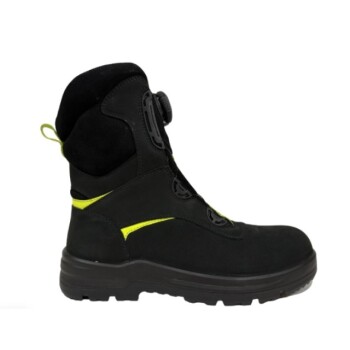
In short, regulation defines every key feature of a Marine Corps boot. They are distinguished by their specific coyote or olive mojave color, 8-inch height, flesh-out cattlehide leather construction, and the mandatory Eagle, Globe, and Anchor (EGA) insignia embossed on the outer heel. These features are not merely stylistic; they are dictated by Marine Corps Order 1020.34H to ensure uniformity, durability, and operational effectiveness across diverse environments.
The core difference isn't just one feature, but a strict combination of requirements. While other military or tactical boots might share some characteristics like height or color, only a boot meeting every single USMC regulation, especially the EGA insignia, is an official Marine Corps boot.
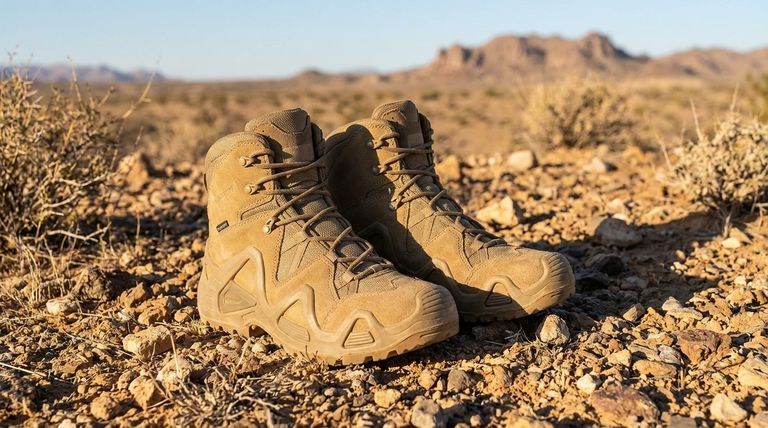
The Anatomy of a Regulation Boot
To understand what makes a boot "Marine-spec," you have to look at the combination of features mandated for active duty wear. Each element serves a specific purpose, from visual identification to performance in the field.
Color and Material Mandate
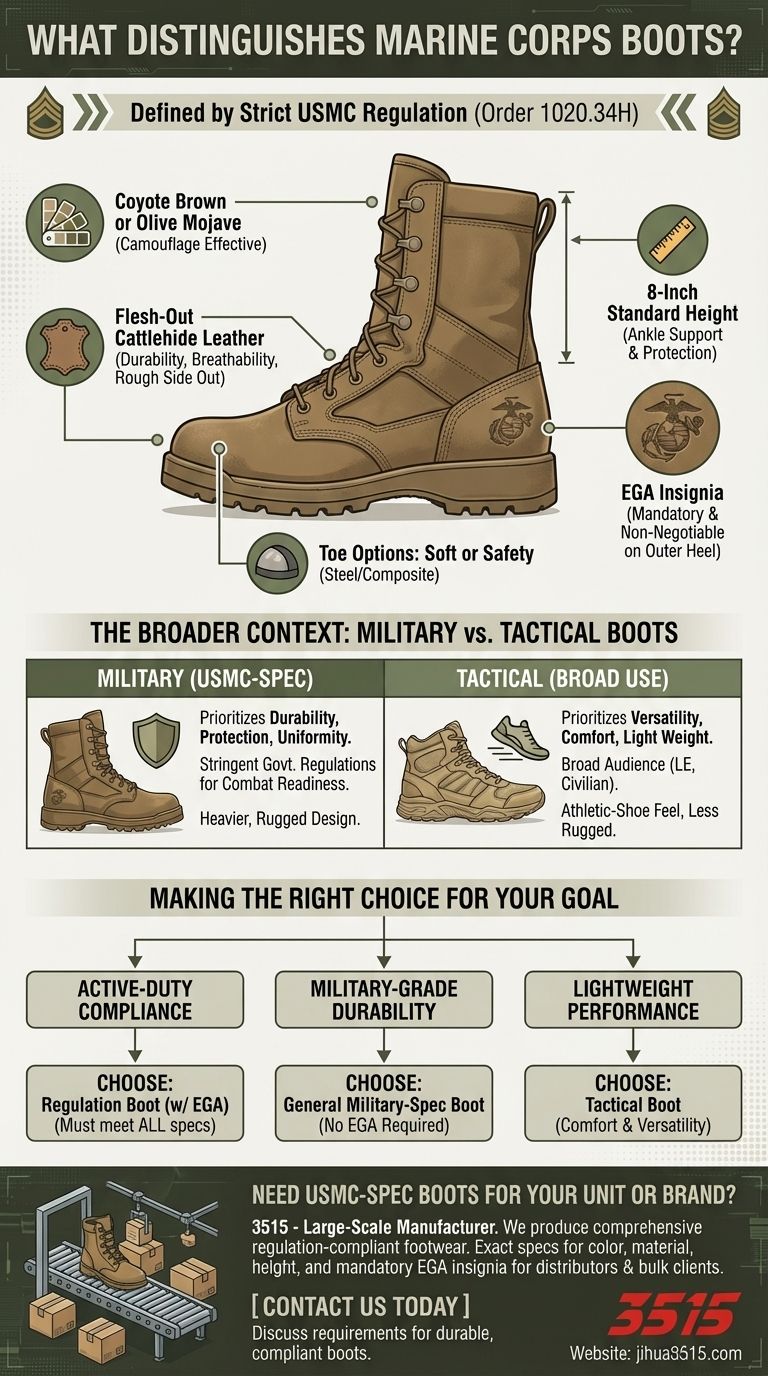
The required color is either coyote brown or olive mojave. This specific palette is chosen for its effectiveness as camouflage across a wide range of operational environments, from desert sand to woodland terrain.
The material must be flesh-out cattlehide leather. This means the rougher, flesh side of the hide faces outward. This construction method offers excellent durability and breathability while minimizing the need for polishing and reducing glare.
The Non-Negotiable Insignia
Perhaps the most definitive visual feature is the Eagle, Globe, and Anchor (EGA). This iconic emblem of the Marine Corps must be embossed on the outer heel of each boot.
Its presence certifies that the boot's manufacturer has met the stringent quality and design standards required for Marine Corps certification. A boot without the EGA is not authorized for wear with the Marine Corps Combat Utility Uniform.
Standardized Height and Construction
All regulation boots must be 8 inches in height. This provides substantial ankle support and protection from environmental hazards without being as restrictive as a taller boot.
Marines are also authorized to wear boots with either a soft toe or a safety toe (like steel or composite), depending on their specific job requirements and environment. This allows for adaptability while maintaining a uniform appearance.
Understanding the Broader Context
Marine Corps boots are a specific subset of military footwear. Understanding how they differ from other types of boots highlights why their regulations are so strict.
Military vs. Tactical Boots
Military boots, like the USMC-specified ones, are built to meet stringent government regulations for combat readiness. They prioritize durability, protection, and uniformity, often resulting in a heavier, more rugged design.
Tactical boots, in contrast, are designed for a broader audience that includes law enforcement and civilian enthusiasts. They prioritize versatility, light weight, and features like athletic-shoe comfort, often sacrificing some of the ruggedness required for front-line military use.
Purpose-Built vs. General Use
While a field boot for equestrian use might also be tall and made of leather, its purpose is entirely different. Its design prioritizes a sleek profile and flexibility for riding, which is a world away from the durability and all-terrain traction demanded of a combat boot.
The Marine Corps boot is engineered as a general-purpose tool for a combat environment, designed to function reliably whether a Marine is marching on pavement, navigating rocky terrain, or operating in a desert.
Making the Right Choice for Your Goal
Selecting the right boot depends entirely on your specific requirements and whether adherence to official regulation is necessary.
- If your primary focus is active-duty compliance: You must choose a boot that meets every regulation, including the 8-inch height, coyote color, flesh-out leather, and the EGA insignia.
- If your primary focus is military-grade durability for civilian use: Look for boots that meet general military specifications for ruggedness, even if they lack the USMC-specific EGA emblem.
- If your primary focus is lightweight performance for hiking or general tasks: A tactical boot is likely your best option, offering comfort and versatility without the strict regulatory constraints of a military boot.
Ultimately, a true Marine Corps boot is defined by its absolute adherence to a set of standards designed for uniformity and uncompromising performance in the field.
Summary Table:
| Feature | Marine Corps Regulation Requirement |
|---|---|
| Color | Coyote Brown or Olive Mojave |
| Material | Flesh-Out Cattlehide Leather |
| Height | 8 Inches |
| Insignia | Eagle, Globe, and Anchor (EGA) on outer heel |
| Toe Options | Soft Toe or Safety Toe (Steel/Composite) |
Need USMC-Spec Boots for Your Unit or Brand?
As a large-scale manufacturer, 3515 produces a comprehensive range of regulation-compliant footwear for distributors, brand owners, and bulk clients. Our production capabilities ensure every boot meets the exact specifications for color, material, height, and the mandatory EGA insignia.
Contact us today to discuss your requirements for durable, regulation-compliant Marine Corps boots.
Visual Guide
Related Products
- Durable Military Combat Boots with Water Drainage for Wholesale & OEM
- High-Traction Suede Tactical Boots Wholesale & Custom Manufacturing
- Wholesale Waterproof Tactical Boots Custom Suede & High-Traction Soles
- Durable High-Ankle Tactical Boots for Wholesale & Custom Manufacturing
- Durable Leather Tactical Boots Wholesale & Custom Manufacturing for Brands
People Also Ask
- Why must gait validation for military applications be conducted in combat boots? Ensure Data Accuracy for Soldiers
- What are the common types of combat boots? Find the Right Boot for Your Mission
- What factors should be considered when choosing military boots for hiking? Durability vs. Weight for Your Terrain
- What are the key considerations when choosing military boots? Prioritize Compliance, Environment & Fit
- How should the midfoot and heel fit in military boots? Achieve a Snug, Secure Fit for Blister Prevention