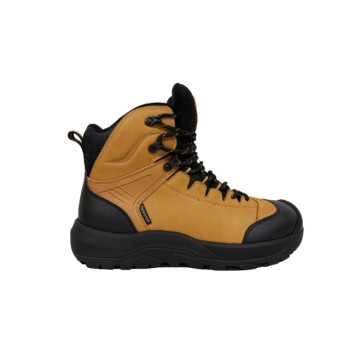
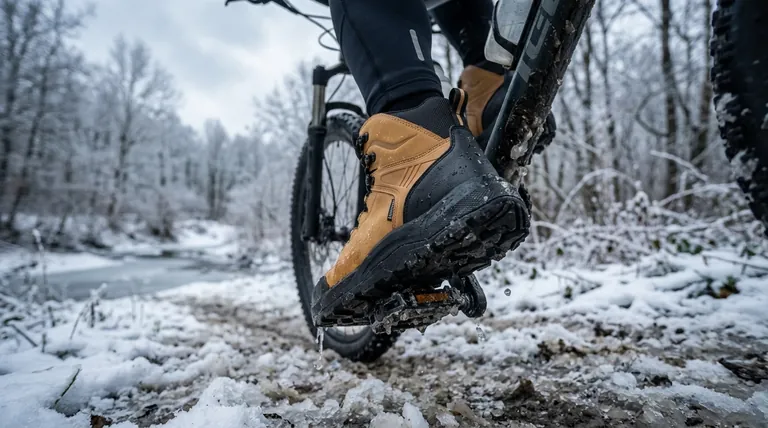
At their core, winter-specific cycling shoes are a system of environmental protection. They are designed with four key features that distinguish them from standard shoes: comprehensive waterproofing, integrated thermal insulation, a high ankle cuff to seal out the elements, and a dual-purpose sole built for both pedaling efficiency and off-bike traction.
The purpose of a winter cycling shoe is not simply warmth, but complete climate control for your feet. They are engineered to keep you dry from external moisture and internal sweat, all while maintaining pedaling performance and providing crucial safety on slippery surfaces.
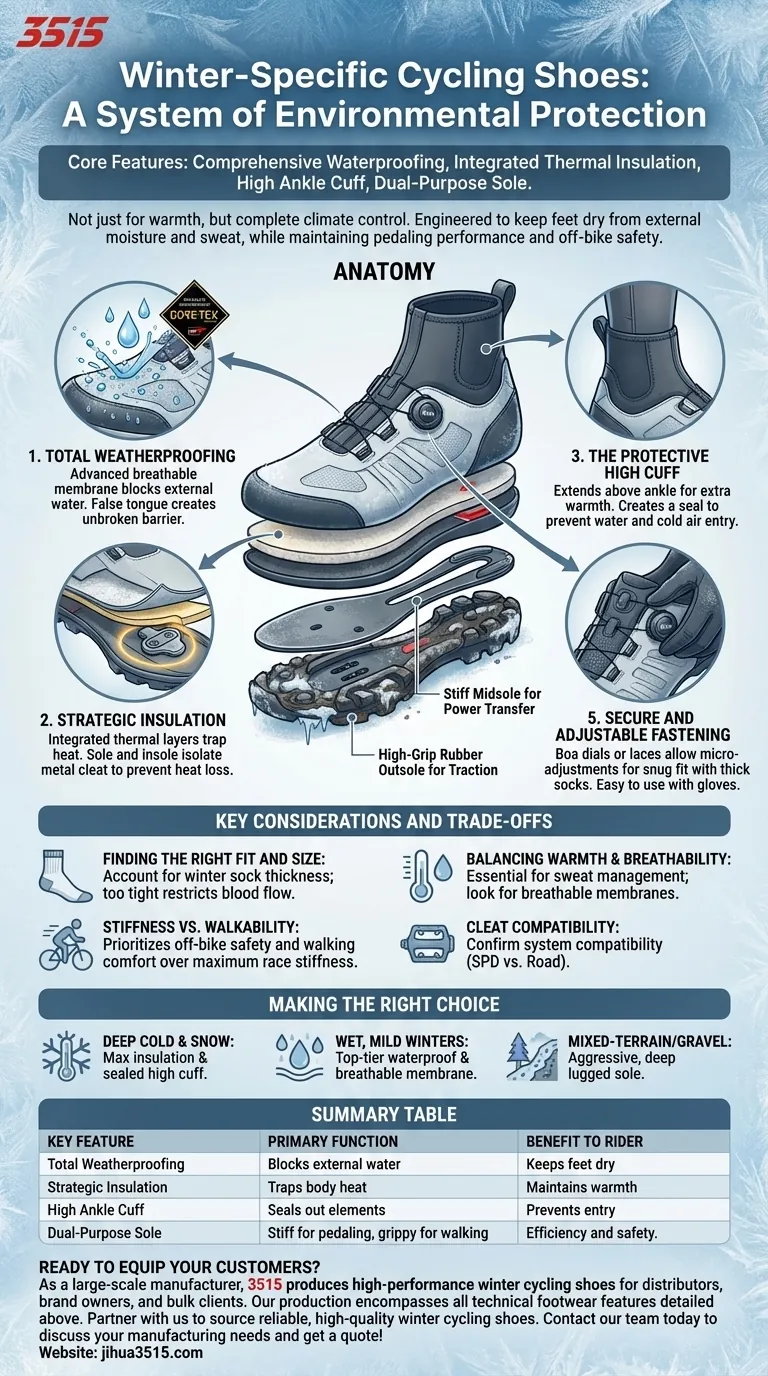
The Anatomy of a Winter Cycling Shoe
A winter shoe is fundamentally different from a standard cycling shoe with an overshoe. Every component is re-thought to function as part of an integrated system designed for cold, wet, and unpredictable conditions.
Total Weatherproofing
The first line of defense is a waterproof and breathable outer layer. This is often achieved using advanced materials like a Gore-Tex membrane or a similar proprietary technology.
Unlike a summer shoe, the construction includes features like a false tongue or a folding internal flap that creates an unbroken barrier against water ingress, keeping your feet dry even in heavy rain or snow.
Strategic Insulation
Winter shoes contain integrated insulation layers designed to trap body heat without adding excessive bulk. This keeps your feet warm far more effectively than simply wearing thicker socks in a standard shoe.
The design also pays special attention to the cleat area, which is a major source of heat loss. The sole and insole are built to isolate the metal cleat from your foot, preventing cold from conducting directly from the pedal.
The Protective High Cuff
Nearly all winter-specific shoes feature a high ankle cuff, extending above the ankle bone. This serves two critical functions.
First, it provides an extra layer of warmth and protection for the ankle. Second, it creates a much better seal with your bib tights or leg warmers, preventing water and cold air from entering from the top. Many use a neoprene-like material for a snug, comfortable fit.
The Dual-Purpose Sole
The sole of a winter shoe is a masterful compromise. It incorporates a stiff midsole to ensure efficient power transfer to the pedals, just like a high-performance summer shoe.
However, this is paired with a softer, high-grip rubber outsole. The aggressive tread provides essential traction for walking on icy, snowy, or muddy surfaces, a critical safety feature for winter riding.
Secure and Adjustable Fastening
Modern winter shoes predominantly use Boa dials or traditional laces. These systems are favored over Velcro or ratchets because they allow for micro-adjustments to achieve a snug fit, even when wearing thicker winter socks.
The ability to easily tighten or loosen the shoe with gloves on is a significant usability advantage in freezing conditions.
Key Considerations and Trade-offs
Choosing the right winter shoe involves balancing competing needs. Understanding these trade-offs is key to making an informed decision.
Finding the Right Fit and Size
Proper sizing is more critical with winter shoes. You must account for the thickness of your winter socks.
A shoe that is too tight will restrict blood flow, leading to cold feet regardless of insulation. It is highly recommended to try shoes on in person with the socks you intend to wear.
Balancing Warmth and Breathability
While waterproofing is essential, breathability is equally important. If a shoe traps too much heat and moisture, your socks will become damp with sweat, causing your feet to get cold.
Look for shoes that explicitly mention a breathable membrane, which allows water vapor to escape while blocking liquid water from entering.
Stiffness vs. Walkability
Winter shoes are generally less stiff than dedicated road racing shoes. This is a deliberate design choice that prioritizes off-bike safety and walking comfort over maximum power transfer.
For most winter riding, this slight decrease in stiffness is unnoticeable and a worthwhile trade-off for the added security.
Cleat Compatibility
Finally, always confirm that the shoe is compatible with your pedal system. Most winter mountain bike or gravel shoes use a two-bolt SPD-style cleat, while some road-specific models may use a three-bolt system.
Making the Right Choice for Your Conditions
Your local climate and riding style should dictate your final choice.
- If your primary focus is riding in deep cold and snow: Prioritize a shoe with the highest level of thermal insulation and a fully sealed, high neoprene cuff.
- If your primary focus is riding in wet, mild winters: A shoe with a top-tier waterproof and breathable membrane like Gore-Tex is more critical than heavy insulation.
- If your primary focus is mixed-terrain or gravel riding: Emphasize a sole with aggressive, deep lugs for maximum off-bike traction in mud and slush.
Investing in the right winter shoe transforms winter cycling from an act of endurance into one of genuine enjoyment.
Summary Table:
| Key Feature | Primary Function | Benefit to Rider |
|---|---|---|
| Total Weatherproofing | Blocks external water ingress | Keeps feet dry in rain and snow |
| Strategic Insulation | Traps body heat efficiently | Maintains warmth without bulk |
| High Ankle Cuff | Seals out elements at the ankle | Prevents cold air and water entry |
| Dual-Purpose Sole | Stiff for pedaling, grippy for walking | Ensures efficiency and off-bike safety |
Ready to equip your customers with superior winter cycling footwear?
As a large-scale manufacturer, 3515 produces a comprehensive range of high-performance winter cycling shoes for distributors, brand owners, and bulk clients. Our production capabilities encompass all types of technical footwear, engineered with the precise features detailed above—from advanced waterproof membranes to insulated, high-traction designs.
Partner with us to source reliable, high-quality winter cycling shoes that enhance rider comfort and safety in harsh conditions. Contact our team today to discuss your manufacturing needs and get a quote!
Visual Guide
Related Products
- Premium Insulated Safety Boots and Shoes for Wholesale & Bulk Orders
- Wholesale Durable Camouflage Canvas Shoes with High-Traction Cleated Rubber Sole
- Premium Suede Sport Safety Shoes for Wholesale & Bulk Orders
- Advanced KPU Athletic Safety Shoe with Steel Toe Cap Anti-Slip Rotary Lacing System
- Lightweight Breathable Sneakers with Wet-Traction Grip for Wholesale & Private Label
People Also Ask
- What are the recommended insulation ratings for mild winter conditions? A Guide for Active & Stationary Workers
- How does insulation thickness correlate with temperature ranges? A Guide to Choosing the Right Warmth
- What insulation level is needed for severe cold and stationary work? 1200g or Higher is Essential
- What safety advantages do insulated boots offer beyond warmth? Dielectric Protection & Superior Grip
- How does fleece lining contribute to the warmth of insulated boots? Trapping Air for Superior Cold Protection