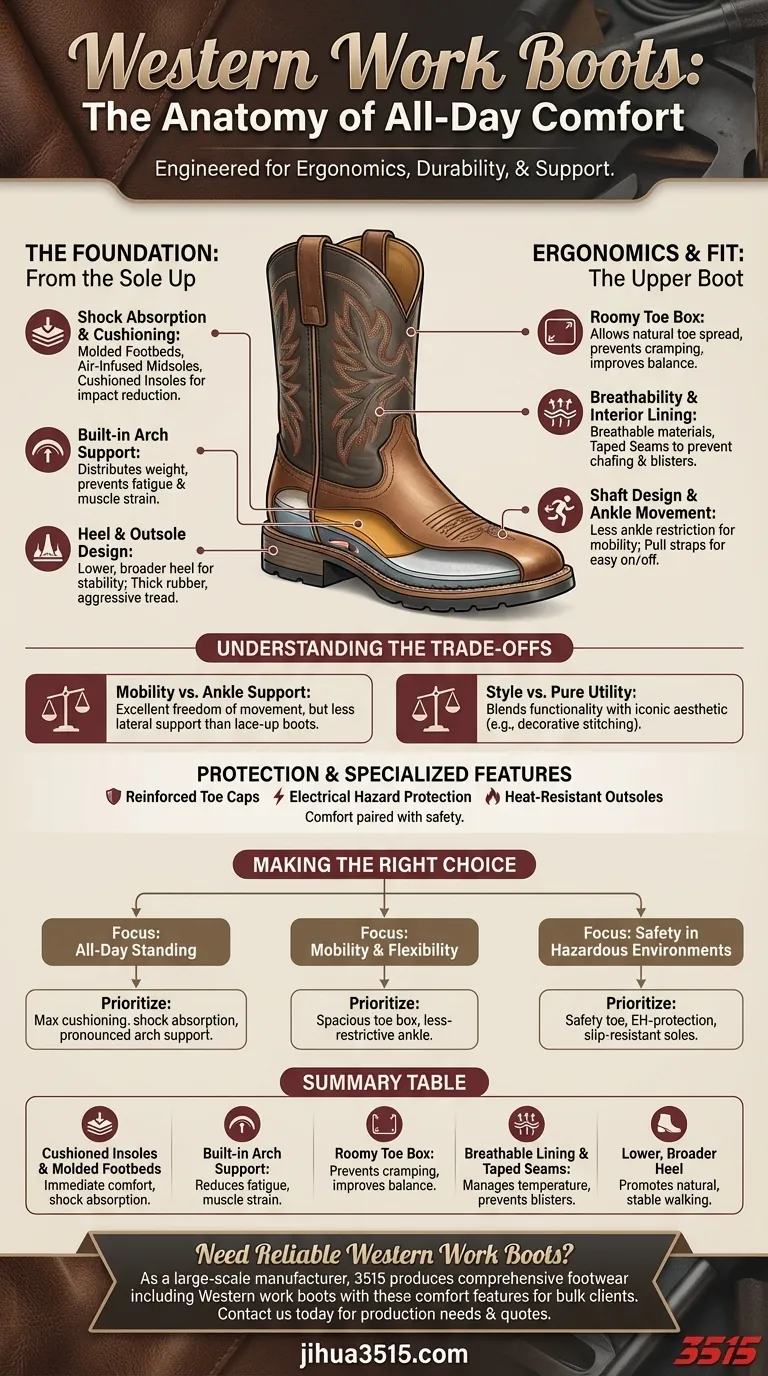
At their core, Western work boots are engineered for all-day comfort through a combination of ergonomic design and advanced materials. Key features include cushioned insoles for immediate comfort, molded footbeds for superior shock absorption, built-in arch support to combat fatigue, and roomy toe boxes that prevent cramping during long hours of wear.
The comfort of a Western work boot isn't a single feature, but a complete system. It starts with a stable, shock-absorbing foundation and extends to an upper design that allows for natural foot movement and breathability, minimizing fatigue from the ground up.
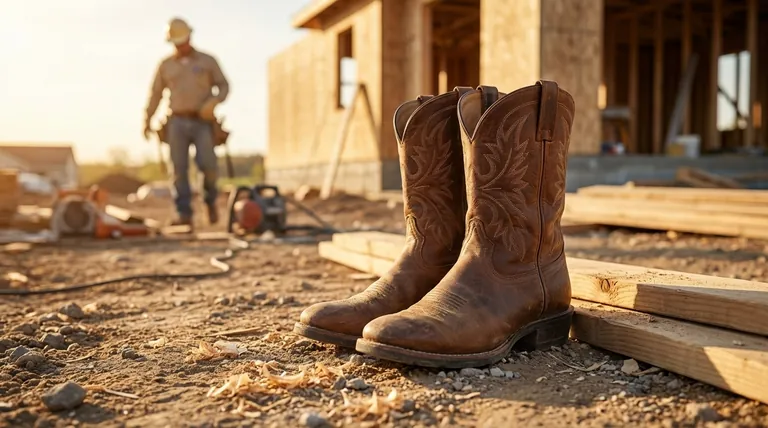
The Foundation of Comfort: From the Sole Up
The most critical comfort elements are built into the boot's lower structure, directly addressing the stress of standing and walking on hard surfaces.
Shock Absorption and Cushioning
The midsole and footbed are the first lines of defense against impact. Many modern designs use molded footbeds and air-infused midsoles to absorb shock, reducing the strain on your feet, ankles, and knees. This is complemented by a cushioned insole for immediate step-in comfort.
Arch Support and Stability
Proper arch support is non-negotiable for preventing foot fatigue. Western work boots incorporate built-in arch support to properly distribute weight across your foot. This prevents the arch from collapsing and reduces the muscle strain that leads to soreness after a long day.
Heel and Outsole Design
Unlike traditional cowboy boots with higher, angled heels, work variants feature a lower, broader heel. This design provides a more stable base and promotes a more natural walking motion. The outsoles are typically made of thicker rubber with aggressive tread for better traction and an additional layer of cushioning.
Ergonomics and Fit: The Upper Boot
How the boot fits around your foot is just as important as the foundation it stands on. The upper part of a Western work boot is designed for a unique balance of protection and freedom of movement.
The Importance of a Roomy Toe Box
One of the most praised features is the spacious toe box. This allows your toes to spread naturally, which is crucial as your feet swell throughout the day. This prevents painful cramping and improves overall balance and stability.
Breathability and Interior Lining
To manage temperature and prevent blisters, these boots often feature breathable linings. High-quality models also use taped seams on the interior, creating a smooth surface that won't chafe or irritate your skin during prolonged wear.
Shaft Design and Ankle Movement
The tall shaft protects the lower leg from worksite hazards. Critically, the design provides less ankle restriction than typical lace-up work boots, allowing for greater mobility when squatting or climbing. Pull straps also make them significantly easier to put on and take off.
Understanding the Trade-offs
No boot is perfect for every single task. Acknowledging the design's inherent trade-offs is key to making an informed decision.
Mobility vs. Ankle Support
The same design that offers excellent freedom of movement provides less lateral ankle support than a tightly laced boot. If your work involves walking on highly uneven terrain where ankle rolls are a primary concern, a traditional lace-up boot might be a more suitable choice.
Style vs. Pure Utility
Western work boots blend functionality with a distinct aesthetic. Features like decorative stitching add character but serve no functional purpose. The overall design is a hybrid that prioritizes robust performance while retaining its iconic look.
Protection and Specialized Features
While comfort is a focus, many Western work boots are also equipped with critical safety features. These can include reinforced toe caps, materials that offer electrical hazard protection, and heat-resistant outsoles, ensuring comfort doesn't come at the expense of safety.
Making the Right Choice for Your Work
Selecting the right boot depends entirely on the demands of your job.
- If your primary focus is all-day standing on hard surfaces: Prioritize boots with maximum cushioning, shock-absorbing footbeds, and pronounced arch support.
- If your primary focus is mobility and flexibility: Look for designs with a spacious toe box and the characteristic less-restrictive ankle for easy movement.
- If your primary focus is safety in hazardous environments: Ensure the boot's comfort features are paired with necessary ratings like a safety toe, EH-protection, or slip-resistant soles.
Ultimately, the best Western work boot marries its iconic style with a modern, ergonomic design built to support you through the longest workdays.
Summary Table:
| Key Comfort Feature | Benefit |
|---|---|
| Cushioned Insoles & Molded Footbeds | Immediate comfort and superior shock absorption |
| Built-in Arch Support | Reduces foot fatigue and muscle strain |
| Roomy Toe Box | Prevents cramping and improves balance |
| Breathable Lining & Taped Seams | Manages temperature and prevents blisters |
| Lower, Broader Heel | Promotes a natural, stable walking motion |
Need a reliable source for comfortable, high-performance Western work boots?
As a large-scale manufacturer, 3515 produces a comprehensive range of footwear for distributors, brand owners, and bulk clients. Our production capabilities encompass all types of shoes and boots, including Western work boots engineered with the exact comfort features detailed above.
We can help you provide your customers with durable, supportive footwear that stands up to long workdays.
Contact us today to discuss your production needs and get a quote.
Visual Guide
Related Products
- Durable Goodyear Welt Leather Work Boots for Wholesale & Private Label
- Durable Leather Work Boots for Wholesale & Custom Manufacturing
- Durable Leather Work Boots for Wholesale & Custom OEM Manufacturing
- Durable Moc-Toe Wedge Work Boots | Wholesale Manufacturing for Brands
- Wholesale Leather Work Boots with Customizable Wedge Sole for Brands
People Also Ask
- What is the difference between full-grain and top-grain leather? Premium Material Guide for Boot Manufacturers
- What are the advantages of leather as an upper material for work boots? Unmatched Durability & Custom Comfort
- Why is it important to waterproof leather work boots? Protect Your Investment and Performance
- How should new leather work boots be broken in? A Guide to Comfort and Durability
- What are the advantages of leather uppers in work boots? Unmatched Durability & Protection