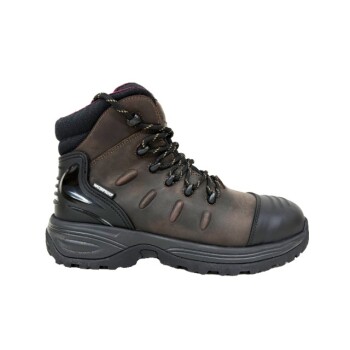
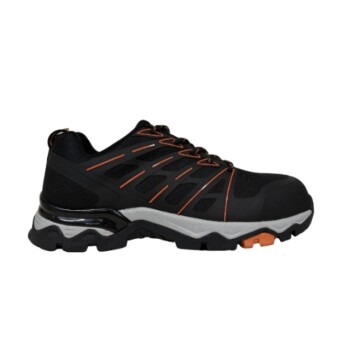
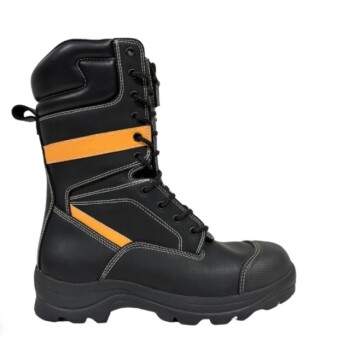
Beyond the standard safety toe, the most critical comfort features in oilfield safety shoes are a combination of advanced cushioning systems, moisture-managing materials, and ergonomic designs. These elements are not luxuries; they are engineered to reduce physical fatigue, keep feet dry, and provide stable support during long, demanding shifts on unforgiving surfaces.
In the demanding environment of an oilfield, comfort is a critical safety component. Features that reduce fatigue, manage moisture, and absorb shock directly contribute to a worker's focus and endurance, ultimately preventing slips, trips, and other accidents.
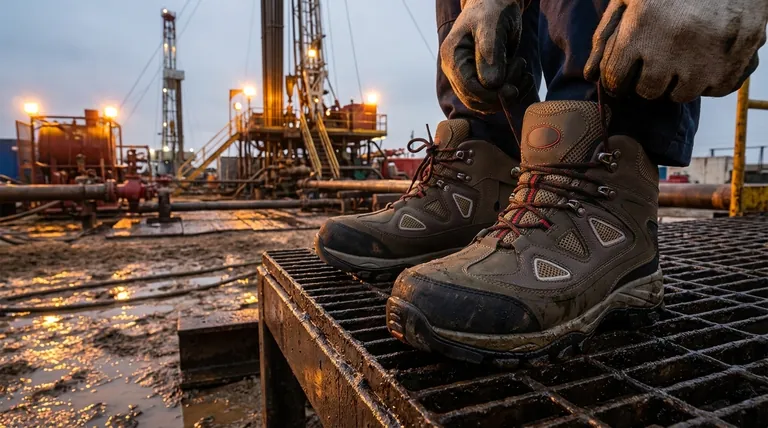
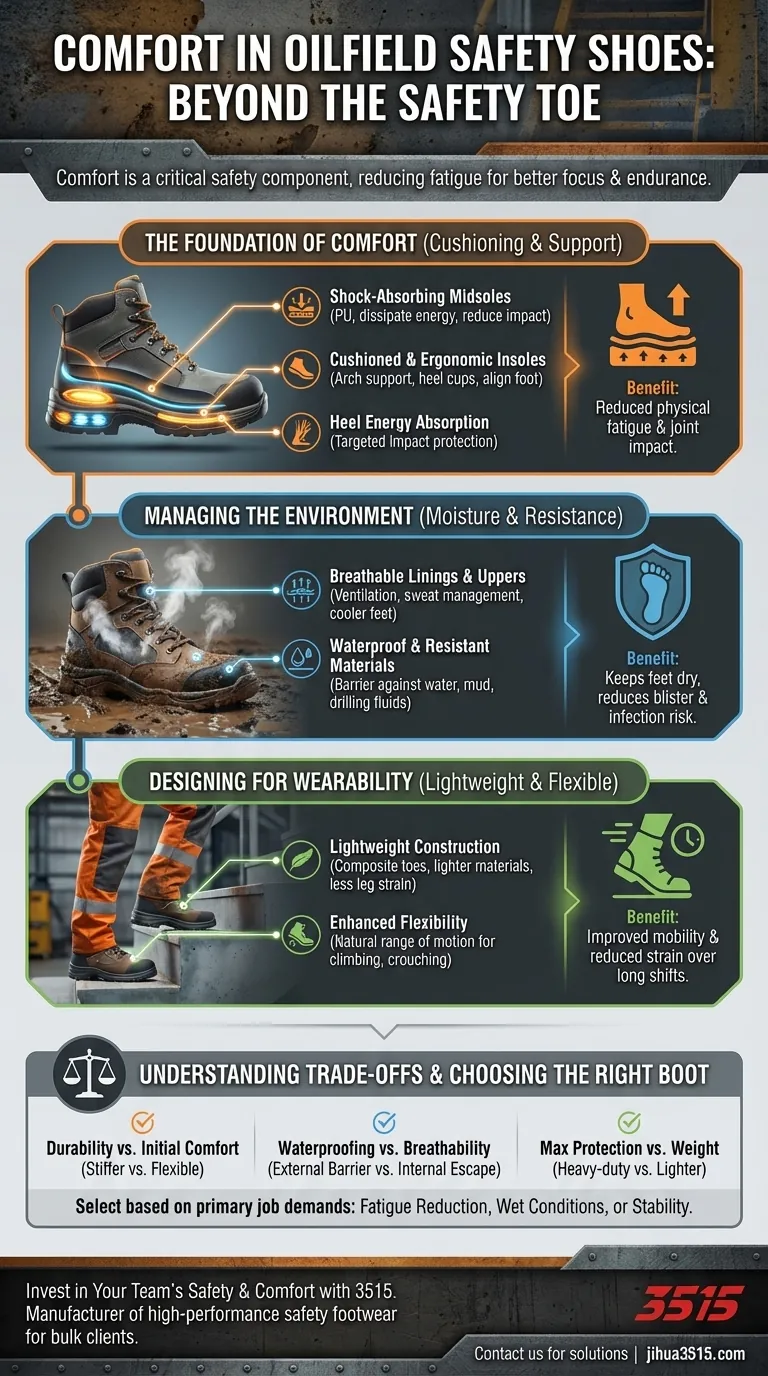
The Foundation of Comfort: Cushioning and Support
The constant impact of walking on steel decks, gravel, and uneven ground requires features specifically designed to absorb shock and support the foot's natural structure.
Shock-Absorbing Midsoles
The midsole is the core layer of cushioning. Modern boots often use air-infused polyurethane (PU) or similar materials to dissipate the energy from each step, reducing the impact that travels up your legs and back.
Cushioned and Ergonomic Insoles
High-quality insoles provide the direct underfoot comfort you feel. Many are removable and feature specific arch support and deep heel cups to properly align the foot, which helps prevent strain over a 12-hour shift.
Heel Energy Absorption
Some boots list heel energy absorption as a specific technical feature. This is a targeted design element ensuring the part of the foot that strikes the ground first receives maximum protection from impact.
Managing the On-Site Environment
Oilfield conditions are rarely clean or dry. A boot's ability to manage both internal and external moisture is fundamental to all-day comfort and foot health.
Breathable Linings and Uppers
Proper ventilation is crucial for managing sweat. Breathable linings and uppers allow moisture vapor to escape, keeping feet drier and cooler, which significantly reduces the risk of blisters and fungal infections.
Waterproof and Resistant Materials
To combat external hazards, uppers are made from waterproof materials like treated leather or specialized synthetic fabrics. This barrier prevents water, mud, and drilling fluids from soaking through to your socks, as wet feet are a primary source of discomfort.
Designing for All-Day Wearability
A boot's overall design and construction play a major role in how it feels at the end of a long day. Modern engineering focuses on reducing strain without compromising safety.
Lightweight Construction
The days of excessively heavy work boots are over. The use of composite safety toes and lighter-weight sole materials helps reduce the overall weight of the boot, which directly translates to less leg fatigue.
Enhanced Flexibility
A rigid boot forces your foot and ankle to work harder. A boot with good flexibility allows for a more natural range of motion, which is essential when climbing stairs, crouching, or navigating uneven terrain.
Understanding the Trade-offs
Choosing the perfect boot involves balancing competing features. Understanding these compromises is key to making an informed decision.
Durability vs. Initial Comfort
Highly durable construction methods, like a Goodyear welt, often result in a stiffer boot that requires a break-in period. More flexible, cement-constructed boots may feel more comfortable out of the box but may not offer the same long-term resilience.
Waterproofing vs. Breathability
The most effective waterproof membranes can sometimes limit a boot's ability to breathe. You must decide whether your primary challenge is keeping external moisture out (mud, water) or letting internal moisture (sweat) escape.
Maximum Protection vs. Weight
Features like heavy-duty metatarsal guards or puncture-resistant steel plates offer superior protection but add significant weight. You must weigh the specific hazards of your job against the fatigue that comes from wearing a heavier boot.
How to Choose the Right Boot for Your Role
Select your footwear based on the most pressing demands of your specific job function.
- If your primary focus is reducing fatigue on long shifts: Prioritize boots with excellent midsole cushioning, arch support, and lightweight composite construction.
- If your primary focus is working in wet and muddy conditions: Look for a boot with a reliable waterproof membrane and an oil-resistant, high-traction outsole.
- If your primary focus is stability on uneven surfaces: Choose a boot with a well-defined heel, ergonomic insoles, and strong ankle support.
Selecting the right boot is a direct investment in your daily endurance and long-term safety on the job.
Summary Table:
| Feature Category | Key Elements | Primary Benefit |
|---|---|---|
| Cushioning & Support | Shock-absorbing midsoles, ergonomic insoles, heel energy absorption | Reduces physical fatigue and impact on joints |
| Environmental Management | Breathable linings, waterproof/resistant uppers | Keeps feet dry and comfortable in wet/muddy conditions |
| Wearability Design | Lightweight construction, enhanced flexibility | Improves mobility and reduces leg strain over long shifts |
Invest in Your Team's Safety and Comfort with 3515
As a large-scale manufacturer, 3515 produces a comprehensive range of high-performance safety footwear for distributors, brand owners, and bulk clients. Our boots are engineered with the precise comfort features detailed above—superior cushioning, moisture management, and ergonomic design—to ensure durability and all-day wearability for workers in the most demanding environments like oilfields.
Let us help you equip your workforce with footwear that protects and enhances performance. Contact our team today to discuss your specific needs and explore our full product catalog.
Visual Guide
Related Products
- Premium Oil Wax Leather Safety Boots for Bulk Purchase
- Premium Lightweight Safety Shoes for Wholesale & Bulk Orders
- Premium Suede Sport Safety Shoes for Wholesale & Bulk Orders
- Premium Safety Shoes with Rotating Buckle Safety Sneakers
- Premium Wheat Nubuck Safety Shoes for Bulk Distribution
People Also Ask
- What materials are commonly used for outsoles in safety boots? A Guide to Durability, Grip, and Comfort
- How do safety boots reduce cutting hazards? Essential Protection for Your Workforce
- What are the common types of safety boots and their primary uses? A Guide to Industrial Footwear
- Which organizations develop safety standards for work boots? Ensure Compliance & Worker Safety
- What primary protective functions do professional safety boots provide in urban solid waste recovery and waste picking processes? Discover Dual-Layer Protection.