The primary closure methods on winter cycling shoes are Boa dial systems, weatherproof zippers, and Velcro straps, often used in combination. These systems are specifically chosen over traditional laces to provide superior weather protection and to be easily operated while wearing bulky gloves.
The core principle behind winter cycling shoe closures is prioritizing a robust seal against the elements and ensuring you can make adjustments with numb fingers. The choice is less about aesthetics and more about functional reliability in cold, wet conditions.

Why Winter Shoe Closures Are Different
The demands of winter riding fundamentally change what is required of a shoe's fastening system. Unlike summer shoes where ventilation and low weight are key, winter shoes must create an impenetrable barrier and remain functional when caked in mud or ice.
The Boa Dial System
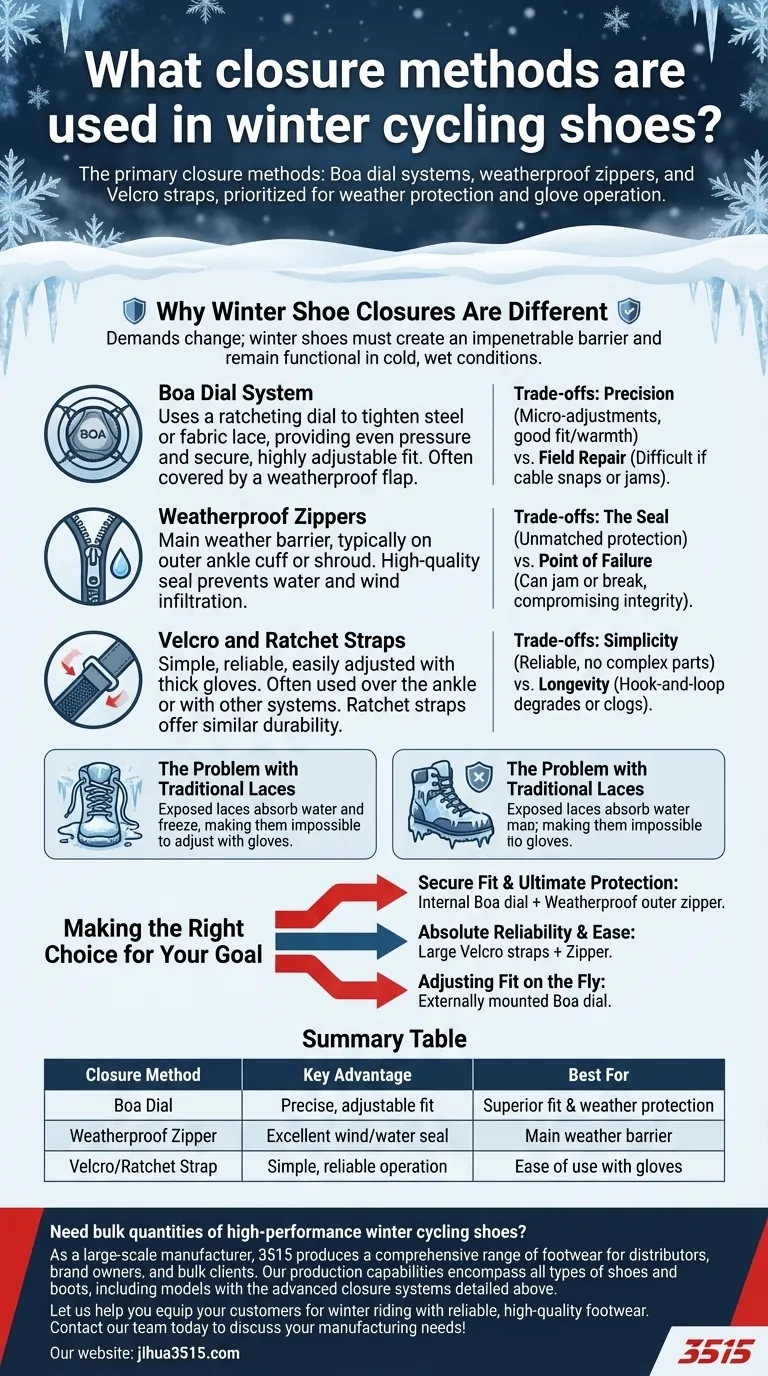
A Boa dial is a common feature on high-end winter shoes. It uses a ratcheting dial to tighten a steel or fabric lace, providing even pressure and a highly adjustable, secure fit across the foot.
Many winter designs place the Boa dial under a weatherproof outer flap, protecting the mechanism from impact, ice, and grime.
Weatherproof Zippers
Zippers are rarely the primary tightening mechanism but serve as the main weather barrier. They are typically used on the outer ankle cuff or a protective shroud that covers the shoe's actual fastening system (like a Boa dial or internal speed laces).
A high-quality, sealed or "weatherproof" zipper is critical for preventing water and wind from seeping into the shoe.
Velcro and Ratchet Straps
Velcro straps are valued for their simplicity and ease of use. You can easily grab and adjust them even with thick winter gloves on. They are often used over the ankle or in conjunction with another system to secure a protective outer flap.
Similar to Velcro, ratchet straps offer a durable and easy-to-operate closure, though they are slightly less common on the latest models than Boa dials.
The Problem with Traditional Laces
Exposed, traditional laces are almost never used on dedicated winter cycling shoes. They act like a sponge, absorbing water which can then freeze. Furthermore, they are nearly impossible to tie, untie, or adjust accurately while wearing gloves.
Understanding the Trade-offs
Each closure system comes with its own set of advantages and potential drawbacks. Understanding these is key to choosing the right shoe for your needs.
Boa Dials: Precision vs. Field Repair
The primary benefit of a Boa dial is its ability to make micro-adjustments for a perfect fit, which helps circulation and warmth. However, if the cable snaps or the mechanism jams mid-ride, it is very difficult to perform a field repair.
Zippers: The Seal vs. The Point of Failure
A good zipper provides an unmatched seal against wind and water. Its main drawback is that it can become a point of failure. Zippers can jam with mud or ice, and the teeth can break over time, compromising the shoe's weatherproof integrity.
Velcro Straps: Simplicity vs. Longevity
Velcro is incredibly simple and reliable. There are no complex mechanical parts to break. The downside is that its effectiveness can degrade over time as the hook-and-loop material wears out or gets clogged with debris.
Making the Right Choice for Your Goal
Your ideal closure system depends entirely on your riding conditions and priorities.
- If your primary focus is the most secure fit and ultimate weather protection: Look for a shoe with an internal Boa dial covered by a high-quality, weatherproof outer zipper.
- If your primary focus is absolute reliability and ease of use: A system combining large Velcro straps and a zipper is robust and has fewer complex parts that could fail in harsh conditions.
- If your primary focus is adjusting fit on the fly: A shoe with an externally mounted Boa dial (often on the side) offers the easiest access for mid-ride tightening or loosening without removing your gloves.
Choose the closure system that gives you the most confidence to face the elements and keep riding.
Summary Table:
| Closure Method | Key Advantage | Best For |
|---|---|---|
| Boa Dial | Precise, adjustable fit | Superior fit & weather protection |
| Weatherproof Zipper | Excellent wind/water seal | Main weather barrier |
| Velcro/Ratchet Strap | Simple, reliable operation | Ease of use with gloves |
Need bulk quantities of high-performance winter cycling shoes? As a large-scale manufacturer, 3515 produces a comprehensive range of footwear for distributors, brand owners, and bulk clients. Our production capabilities encompass all types of shoes and boots, including models with the advanced closure systems detailed above. Let us help you equip your customers for winter riding with reliable, high-quality footwear. Contact our team today to discuss your manufacturing needs!
Visual Guide
Related Products
- Premium Insulated Safety Boots and Shoes for Wholesale & Bulk Orders
- Lightweight Breathable Sneakers with Wet-Traction Grip for Wholesale & Private Label
- Premium Suede Sport Safety Shoes for Wholesale & Bulk Orders
- Durable Waterproof Rain Boots | Custom Manufacturer for Wholesale & Brands
- Durable Rubber Sole Outdoor Shoes Wholesale & Custom Manufacturing
People Also Ask
- What are the recommended insulation ratings for mild winter conditions? A Guide for Active & Stationary Workers
- How does insulation thickness correlate with temperature ranges? A Guide to Choosing the Right Warmth
- What insulation level is needed for severe cold and stationary work? 1200g or Higher is Essential
- What safety advantages do insulated boots offer beyond warmth? Dielectric Protection & Superior Grip
- How does fleece lining contribute to the warmth of insulated boots? Trapping Air for Superior Cold Protection