
First, I need to get straight to the point. At a fundamental level, motorcycle boots are engineered to provide critical protection for your feet, ankles, and shins. Their design incorporates reinforcement and structural support to shield these areas from the most common injuries associated with a motorcycle accident. But that's just the start.
The primary role of a motorcycle boot is not just to cover your foot, but to manage three specific forces that regular footwear cannot: direct impact, high-velocity abrasion, and extreme twisting or torsion.
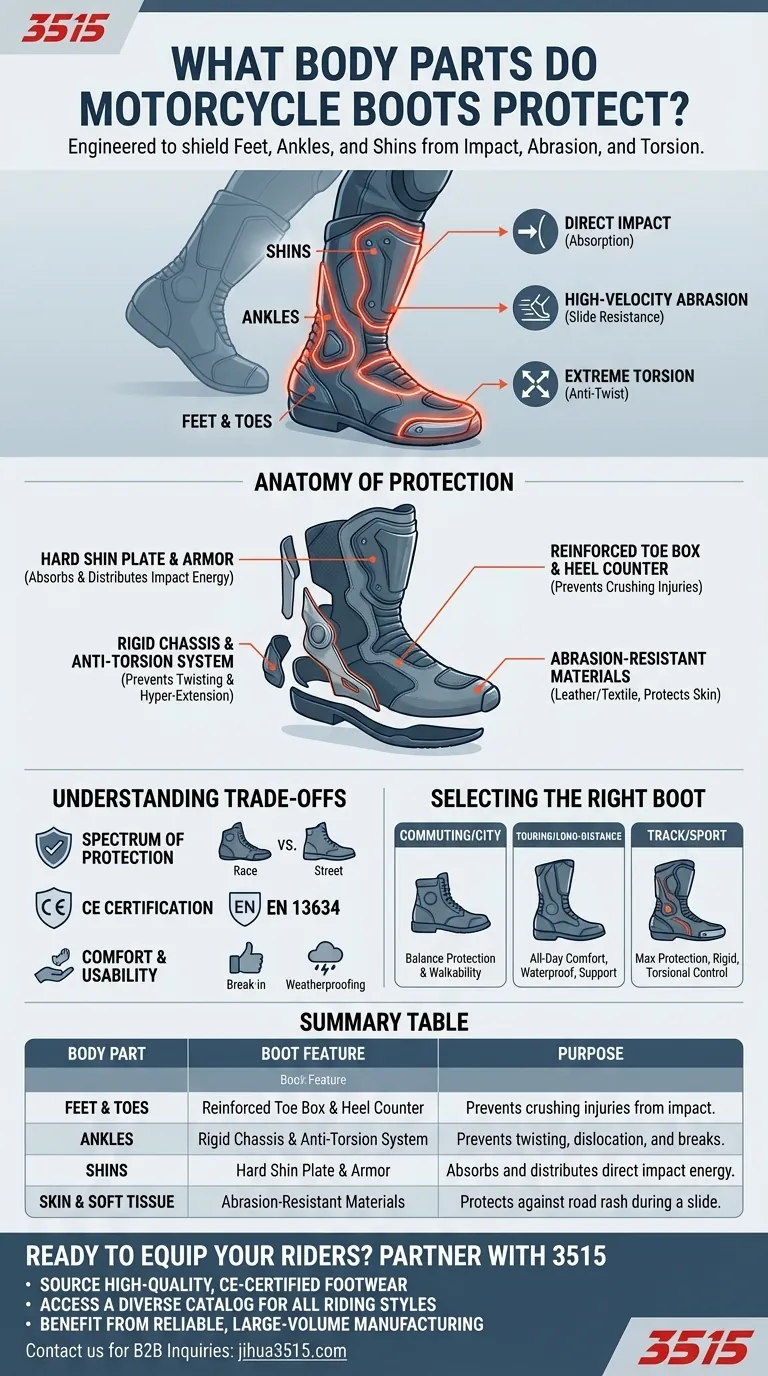
Here's how this works, from a design perspective:
The Anatomy of Motorcycle Boot Protection:
- Guarding Against Direct Impact: I need to explain how reinforced toe boxes, heel counters, and shin plates absorb and distribute impact energy. Materials like TPU are key here.
- Resisting Abrasive Forces: The slide is the most dangerous aspect here. Durable materials like leather and advanced textiles are designed to prevent the road from grinding away skin and bone. Regular shoes just won't cut it.
- Preventing Torsion and Hyper-Extension: This is crucial and something I'll highlight. The rigid structure and ankle bracing systems prevent the ankle from twisting or bending in ways it shouldn't. This is a key differentiator from hiking boots, for example.
Understanding the Trade-offs: Protection vs. Practicality:
I also have to address the limitations. It's not a perfect world:
- The Spectrum of Protection: Not all boots are created equal. A track-day race boot offers maximum protection but is terrible for walking. A short riding shoe is good for walking but offers less protection.
- The Cost of Safety: I'll acknowledge that proper, certified boots are an investment. It's a reflection of R&D, materials, and specialized construction.
- The Comfort and Usability Factor: Stiffness, break-in, and waterproofing matter. If it's uncomfortable, you won't wear it, and the protection is useless.
Selecting the Right Boot for Your Ride:
- If your primary focus is daily commuting or city riding: Prioritize certified riding shoes or short boots that balance protection with off-bike comfort and walkability.
- If your primary focus is touring or long-distance travel: Look for taller, waterproof boots that offer robust ankle support and all-day comfort for varied conditions.
- If your primary focus is track days or aggressive sport riding: Your only choice should be full-height race boots with advanced torsional control systems and maximum armor.
Choosing the right boot is an essential decision that directly invests in your safety and confidence on every ride. At its core, a motorcycle boot is engineered to provide critical protection for your feet, ankles, and shins. Unlike standard footwear, every component—from the sole to the shin plate—is designed to shield these vulnerable areas from the specific forces encountered in a motorcycle accident.
The true purpose of a motorcycle boot goes beyond simple coverage. It is a technical piece of safety equipment designed to manage three distinct threats that regular shoes cannot withstand: direct impact, high-velocity abrasion, and severe twisting forces.
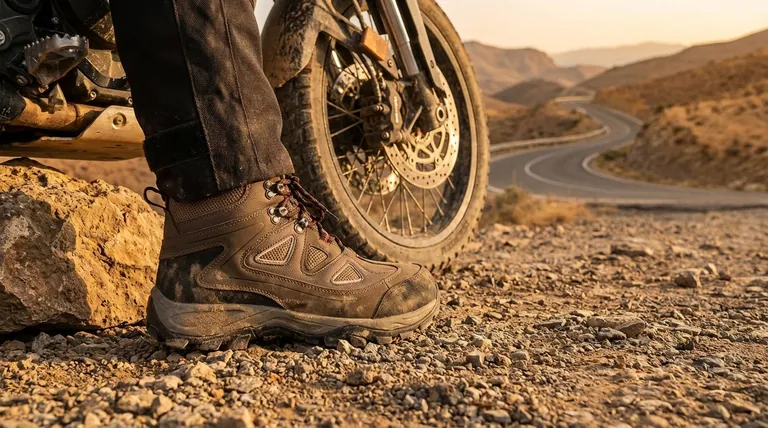
The Anatomy of Motorcycle Boot Protection
To understand a boot's value, you must understand the specific injuries it is built to prevent. The protection is not a single feature but a system of reinforcing elements working together.
Guarding Against Direct Impact
In an accident, your feet and legs can be struck by the motorcycle itself or other objects.
A boot's armor absorbs and distributes this focused energy. This is achieved through reinforced toe boxes, heel counters, and rigid shin plates, often made from hardened TPU (thermoplastic polyurethane).
Resisting Abrasive Forces
When a rider falls, sliding across pavement is almost inevitable. Standard shoes and skin can be worn away in seconds.
Motorcycle boots are constructed from highly abrasion-resistant materials, such as thick leather or advanced textiles. These materials are designed to withstand the slide, protecting the skin and bone underneath from catastrophic injury.
Preventing Torsion and Hyper-Extension
Perhaps the most critical function is stabilizing the ankle joint. The forces in a crash can easily twist, break, or dislocate an ankle.
Most riding boots feature a rigid chassis and dedicated anti-torsion systems. This structural stiffness prevents the ankle from bending sideways or rotating beyond its natural range of motion, a feature completely absent in work or hiking boots.
Understanding the Trade-offs: Protection vs. Practicality
No single boot is perfect for every situation. Choosing the right one involves balancing a few key factors.
The Spectrum of Protection
Not all boots offer the same level of safety. A full-height race boot provides maximum rigidity and impact absorption but is stiff and difficult to walk in.
Conversely, a shorter, more casual "riding shoe" offers far greater comfort and flexibility for city use but provides less shin protection and reduced anti-torsion support.
The Role of Certification
Look for boots with a CE rating (e.g., EN 13634:2017). This certification indicates the boot has been independently tested to meet specific minimum standards for abrasion resistance, impact cut, and transverse rigidity.
This rating is your most reliable indicator of a boot's protective capabilities, moving your decision from guesswork to an informed choice.
The Comfort and Usability Factor
The safest boot in the world is useless if you don't wear it. Extreme stiffness, a long break-in period, or lack of weatherproofing can lead riders to choose less-safe options.
It is crucial to find a balance where the boot provides adequate protection for your riding style while being comfortable enough for you to wear on every single ride.
Selecting the Right Boot for Your Ride
Your choice should be directly informed by how and where you ride.
- If your primary focus is daily commuting or casual city riding: Prioritize certified riding shoes or short boots that balance verified protection with essential off-bike walkability.
- If your primary focus is touring or long-distance travel: Look for taller, waterproof boots that offer robust ankle support and all-day comfort to handle varied roads and weather conditions.
- If your primary focus is track days or performance sport riding: Your only option should be a full-height race boot with advanced torsional control systems, replaceable sliders, and the highest level of certification.
Ultimately, investing in a proper motorcycle boot is a direct investment in your ability to walk away from an accident.
Summary Table:
| Body Part Protected | Boot Feature | Purpose |
|---|---|---|
| Feet & Toes | Reinforced Toe Box & Heel Counter | Prevents crushing injuries from impact. |
| Ankles | Rigid Chassis & Anti-Torsion System | Prevents twisting, dislocation, and breaks. |
| Shins | Hard Shin Plate & Armor | Absorbs and distributes direct impact energy. |
| Skin & Soft Tissue | Abrasion-Resistant Materials (e.g., Leather) | Protects against road rash during a slide. |
Ready to Equip Your Riders with Superior Protection?
As a large-scale manufacturer, 3515 produces a comprehensive range of CE-certified motorcycle boots for distributors, brand owners, and bulk clients. Our production capabilities encompass all types of riding footwear, from urban commuter boots to high-performance race models, ensuring your customers get the precise protection they need.
Partner with us to:
- Source high-quality, safety-focused footwear built to exacting standards.
- Access a diverse catalog tailored to various riding styles and market demands.
- Benefit from reliable, large-volume manufacturing that ensures consistent supply.
Contact our team today to discuss your specific requirements and place your order.
Visual Guide
Related Products
- Wholesale Tactical Boots High-Traction & Reflective for Bulk & Brand Orders
- High Performance Fire-Retardant Waterproof Safety Boots
- Durable Goodyear Welt Leather Work Boots for Wholesale & Private Label
- Wholesale High-Traction Camo Boots - Custom Manufacturer for Brands
- Heavy-Duty Waterproof Nubuck Safety Boots Safety Shoes for Bulk Supply
People Also Ask
- How do tactical boots protect against injuries? Discover the Integrated Safety System
- What is the role of professional 3D medical imaging software in optimizing tactical boot design and performance?
- What are the advantages and disadvantages of tactical boots? Lightweight Comfort vs. Rugged Durability
- What are the key features to look for in the best tactical boots? A Guide to Peak Performance
- What makes the traction of tactical boots superior? Unlock the Science of Unbeatable Grip



















