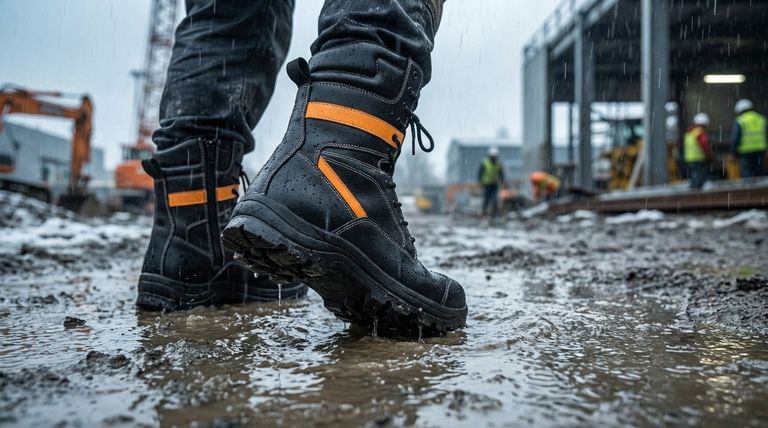
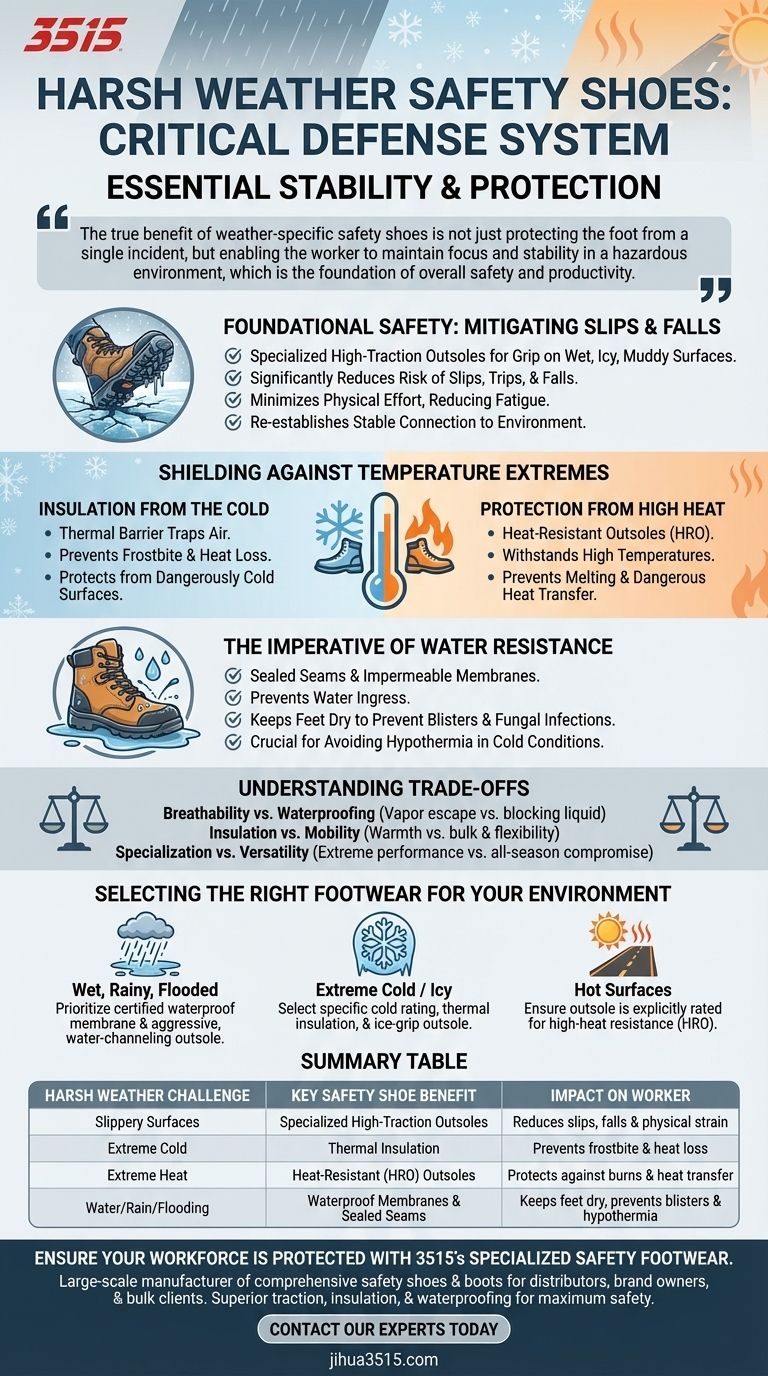
In harsh weather, safety shoes are a critical defense system. They provide essential stability and protection against environmental hazards by offering superior traction on slick surfaces, insulation from extreme temperatures, and a barrier against water, directly reducing physical strain and preventing weather-related injuries.
The true benefit of weather-specific safety shoes is not just protecting the foot from a single incident, but enabling the worker to maintain focus and stability in a hazardous environment, which is the foundation of overall safety and productivity.
Foundational Safety: Mitigating Slips and Falls
In adverse weather, the ground itself becomes a primary hazard. The most fundamental benefit of specialized safety shoes is to re-establish a stable connection between the worker and their environment.
The Critical Role of Traction
Specialized safety shoes feature outsoles made from compounds and tread patterns designed specifically for grip on wet, icy, or muddy surfaces. This significantly reduces the risk of slips, trips, and falls, which are among the most common workplace accidents.
Reducing Physical Strain
When traction is poor, the body's muscles must constantly work to maintain balance. A high-traction sole provides a secure footing, which minimizes this constant physical effort, reduces fatigue, and allows the worker to focus on their task safely.
Shielding Against Temperature Extremes
A worker's feet are highly susceptible to heat transfer from the ground. Maintaining a stable foot temperature is crucial for both comfort and the prevention of serious injury.
Insulation from the Cold
For cold weather, insulated safety boots use materials that trap air to create a thermal barrier. This protects the foot from dangerously cold surfaces, preventing heat loss and reducing the risk of frostbite and other cold-related health issues.
Protection from High Heat
Conversely, in hot conditions or when working on surfaces like fresh asphalt, heat-resistant outsoles are essential. These soles are engineered to withstand high temperatures without melting or transferring dangerous levels of heat to the foot.
The Imperative of Water Resistance
Water is a persistent threat in many harsh weather scenarios, from rain and snow to flooded work areas. Keeping feet dry is a matter of health, safety, and comfort.
Preventing Water Ingress
Waterproof safety shoes utilize sealed seams and impermeable membranes to create a barrier that stops water from entering. This is the first and most important line of defense against wet conditions.
The Impact of Dry Feet
Dry feet are essential for preventing blisters, fungal infections, and discomfort. More critically, wet feet lose heat up to 25 times faster than dry feet, dramatically increasing the risk of hypothermia in cold environments.
Understanding the Trade-offs
Selecting the right footwear involves balancing competing features. A boot designed for one extreme condition may not be ideal for another.
Breathability vs. Waterproofing
A completely waterproof boot can sometimes trap sweat, leading to discomfort. High-end models often incorporate breathable membranes that allow vapor to escape while blocking liquid water, but this feature typically comes at a higher cost.
Insulation vs. Mobility
Heavily insulated boots provide excellent protection in extreme cold but can be bulky and less flexible. This can be a drawback for tasks that require significant agility or climbing.
Specialization vs. Versatility
An all-season safety boot is a compromise. While versatile, it will not perform as well as a specialized boot designed specifically for deep cold or consistently flooded conditions. The choice depends on the most frequent and severe hazards a worker will face.
Selecting the Right Footwear for Your Environment
Your choice of safety shoe should be a direct response to the primary environmental challenges of your worksite.
- If your primary focus is wet, rainy, or flooded conditions: Prioritize a boot with a certified waterproof membrane and an aggressive, high-traction outsole designed to channel water away.
- If your primary focus is extreme cold or icy surfaces: Select footwear with a specific cold temperature rating, thermal insulation, and an outsole compound engineered for grip on ice.
- If your primary focus is exposure to hot surfaces: Ensure the outsole is explicitly rated for high-heat resistance (often designated "HRO") to prevent degradation and protect your feet.
Ultimately, choosing the right safety footwear is a proactive investment in worker well-being, safety, and uninterrupted performance.
Summary Table:
| Harsh Weather Challenge | Key Safety Shoe Benefit | Impact on Worker |
|---|---|---|
| Slippery Surfaces (Wet, Ice, Mud) | Specialized High-Traction Outsoles | Reduces slips, falls, and physical strain |
| Extreme Cold | Thermal Insulation | Prevents frostbite and heat loss |
| Extreme Heat / Hot Surfaces | Heat-Resistant (HRO) Outsoles | Protects against burns and heat transfer |
| Water, Rain, Flooding | Waterproof Membranes & Sealed Seams | Keeps feet dry, prevents blisters and hypothermia |
Ensure your workforce is protected against harsh weather conditions with 3515's specialized safety footwear.
As a large-scale manufacturer, 3515 produces a comprehensive range of safety shoes and boots for distributors, brand owners, and bulk clients. Our production capabilities encompass all types of weather-specific footwear, designed to provide superior traction, insulation, and waterproofing for maximum safety and productivity.
Ready to equip your team with the right protection? Contact our experts today to discuss your specific needs and discover how 3515 can be your trusted manufacturing partner.
Visual Guide
Related Products
- Premium Suede Sport Safety Shoes for Wholesale & Bulk Orders
- Premium Lightweight Safety Shoes for Wholesale & Bulk Orders
- Wholesale Anti-Smash & Puncture-Proof Safety Shoes Custom Manufacturing for Brands
- Premium KPU Injection Athletic Style Safety Shoes
- Premium Safety Shoes with Rotating Buckle Safety Sneakers
People Also Ask
- What industries have specific OSHA footwear requirements? Ensure Compliance & Protect Your Workforce
- What are the primary functions of professional safety shoes? Maximize Safety in Water Supply Confined Spaces
- What role do specialized safety shoes play in preventing falls? Engineering Stability in Industrial Environments
- How does professional industrial cleaning equipment maintain the performance stability of safety shoes? Pro Maintenance
- Why must safety training be synchronized with the provision of physical safety shoes? Achieve Optimal Workplace Protection