
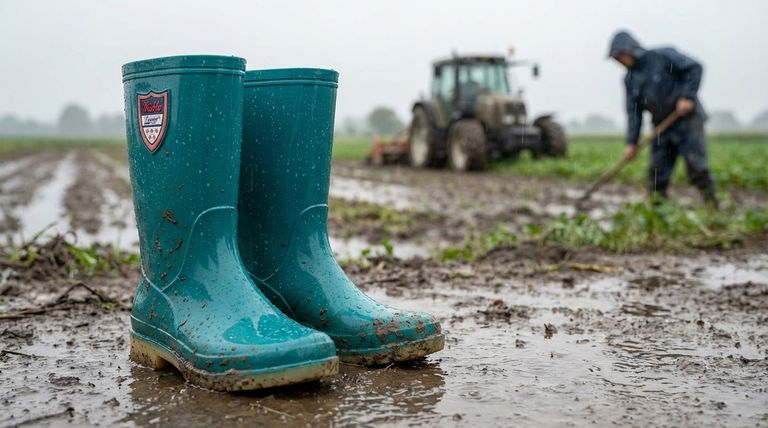
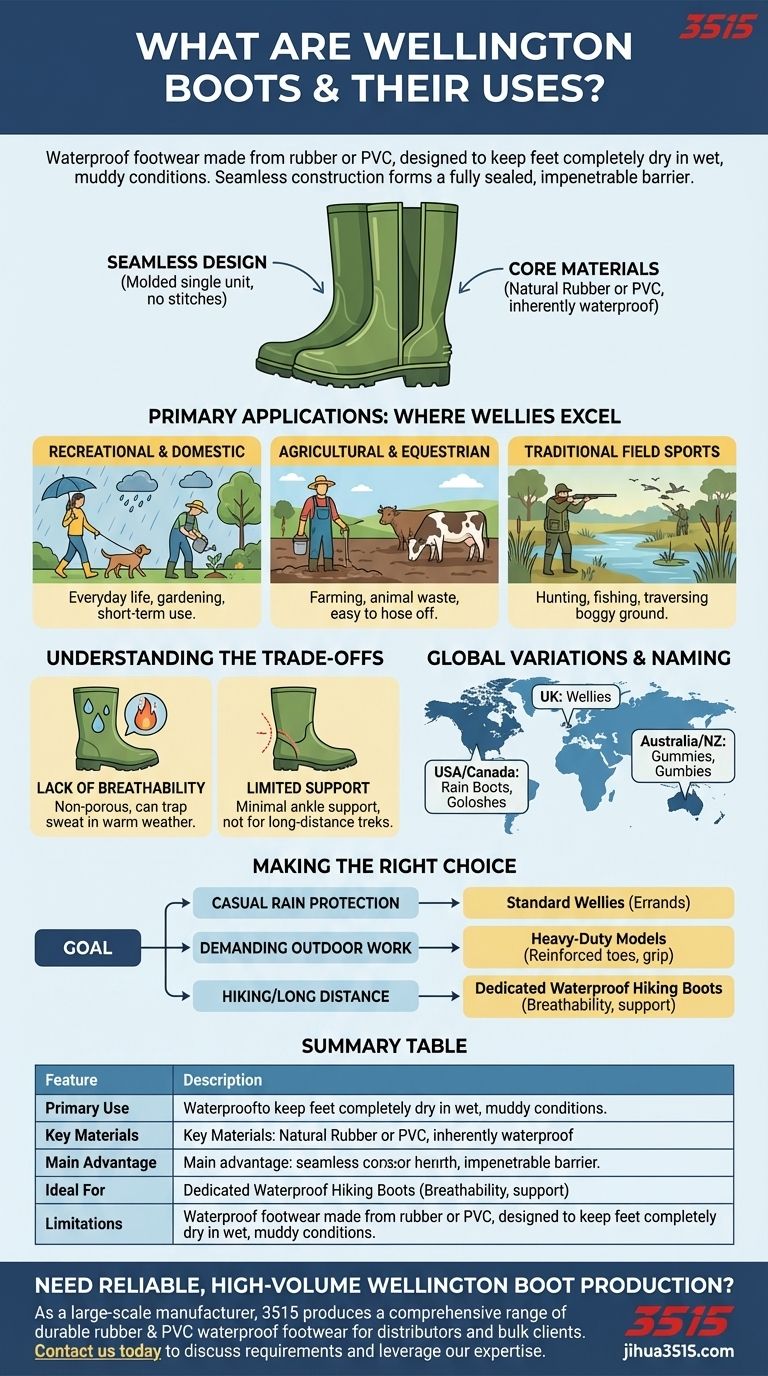
In short, Wellington boots are a type of waterproof footwear made from rubber or synthetic materials like PVC. They are designed primarily to keep your feet completely dry when walking on wet or muddy ground, or during rainy and snowy weather. Their seamless construction makes them ideal for a range of outdoor activities where water and mud are a primary concern.
The core purpose of a Wellington boot is not just to resist water, but to provide a fully sealed, impenetrable barrier. This makes them a specialized tool for specific wet and messy conditions, distinct from water-resistant footwear.
The Defining Characteristic: Waterproof Construction
The effectiveness of a Wellington boot comes down to how it's made. Unlike traditional boots that are stitched together from multiple pieces of material, Wellingtons are typically molded as a single unit.
Core Materials
The vast majority of these boots are made from either natural rubber or Polyvinyl Chloride (PVC). These materials are chosen specifically for their inherent waterproof properties and durability. This ensures water cannot soak through the material itself.
Seamless Design
The molded, seamless design is the boot's most critical feature. It eliminates the seams, stitches, and joints found in other footwear, which are the most common points of failure for water entry. This creates a truly waterproof shell from top to bottom.
Primary Applications: Where Wellies Excel
Wellington boots are fundamentally practical, designed for scenarios where staying dry and clean is the top priority.
Recreational and Domestic Use
For everyday life, they are the go-to choice for walking the dog on a rainy day, gardening in wet soil, or for children playing outdoors. Their simple, slip-on design makes them highly convenient for short-term use.
Agricultural and Equestrian Activities
In farming and equestrian circles, Wellington boots are essential equipment. They protect against mud, animal waste, and wet ground, and they can be hosed off easily at the end of the day, making them incredibly practical for messy work environments.
Traditional Field Sports
Historically, Wellington boots have been associated with outdoor country pursuits like hunting and fishing. They allow the wearer to traverse boggy, wet, or marshy terrain without compromising comfort or getting their feet wet.
Understanding the Trade-offs
While unmatched for waterproofness, the design of a Wellington boot comes with important limitations that you must understand.
Lack of Breathability
The very quality that makes them waterproof—their non-porous rubber or plastic construction—also means they are not breathable. On long walks or in warmer weather, this can trap sweat and lead to discomfort.
Limited Support
Standard Wellington boots offer minimal ankle support and cushioning compared to dedicated hiking or work boots. They are not designed for long-distance treks over uneven terrain where robust foot and ankle support is critical.
Global Variations and Naming
While the design is universal, the name often changes depending on the region.
Common Aliases
In the UK, they are famously known as "wellies." In the United States and Canada, they are more commonly called "rain boots" or sometimes "goloshes." In Australia and New Zealand, you will often hear them referred to as "gummies" or "gumbies."
Cultural Significance
The name "gumboot" in South Africa is famously associated with the "gumboot dance," a form of expressive dance created by miners as a way to communicate in the mines.
Making the Right Choice for Your Goal
- If your primary focus is casual rain protection: A standard pair of Wellingtons or rain boots is a perfect, convenient solution for errands and short walks in the rain.
- If your primary focus is demanding outdoor work: Seek out heavy-duty models designed for agricultural use, which often feature reinforced toes and superior grip.
- If your primary focus is hiking or long-distance walking: Choose dedicated waterproof hiking boots, as they provide the essential breathability and ankle support that Wellingtons lack.
By understanding their specific purpose, you can leverage their unparalleled waterproof protection when you need it most.
Summary Table:
| Feature | Description |
|---|---|
| Primary Use | Keeping feet dry in wet, muddy, or rainy conditions |
| Key Materials | Natural rubber or PVC |
| Main Advantage | Fully waterproof, seamless, one-piece molded construction |
| Ideal For | Gardening, farming, equestrian activities, field sports, casual rainwear |
| Limitations | Low breathability, limited ankle support for long walks |
Need reliable, high-volume Wellington boot production?
As a large-scale manufacturer, 3515 produces a comprehensive range of waterproof footwear for distributors, brand owners, and bulk clients. Our production capabilities encompass all types of durable rubber and PVC boots, ensuring superior quality and consistent supply for your market.
Contact us today to discuss your specific requirements and leverage our manufacturing expertise for your business.
Visual Guide
Related Products
- Durable Waterproof Rain Boots | Custom Manufacturer for Wholesale & Brands
- Durable Goodyear Welt Leather Work Boots for Wholesale & Private Label
- Wholesale Durable Leather Work Boots | 8-Inch Goodyear Welt Manufacturer
- High-Traction Suede Tactical Boots Wholesale & Custom Manufacturing
- Premium Wholesale Tactical Style Safety Shoes Boots with Quick Lacing
People Also Ask
- What are the main materials for waterproof rain boots? Choose the Right Material for Durability & Comfort
- What is the overall recommendation for choosing rain boot materials? A Guide to Rubber vs. PVC
- How does boot height affect waterproofing? Choose the Right Height for Ultimate Protection
- Why are rain boots more flexible and comfortable than snow boots? The Key Differences Explained
- What are the best types of shoes for different gardening conditions? Find Your Perfect Match.



















