
At its core, a trench boot is a modern footwear style directly inspired by the rugged service boots worn by American soldiers in World War I. While its origins are purely military—where it was also known as the "Pershing boot"—the contemporary version has evolved to blend this classic heritage with refined materials and construction suitable for everyday wear.
The trench boot bridges the gap between historical military function and modern style. It retains the durable, supportive silhouette of its ancestor but is now crafted with a focus on timeless aesthetics, high-quality materials, and long-term wearability.
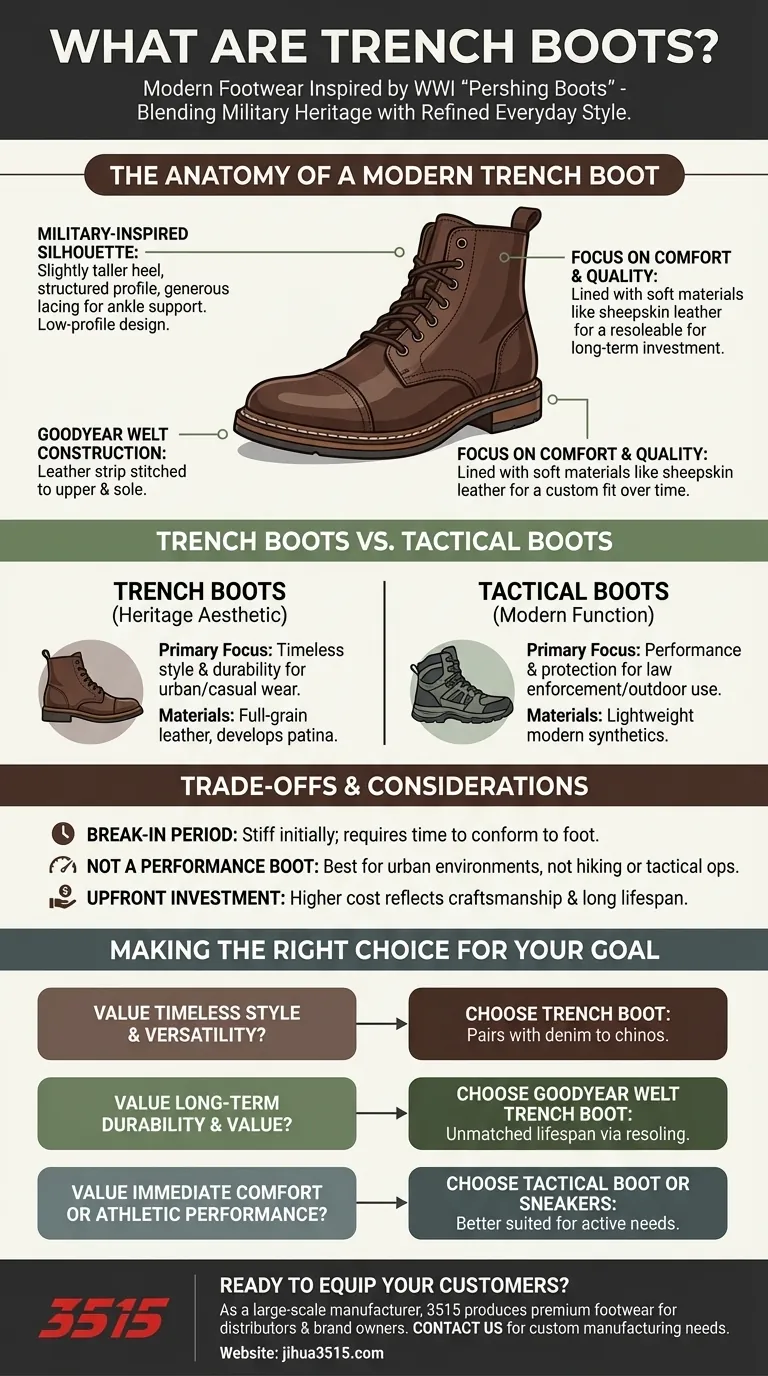
The Anatomy of a Modern Trench Boot
To understand the trench boot, you must look at the key characteristics that define its modern form. These elements separate it from both formal dress boots and purely functional tactical boots.
Military-Inspired Silhouette
The boot maintains a distinct military DNA. It typically features a slightly taller heel than a standard work boot, a structured profile, and a generous lacing system that provides excellent ankle support.
This design is often described as "low-profile," meaning it's less bulky than a traditional combat boot, allowing it to pair easily with a wide range of clothing.
Uncompromising Construction
A defining feature of a high-quality trench boot is its Goodyear welt construction. This is a time-tested method where a strip of leather is stitched to the upper and the sole, creating an exceptionally durable and water-resistant bond.
Critically, a Goodyear welt allows the boot to be resoled multiple times, transforming it from a disposable item into a long-term investment that can last for decades.
A Focus on Comfort and Quality
While the original WWI boots were built for utility above all else, modern trench boots prioritize wearer comfort. They are often lined with soft, supple materials like sheepskin leather.
This commitment to quality materials ensures the boot not only looks good but also molds to your foot over time, creating a custom, comfortable fit.
Trench Boots vs. Tactical Boots: A Key Distinction
Many people confuse trench boots with modern tactical boots, but their purpose and design are fundamentally different.
Function Over Form
Tactical boots are purpose-built tools designed for law enforcement or military personnel. They prioritize performance metrics like light weight, aggressive traction, and protection, often using modern synthetic materials.
Trench boots, in contrast, prioritize classic style and durability for civilian life. Their design goal is versatility across casual and smart-casual settings, not performance in extreme conditions.
Aesthetics and Materials
The visual difference is clear. Tactical boots have a modern, athletic appearance. Trench boots are defined by their heritage aesthetic, relying on traditional materials like full-grain leather that develop a rich patina over time.
Understanding the Trade-offs
The commitment to traditional construction and materials comes with specific considerations that every potential buyer should understand.
The Break-in Period
Boots made with Goodyear welts and thick leather are famously stiff when new. Expect a significant break-in period as the tough leather and supportive footbed conform to the shape of your foot.
Not a True Performance Boot
Despite its military roots, the modern trench boot is not designed for hiking, tactical operations, or heavy outdoor work. Its leather sole and classic construction are best suited for urban and casual environments.
The Upfront Investment
Handmade construction, Goodyear welting, and premium leathers mean that a quality trench boot is a significant investment. The cost reflects the craftsmanship and the boot's potential for a long lifespan.
Making the Right Choice for Your Goal
Deciding if a trench boot is right for you depends entirely on what you value in your footwear.
- If your primary focus is timeless style and versatility: The trench boot is an exceptional choice that pairs effortlessly with everything from rugged denim to smart-casual chinos.
- If your primary focus is long-term durability and value: Choose a model with a Goodyear welt, as the ability to resole it provides a lifespan unmatched by most modern footwear.
- If your primary focus is immediate, out-of-the-box comfort or athletic performance: A modern tactical boot or a pair of sneakers would be a more appropriate choice for your needs.
Ultimately, investing in a well-made trench boot is about choosing a piece of functional history built to last a lifetime.
Summary Table:
| Feature | Trench Boots | Tactical Boots |
|---|---|---|
| Primary Focus | Timeless style & durability | Performance & protection |
| Construction | Goodyear welt (resoleable) | Modern synthetics |
| Materials | Full-grain leather, sheepskin lining | Synthetic, lightweight fabrics |
| Best For | Urban/casual wear, long-term investment | Law enforcement, outdoor activities |
Ready to equip your customers with premium, durable footwear?
As a large-scale manufacturer, 3515 produces a comprehensive range of trench boots and other footwear for distributors, brand owners, and bulk clients. Our production capabilities encompass all types of shoes and boots, ensuring high quality, competitive pricing, and reliable supply.
Contact us today to discuss your custom manufacturing needs and elevate your product line!
Visual Guide
Related Products
- Durable Military Combat Boots with Water Drainage for Wholesale & OEM
- High-Traction Suede Tactical Boots Wholesale & Custom Manufacturing
- Durable Leather High-Ankle Tactical Boots for Wholesale & Custom Manufacturing
- Wholesale Tactical Boots High-Traction & Reflective for Bulk & Brand Orders
- Durable Leather Tactical Boots Wholesale & Custom Manufacturing for Brands
People Also Ask
- Why must gait validation for military applications be conducted in combat boots? Ensure Data Accuracy for Soldiers
- What are the common types of combat boots? Find the Right Boot for Your Mission
- What factors should be considered when choosing military boots for hiking? Durability vs. Weight for Your Terrain
- What are the key considerations when choosing military boots? Prioritize Compliance, Environment & Fit
- How should the midfoot and heel fit in military boots? Achieve a Snug, Secure Fit for Blister Prevention
















