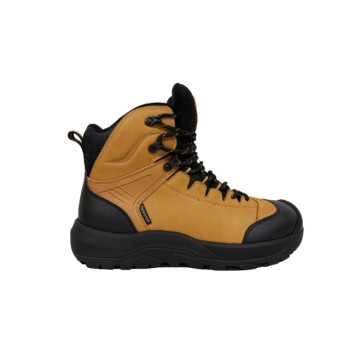
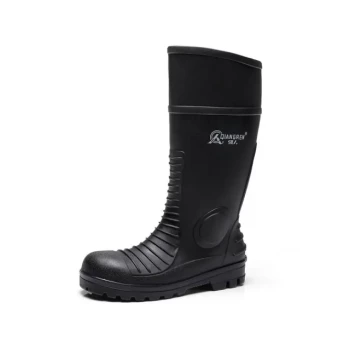
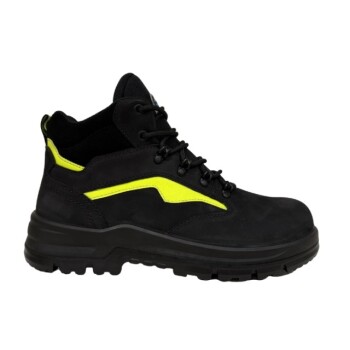
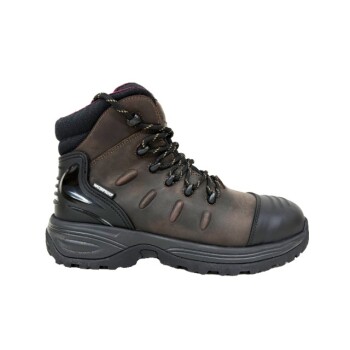
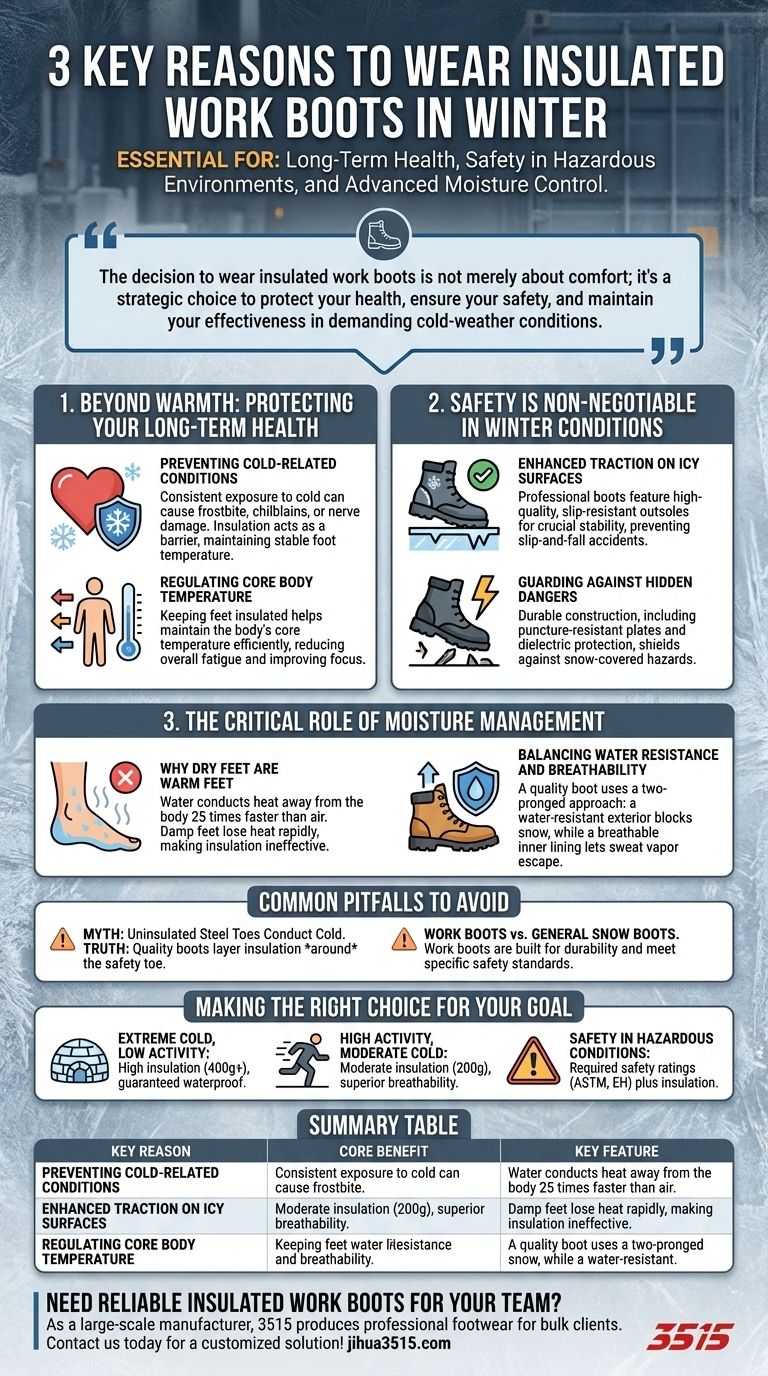
In short, insulated work boots are essential in winter for three primary reasons: they provide critical long-term health benefits by preventing cold-related conditions, incorporate specific safety features for hazardous environments, and offer advanced moisture control to keep your feet both dry and warm.
The decision to wear insulated work boots is not merely about comfort; it's a strategic choice to protect your health, ensure your safety, and maintain your effectiveness in demanding cold-weather conditions. They are a professional tool, not just winter footwear.
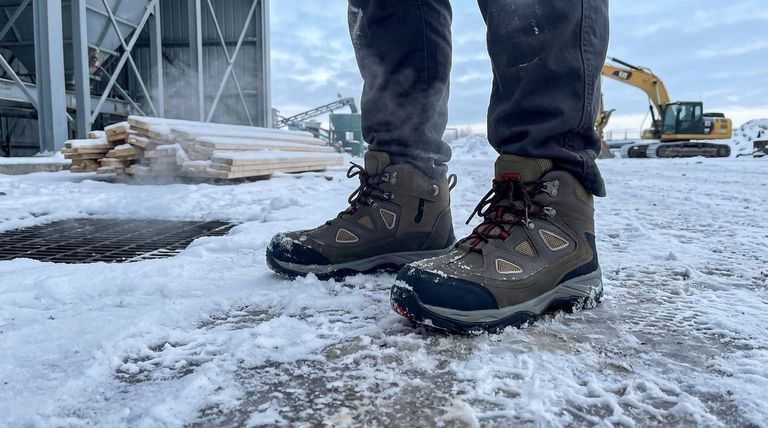
Beyond Warmth: Protecting Your Long-Term Health
Your body's first priority in the cold is to protect vital organs, which it does by reducing blood flow to your extremities. Insulated boots directly counteract this, providing benefits that go far beyond simple comfort.
Preventing Cold-Related Conditions
Consistent exposure to cold can lead to serious health issues like frostbite, chilblains, or nerve damage. Proper insulation acts as a barrier, maintaining a stable temperature around your feet and preventing the onset of these damaging and painful conditions.
Regulating Core Body Temperature
You lose a significant amount of body heat through your feet. By keeping them properly insulated, you help your entire body maintain its core temperature more efficiently. This reduces overall fatigue and allows you to stay focused and productive on the job.
Safety is Non-Negotiable in Winter Conditions
Winter introduces unique hazards to any work site. Insulated work boots are engineered with features specifically designed to mitigate these risks, which standard snow boots often lack.
Enhanced Traction on Icy Surfaces
One of the greatest risks in winter is a slip-and-fall accident on ice or snow. Professional work boots feature high-quality, slip-resistant outsoles designed to grip treacherous surfaces, providing crucial stability and preventing injury.
Guarding Against Hidden Dangers
Snow and slush can easily hide sharp objects, uneven ground, or electrical hazards. The durable construction of a work boot, often including features like puncture-resistant plates and dielectric protection, shields you from dangers you may not see.
The Critical Role of Moisture Management
Staying warm in the winter is impossible if you are wet. Effective insulated boots manage moisture from both the outside environment and from your own body.
Why Dry Feet are Warm Feet
Water conducts heat away from the body 25 times faster than air. If your socks and feet become damp from sweat, you will lose heat rapidly, making even the thickest insulation ineffective.
Balancing Water Resistance and Breathability
A quality boot uses a two-pronged approach. It features a water-resistant or waterproof exterior to block snow and slush from getting in, while also incorporating a breathable inner lining that allows sweat vapor to escape. This system is essential for keeping feet dry from the inside out.
Common Pitfalls to Avoid
Choosing the right boot involves understanding the nuances that separate professional gear from casual winter wear.
The Myth of Cold Steel Toes
A common misconception is that steel-toed boots are inherently cold. An uninsulated steel toe will rapidly conduct cold to your foot. However, quality insulated work boots are designed with insulation layered around the safety toe, neutralizing this effect and providing both warmth and protection.
Work Boots vs. General Snow Boots
While a snow boot provides warmth and some traction, it is not a substitute for a work boot. Work boots are built for durability and meet specific safety standards (e.g., impact resistance, electrical hazard protection) that are required in professional environments.
Making the Right Choice for Your Goal
Select your boot based on the specific demands of your environment and activity level.
- If your primary focus is extreme cold with low activity: Prioritize a boot with a higher insulation rating (e.g., 400g or more) and a guaranteed waterproof membrane.
- If your primary focus is high activity in moderate cold: Choose a boot with moderate insulation (e.g., 200g) and superior breathability to manage sweat effectively.
- If your primary focus is safety in hazardous conditions: Ensure the boot has the required safety ratings (e.g., ASTM-certified safety toe, EH rating) in addition to the appropriate level of insulation.
Investing in the correct insulated work boot is a direct investment in your personal safety and well-being on the job.
Summary Table:
| Key Reason | Core Benefit | Key Feature |
|---|---|---|
| Health Protection | Prevents frostbite, regulates body temperature | Maintains stable foot temperature |
| Safety Enhancement | Reduces slip-and-fall risks, guards against hidden hazards | Slip-resistant outsoles, puncture-resistant plates |
| Moisture Management | Keeps feet dry from sweat and external moisture | Waterproof exterior, breathable lining |
Need reliable insulated work boots for your team? As a large-scale manufacturer, 3515 produces a comprehensive range of professional footwear for distributors, brand owners, and bulk clients. Our production capabilities encompass all types of insulated safety boots designed for harsh winter conditions—ensuring your workforce stays protected, warm, and productive. Contact us today to discuss your specific needs and get a customized solution!
Visual Guide
Related Products
- Premium Insulated Safety Boots and Shoes for Wholesale & Bulk Orders
- Durable Leather Work Boots for Wholesale & Custom Manufacturing
- Durable Leather Work Boots for Wholesale & Custom OEM Manufacturing
- Durable Moc-Toe Wedge Work Boots | Wholesale Manufacturing for Brands
- Wholesale Customizable Safety Boots Durable & Protective Footwear Manufacturing
People Also Ask
- What are the recommended insulation ratings for mild winter conditions? A Guide for Active & Stationary Workers
- How does insulation thickness correlate with temperature ranges? A Guide to Choosing the Right Warmth
- What insulation level is needed for severe cold and stationary work? 1200g or Higher is Essential
- What safety advantages do insulated boots offer beyond warmth? Dielectric Protection & Superior Grip
- How does fleece lining contribute to the warmth of insulated boots? Trapping Air for Superior Cold Protection