
At its core, a Western boot is defined by four key features: a tall shaft, an angled high heel, a distinct toe shape, and often elaborate decorative stitching. These elements are not merely stylistic; each originated from the practical, demanding needs of a horse-riding cowboy, creating a design that is both functional and iconic.
The unique design of a Western boot is a masterclass in purpose-built engineering. Every curve, stitch, and angle was originally developed not for fashion, but for the safety, durability, and efficiency required by a rider in the American West.
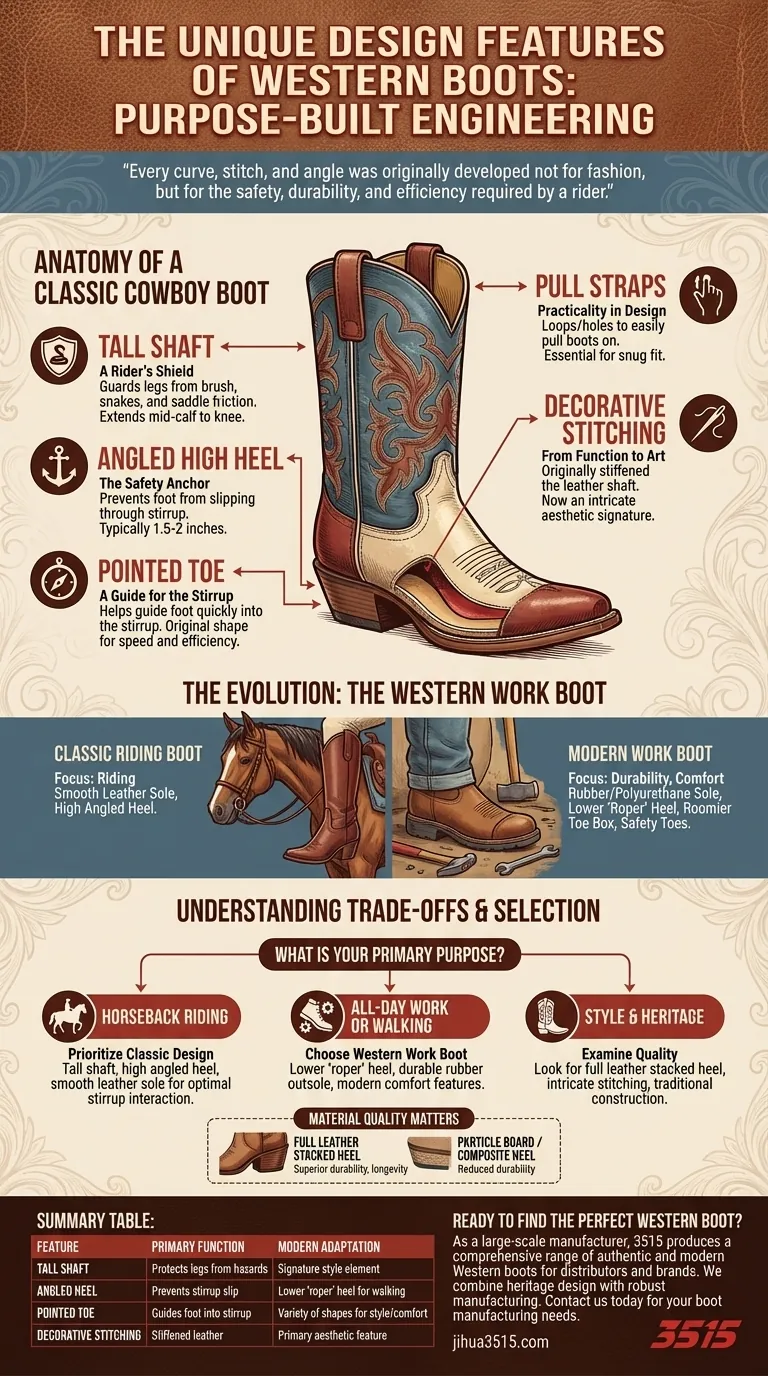
The Anatomy of a Classic Cowboy Boot
Understanding the classic Western boot begins with recognizing how each part served a specific, critical function for a person on horseback.
The Tall Shaft: A Rider's Shield
The boot shaft, which can extend from the mid-calf to the knee, acts as a protective shield. It guards the rider's legs against thorny brush, snake bites, and the friction and pinching of the saddle's stirrup leathers.
The Angled Heel: The Safety Anchor
The high, angled heel, typically 1.5 to 2 inches, is the boot's most crucial safety feature for a rider. It is designed to prevent the foot from accidentally slipping all the way through the stirrup, which could lead to being dragged in a fall.
The Pointed Toe: A Guide for the Stirrup
A traditionally pointed or narrowed toe serves a simple purpose: it helps a rider guide their foot quickly and easily into the stirrup. While styles vary today, this original shape was all about speed and efficiency.
The Pull Straps: Practicality in Design
The loops or holes at the top of the shaft, known as pull straps, are a straightforward feature. They allow the owner to easily pull their boots on, a necessity for a snug-fitting leather boot.
The Decorative Stitching: From Function to Art
The ornate stitching seen on the shaft was not always just for looks. It originally served to stiffen the leather, preventing the shaft from slumping. Over time, this functional reinforcement evolved into an intricate art form, becoming a signature element of the boot's aesthetic.
The Evolution: The Western Work Boot
As the role of the cowboy has changed, so has the boot. The modern Western work boot adapts the classic design for long hours of standing and walking on the ground, blending heritage style with contemporary technology.
A Focus on Durability and Safety
These boots are built for toughness. They often feature rubber or polyurethane outsoles for better traction, safety toes (steel or composite), and are made from leathers resistant to water and barnyard acids.
All-Day Comfort and Support
Unlike traditional riding boots, work variations prioritize ergonomics. They typically have a lower, wider heel (often called a "roper" heel) to distribute weight more evenly, along with supportive footbeds and roomier toe boxes to minimize fatigue.
Understanding the Trade-offs
Choosing a Western boot involves understanding the compromises between traditional design and modern comfort.
Classic Riding vs. All-Day Walking
A classic boot with a high, angled heel and a smooth leather sole is perfect for the saddle but can be uncomfortable for extensive walking on hard surfaces. A work boot with a rubber sole and lower heel is far better for life on the ground but less ideal for riding.
Material Quality Defines Longevity
High-quality boots use superior construction methods, such as a full leather stacked heel and molded leather heel counters. Cheaper alternatives may use particle board or composite materials within the heel, which significantly reduces the boot's durability and lifespan.
Selecting the Right Boot for Your Purpose
Your primary use case should dictate your choice.
- If your primary focus is horseback riding: Prioritize a classic design with a tall shaft, a high angled heel, and a smooth leather sole for optimal stirrup interaction.
- If your primary focus is all-day work or walking: Choose a Western work boot with a lower "roper" style heel, a durable rubber outsole, and modern comfort features.
- If your primary focus is style and heritage: Examine the quality of the leather, the intricacy of the stitching, and traditional construction methods like a full leather heel.
Understanding the purpose behind each design feature empowers you to choose a boot that is not just an accessory, but a tool perfectly suited to your needs.
Summary Table:
| Feature | Primary Function | Modern Adaptation |
|---|---|---|
| Tall Shaft | Protects legs from brush, snakes, and saddle friction. | Remains a signature style element. |
| Angled Heel | Prevents foot from slipping through the stirrup. | Lower "roper" heel for all-day walking comfort. |
| Pointed Toe | Guides foot easily into the stirrup. | Variety of toe shapes available for style and comfort. |
| Decorative Stitching | Originally stiffened the leather shaft. | A primary aesthetic feature showcasing craftsmanship. |
Ready to find the perfect Western boot for your needs?
As a large-scale manufacturer, 3515 produces a comprehensive range of authentic and modern Western boots for distributors, brand owners, and bulk clients. Whether you need classic riding boots built with traditional craftsmanship or durable work boots featuring modern comfort technology, our production capabilities cover all types of footwear.
We combine heritage design with robust manufacturing to deliver quality, durability, and style. Contact us today to discuss your specific requirements and discover how we can be your trusted boot manufacturing partner.
Visual Guide
Related Products
- Durable Goodyear Welt Leather Work Boots for Wholesale & Private Label
- Durable Military Combat Boots with Water Drainage for Wholesale & OEM
- High-Traction Suede Tactical Boots Wholesale & Custom Manufacturing
- Durable Leather Tactical Boots Wholesale & Custom Manufacturing for Brands
- Durable High-Ankle Tactical Boots for Wholesale & Custom Manufacturing
People Also Ask
- What is the difference between full-grain and top-grain leather? Premium Material Guide for Boot Manufacturers
- What are the advantages of leather as an upper material for work boots? Unmatched Durability & Custom Comfort
- Why is it important to waterproof leather work boots? Protect Your Investment and Performance
- How should new leather work boots be broken in? A Guide to Comfort and Durability
- What are the advantages of leather uppers in work boots? Unmatched Durability & Protection















