
Traditionally, Wellington boots were specialized military riding boots. Today, their use has expanded dramatically, making them a versatile staple for everything from practical farm work and industrial safety to casual outdoor leisure and even high fashion. They are fundamentally designed to keep feet dry, clean, and protected from the elements.
At its core, the Wellington boot's journey is one of radical adaptation. It evolved from a single-purpose piece of officer's attire into a universal symbol of practical protection, proving its worth in nearly any wet or muddy environment imaginable.
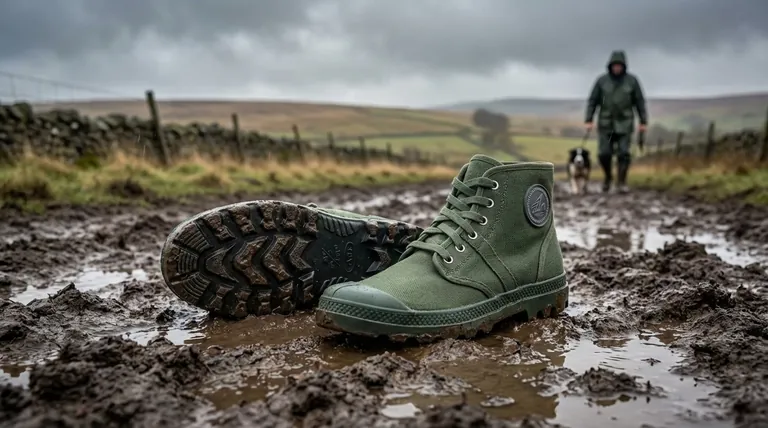
The Origins: From Battlefield to Countryside
The Wellington boot's story begins not in a field, but as an article of war commissioned for a specific, high-status purpose. Its transition into a civilian essential was a direct result of its superior, practical design.
The Military Riding Boot
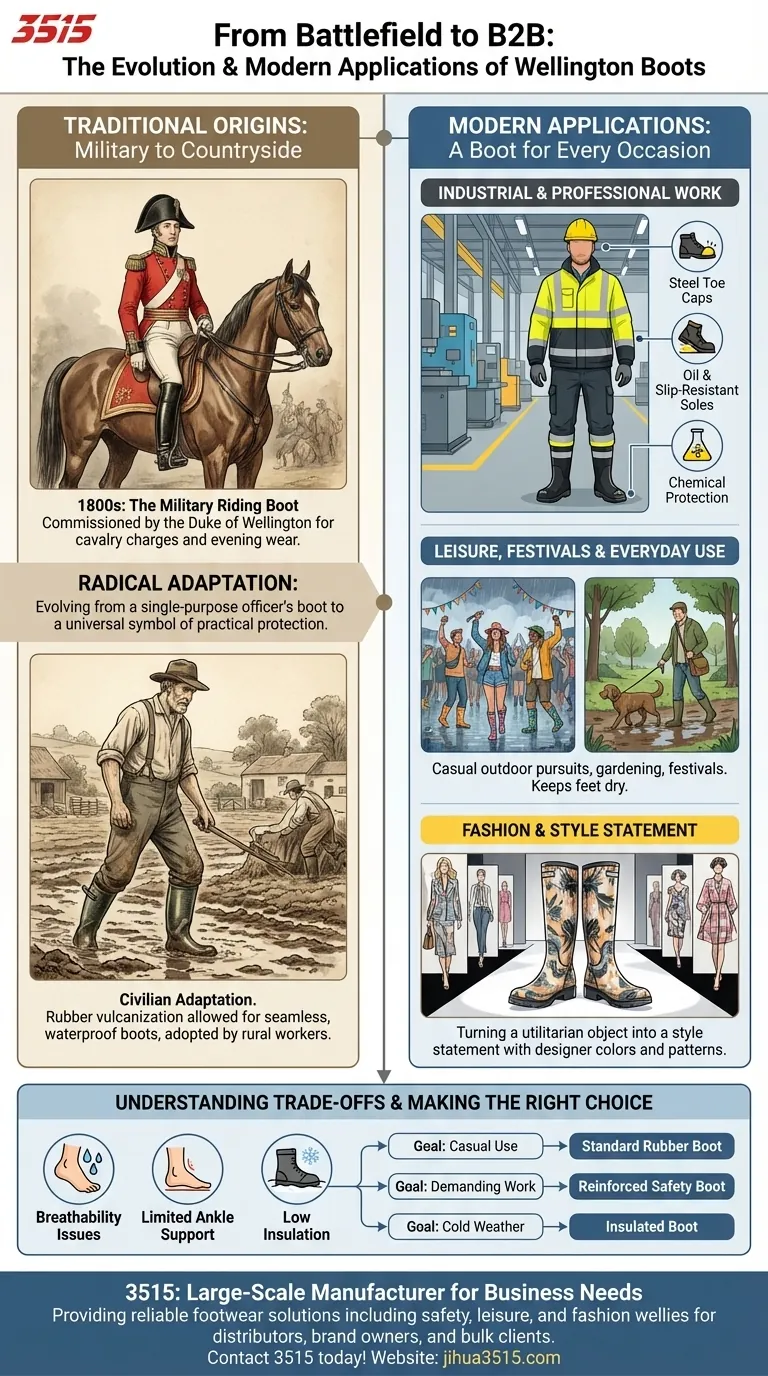
The original Wellington boot was a modified leather Hessian boot, requested by Arthur Wellesley, the first Duke of Wellington, in the early 19th century. He wanted a comfortable yet hard-wearing boot for military officers to wear during cavalry charges and formal evening wear.
The Civilian Adaptation
The boot’s waterproof potential was realized when rubber vulcanization was invented. This allowed for the creation of a seamless, fully waterproof version that was quickly adopted by farmers and rural workers who needed durable protection from mud and water.
Modern Uses: A Boot for Every Occasion
Today, the Wellington's applications are incredibly diverse, spanning leisure, professional work, and fashion. Its core function—protection from wet and messy conditions—remains the common thread.
Everyday Outdoor Activities
For most people, "wellies" are the go-to footwear for a wide range of casual outdoor pursuits. Their simple, effective design makes them ideal for keeping feet dry and comfortable during rainy-day walks, dog walking, gardening, and muddy school runs.
Festivals and Leisure
Wellington boots have become an iconic symbol of music festivals. Their ability to handle muddy fields makes them an essential piece of gear for attendees. They are also commonly used for camping trips, fishing, and standing on the sidelines at sporting events.
Industrial and Professional Work
In professional settings, the Wellington has evolved into a serious piece of personal protective equipment (PPE). It is standard issue in agriculture, fishing, and many heavy industrial environments.
Specialized Safety Features
Modern work wellies are far more advanced than their leisure counterparts. They can be reinforced with steel toe caps, feature oil- and slip-resistant outsoles, and are often made from specialized rubber compounds that protect against chemicals and other industrial hazards.
An Unlikely Fashion Staple
Beyond their practical uses, Wellington boots have also found a place in fashion. They frequently appear in seasonal fashion shows and are offered by designer brands in a vast array of colors and patterns, turning a utilitarian object into a style statement.
Understanding the Trade-offs
While incredibly versatile, the classic Wellington boot is not the perfect choice for every situation. Understanding its limitations is key to using it effectively.
Breathability and Comfort
Standard rubber wellies are not breathable. During prolonged wear, especially in warmer weather, this can lead to uncomfortable, sweaty feet. Proper moisture-wicking socks are essential for all-day comfort.
Ankle Support
The loose-fitting, pull-on design of a traditional Wellington boot offers minimal ankle support. For serious hiking or walking on highly uneven terrain, a dedicated hiking boot with a laced, supportive structure is a much safer option.
Insulation
A basic welly offers little insulation against extreme cold. While fine for cool, wet days, specialized insulated or neoprene-lined versions are necessary for keeping feet warm in snow and freezing temperatures.
Making the Right Choice for Your Goal
To select the right boot, you must first identify your primary need.
- If your primary focus is casual use (gardening, walks, festivals): A standard, comfortable rubber Wellington will serve you perfectly well.
- If your primary focus is demanding work (construction, farming): You must seek out a reinforced work boot with certified safety features like steel toes and slip-resistant soles.
- If your primary focus is cold weather protection: Look for boots specifically designed for winter, featuring neoprene linings or other thermal insulation.
Ultimately, the Wellington boot's enduring popularity comes from its simple, unwavering promise to protect you from the elements, no matter the context.
Summary Table:
| Traditional Use | Modern Applications | Key Features |
|---|---|---|
| Military Riding Boots | Industrial & Farm Work | Steel Toe Caps, Slip-Resistant Soles |
| Civilian Farmwear | Outdoor Leisure & Festivals | Waterproof Rubber, Casual Designs |
| - | Fashion & Style Statements | Designer Colors, Patterns |
| - | Cold-Weather Activities | Neoprene Lining, Insulation |
Need durable, versatile Wellington boots for your business or customers? As a large-scale manufacturer, 3515 produces a comprehensive range of footwear for distributors, brand owners, and bulk clients. Our production capabilities encompass all types of safety, leisure, and fashion boots—including steel-toe work boots, insulated winter wellies, and customizable designs. Let us provide the reliable footwear solutions your market demands. Contact 3515 today to discuss your needs!
Visual Guide
Related Products
- Durable Waterproof Rain Boots | Custom Manufacturer for Wholesale & Brands
- Durable Goodyear Welt Leather Work Boots for Wholesale & Private Label
- Wholesale Durable Leather Work Boots | 8-Inch Goodyear Welt Manufacturer
- High-Traction Suede Tactical Boots Wholesale & Custom Manufacturing
- Premium Wholesale Tactical Style Safety Shoes Boots with Quick Lacing
People Also Ask
- What are the main materials for waterproof rain boots? Choose the Right Material for Durability & Comfort
- What is the overall recommendation for choosing rain boot materials? A Guide to Rubber vs. PVC
- How does boot height affect waterproofing? Choose the Right Height for Ultimate Protection
- Why are rain boots more flexible and comfortable than snow boots? The Key Differences Explained
- What are the best types of shoes for different gardening conditions? Find Your Perfect Match.



















