
In the world of English riding, the three primary types of tall boots are the Field Boot, the Dress Boot, and the more specialized Dressage Boot. While they may appear similar at first glance, each is engineered for a specific discipline, with the core difference being the degree of ankle flexibility they provide to the rider.
Choosing the right tall boot is less about style and more about function. The fundamental difference comes down to ankle flexibility, which is directly tied to the specific needs of your riding discipline—whether you're jumping or focusing on flatwork.
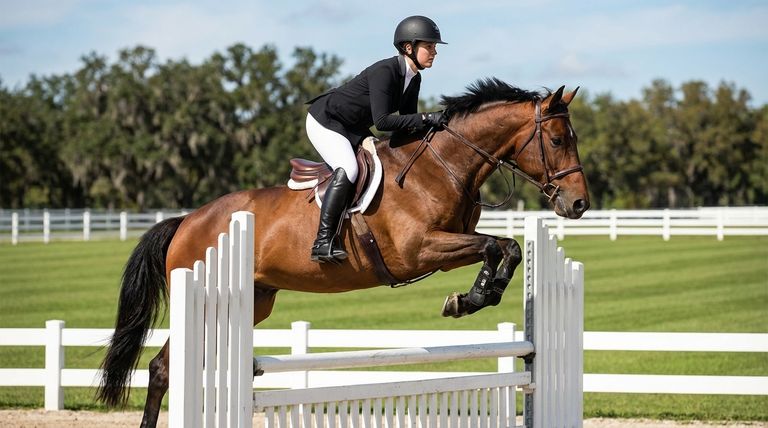
Field Boots: Designed for Flexibility
Field boots are the standard for riders in disciplines that require a shortened stirrup length and significant ankle flexion, such as show jumping, eventing, and fox hunting.
The Defining Feature: Ankle Laces
The most recognizable feature of a field boot is the lacing at the ankle. This design allows the boot to flex easily as the rider's heel drops into a deep jumping position.
Who Uses Them?
Riders in any jumping discipline—from hunters and jumpers to eventers—rely on field boots. Their flexible construction prevents pinching and allows for the mobility needed over fences.
Dress Boots: The Standard for Formal Flatwork
Dress boots offer a clean, traditional, and more rigid silhouette compared to field boots. They are designed to promote a long, stable leg position.
The Defining Feature: A Clean, Unlaced Ankle
The defining characteristic of a dress boot is its lack of laces across the instep. This creates a sleek, formal appearance suitable for the show ring.
Who Uses Them?
While they are the required footwear for dressage riders, dress boots are also worn by some hunter riders and eventers during the dressage phase of competition.
Dressage Boots: The Pinnacle of Rigidity
A dressage boot is a highly specialized type of dress boot, built with the specific demands of upper-level dressage in mind.
The Defining Feature: Reinforced Stiffness
These boots are considerably stiffer than standard dress boots. This reinforcement helps keep the rider's leg completely still, encouraging subtle aids and a quiet, elongated leg position.
Who Uses Them?
Dressage boots are used almost exclusively by riders who are serious about the discipline of dressage, as their rigidity is not suitable for jumping.
Understanding Key Variations and Features
Beyond the three core types, several design elements affect a boot's fit, function, and appearance.
The Hunt Boot Cuff
A traditional hunt boot is a type of dress boot distinguished by a contrasting cuff at the top, typically in black or patent leather on a black boot, or brown on a field boot. This is a stylistic appointment for formal fox hunting.
The Spanish Cut
Most modern tall boots feature a "Spanish cut" at the topline. This means the outside of the boot is cut higher than the inside, creating an elegant line that visually elongates the rider's leg.
Zippers vs. Pull-Ons
While traditional boots were pull-ons, nearly all modern boots incorporate a full-length back zipper. This makes them significantly easier to put on and take off while ensuring a snug, custom-like fit through the calf.
Choosing the Right Boot for Your Discipline
Your choice should be guided first and foremost by your primary riding activity.
- If your primary focus is jumping or eventing: Field boots are your essential choice for necessary ankle flexibility and comfort.
- If your primary focus is dressage or formal flatwork: A dress boot or a specialized dressage boot will provide the correct leg stability and formal appearance.
- If you are a multi-discipline rider: A softer, more broken-in dress boot can sometimes offer enough versatility for both flatwork and lower-level jumping.
Understanding these distinctions ensures your equipment is a tool that properly supports your goals in the saddle.
Summary Table:
| Boot Type | Key Feature | Primary Use |
|---|---|---|
| Field Boot | Ankle laces for flexibility | Jumping, Eventing, Fox Hunting |
| Dress Boot | Clean, unlaced ankle | Dressage, Formal Flatwork |
| Dressage Boot | Reinforced stiffness | Upper-Level Dressage |
Ready to Equip Your Riders with the Perfect Boot?
As a large-scale manufacturer, 3515 produces a comprehensive range of equestrian footwear for distributors, brand owners, and bulk clients. Our production capabilities encompass all types of riding boots, ensuring quality, durability, and the precise features riders demand.
Partner with us to offer your customers:
- Discipline-Specific Designs: From flexible field boots to rigid dressage boots.
- Superior Craftsmanship: Built for performance and longevity.
- Scalable Production: Reliable supply for your business needs.
Contact 3515 today to discuss your tall boot manufacturing requirements and elevate your product line.
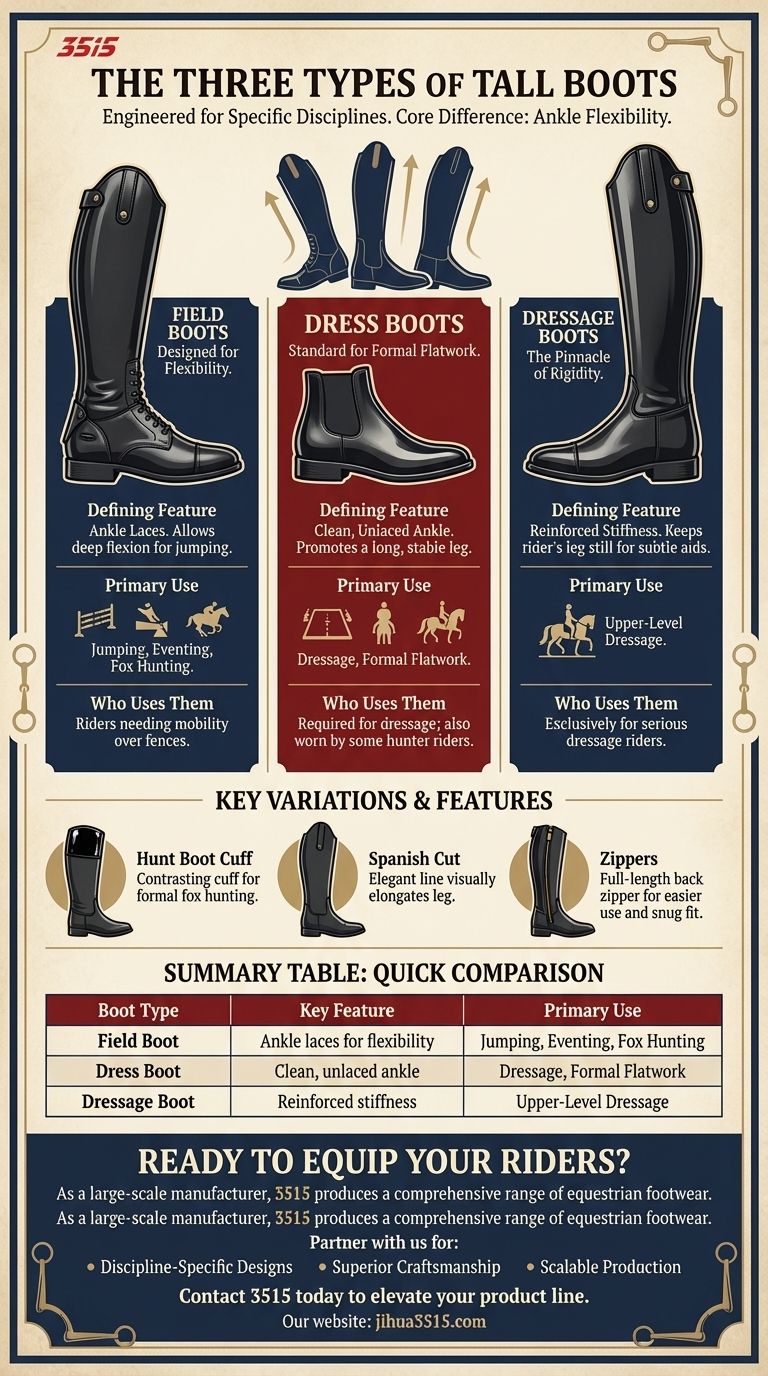
Visual Guide
Related Products
- Durable High-Ankle Tactical Boots Wholesale Manufacturer for Custom & Bulk Orders
- Durable High-Ankle Tactical Boots for Wholesale & Custom Manufacturing
- Durable Leather High-Ankle Tactical Boots for Wholesale & Custom Manufacturing
- Wholesale High-Traction Camo Boots - Custom Manufacturer for Brands
- Wholesale Tactical Boots High-Traction & Reflective for Bulk & Brand Orders
People Also Ask
- What specialized protections do tactical boots offer? Maximize Endurance with High-Performance Footwear
- How do tactical boots protect against injuries? Discover the Integrated Safety System
- What are the ideal use cases for tactical boots? Empower Your Performance in Demanding Scenarios
- Can tactical boots be stylish for everyday wear? Yes, with the right styling and features.
- What are the primary benefits of wearing tactical boots for everyday use? Get All-Day Comfort & Durability


















