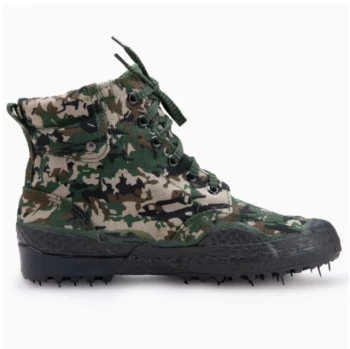
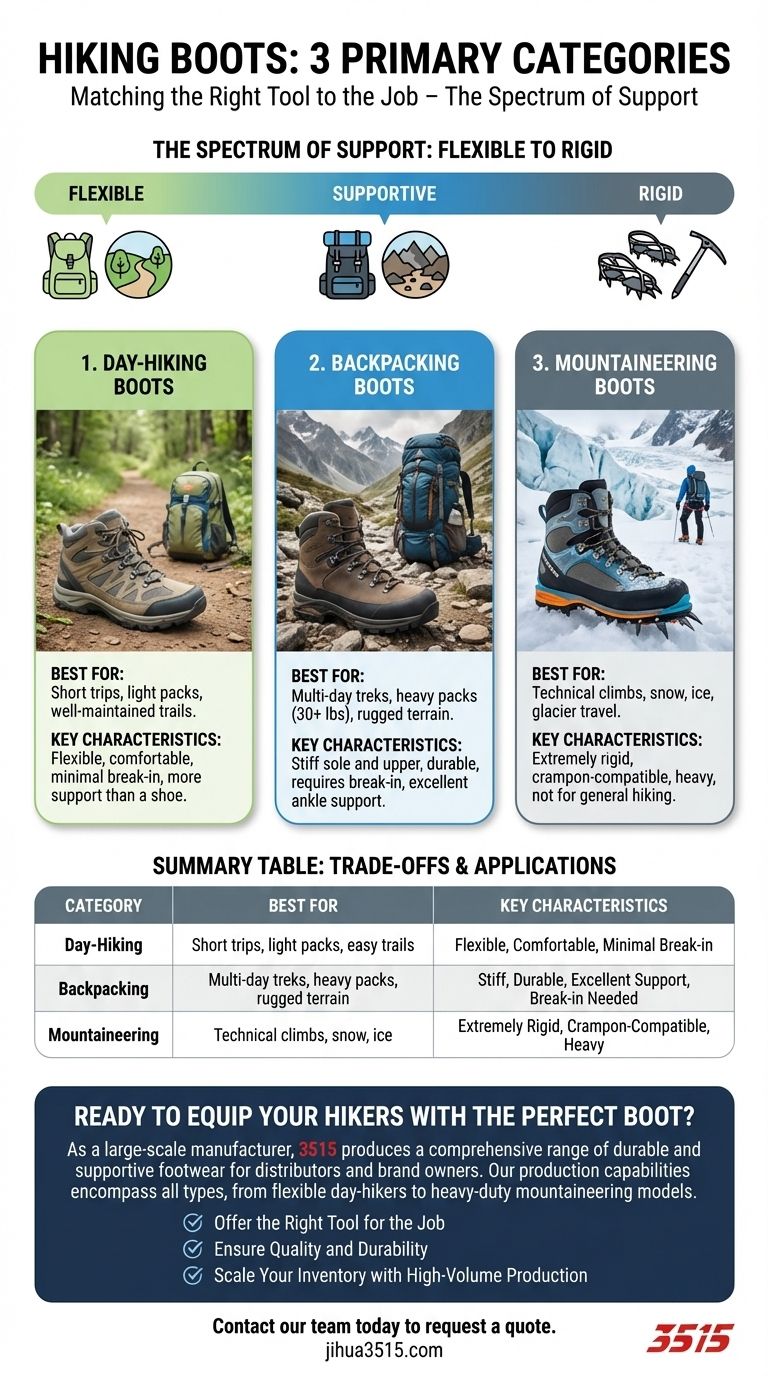
The three primary categories of hiking boots are day-hiking boots, backpacking boots, and mountaineering boots. Each is a specialized tool designed for a specific level of terrain difficulty and pack weight. While they all provide more support and durability than a standard hiking shoe, their core differences in stiffness and construction are critical to understand.
Your choice of hiking boot is not about finding the "best" boot, but about matching the right tool to the job. The defining factors are the weight of your pack and the ruggedness of the terrain, which dictate the level of stiffness and support your feet will need.
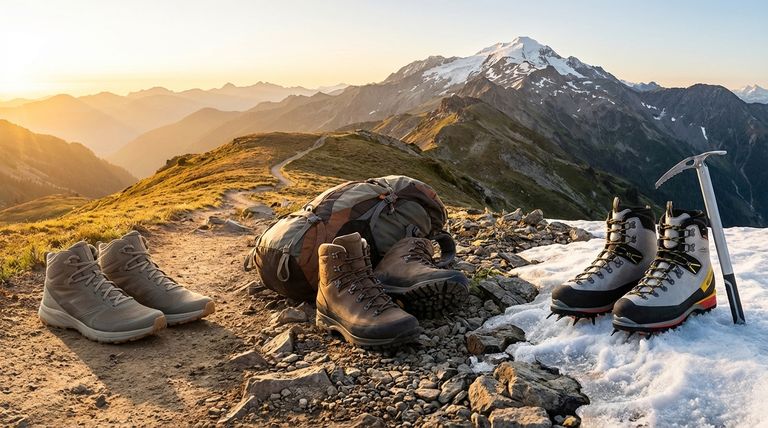
The Spectrum of Support: From Flexible to Rigid
The three categories of boots exist on a spectrum of flexibility. The core principle is simple: as the load on your back and the difficulty of the terrain increase, the stiffness of your boot's sole and upper must also increase to protect your feet and prevent injury.
The Role of Stiffness
A stiffer boot acts as a platform, preventing your foot from constantly bending and fatiguing over rocks, roots, and uneven ground. This is especially crucial when carrying a heavy pack, as the boot absorbs the stress that would otherwise be transferred to your joints and muscles.
A Detailed Look at the Three Categories
Understanding the specific purpose of each category will clarify which is appropriate for your intended use.
Category 1: Day-Hiking Boots
These boots are at the most flexible end of the spectrum. They are perfect for short trips on well-maintained trails with a light daypack.
They prioritize comfort and require little to no break-in period. While offering more ankle support and durability than a trail-running shoe, they are not built to handle the stress of heavy loads.
Category 2: Backpacking Boots
These are the workhorses for multi-day treks and heavier loads. They are significantly stiffer than day-hiking boots, both in the sole and the upper materials.
This added structure provides critical support for carrying packs over 30 pounds across varied and challenging terrain. They are taller and more durable, but they do require a break-in period to conform to your feet.
Category 3: Mountaineering Boots
These are highly specialized and the most rigid of all hiking footwear. They are designed for alpine ascents, glacier travel, and ice climbing.
Their soles are almost completely inflexible to provide a solid platform for kicking steps in snow and for attaching crampons. They are heavy, exceptionally durable, and not suitable for general trail hiking due to their extreme stiffness.
Understanding the Trade-offs
Choosing the wrong boot for your hike has tangible consequences for both comfort and safety.
The Penalty of Over-Engineering
Wearing a boot that is too stiff for your activity, such as using a heavy backpacking boot for a simple walk, is inefficient. You carry unnecessary weight on your feet with every step, leading to faster fatigue and a clumsy feel on the trail.
The Risk of Under-Equipping
This is the more dangerous mistake. Using a flexible day-hiking boot on a multi-day backpacking trip can lead to serious foot pain, bruised soles, and an increased risk of ankle sprains. The boot is simply not designed to provide the support needed to manage a heavy load on rugged ground.
How to Apply This to Your Goal
Use the nature of your trip as your primary guide to selecting the right category of boot.
- If your primary focus is short day hikes on established trails: A flexible, lightweight day-hiking boot offers the best balance of comfort and traction.
- If your primary focus is multi-day trips with a heavy pack: A sturdy backpacking boot is essential for providing the ankle support and sole stiffness you need.
- If your primary focus is high-altitude, technical climbs on snow or ice: A rigid, crampon-compatible mountaineering boot is the only safe and appropriate choice.
Selecting the right boot is the foundational step for a safe, comfortable, and successful journey on the trail.
Summary Table:
| Category | Best For | Key Characteristics |
|---|---|---|
| Day-Hiking Boots | Short trips, light packs, well-maintained trails | Flexible, comfortable, minimal break-in, more support than a shoe |
| Backpacking Boots | Multi-day treks, heavy packs (30+ lbs), rugged terrain | Stiff sole and upper, durable, requires break-in, excellent ankle support |
| Mountaineering Boots | Technical climbs, snow, ice, glacier travel | Extremely rigid, crampon-compatible, heavy, not for general hiking |
Ready to Equip Your Hikers with the Perfect Boot?
As a large-scale manufacturer, 3515 produces a comprehensive range of durable and supportive footwear for distributors, brand owners, and bulk clients. Our production capabilities encompass all types of boots, from flexible day-hikers to heavy-duty mountaineering models.
Partner with us to:
- Offer the Right Tool for the Job: Provide your customers with boots perfectly matched to their adventures.
- Ensure Quality and Durability: Leverage our manufacturing expertise for reliable products that build trust.
- Scale Your Inventory: Meet market demand with our high-volume production capacity.
Let's discuss how we can support your business and help you equip every hiker for the trail ahead.
Contact our team today to request a quote
Visual Guide
Related Products
- Wholesale High-Traction Camo Boots - Custom Manufacturer for Brands
- Durable Rubber Sole Outdoor Shoes Wholesale & Custom Manufacturing
- Durable Spiked Camouflage Boots Wholesale & Factory Production
- Wholesale Lightweight Tactical Boots Custom Manufacturer for Desert & Combat Use
- Wholesale Waterproof Tactical Boots Custom Suede & High-Traction Soles
People Also Ask
- What are the key features of the new line of camo boots? Built for Extreme Cold & Rugged Terrain
- Are camo boots necessary for hunting success? Prioritize Performance Over Pattern
- What is the technical logic behind using closed-eye testing for tactical boots? Unlocking Peak Footwear Stability
- How does the Rank Score Test identify the primary causes of premature failure in tactical and work boots? Key Insights
- What shoes to wear for a security job? Durable, Protective Footwear for Long Shifts