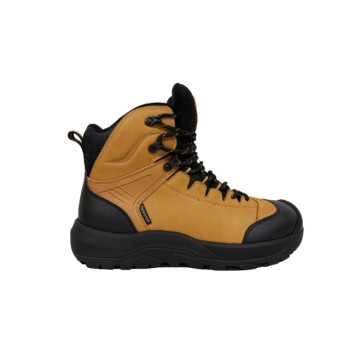
Choosing the right winter boot is a decision that balances four critical factors: warmth, waterproofing, traction, and fit. The ideal boot isn't the one with the most features, but the one whose capabilities are perfectly matched to your specific environment and how you plan to use it.
Your primary activity is the single most important factor. A boot designed for hiking in deep snow will be cumbersome and overly warm for a slushy city commute, and a stylish urban boot will fail in a true winter environment.
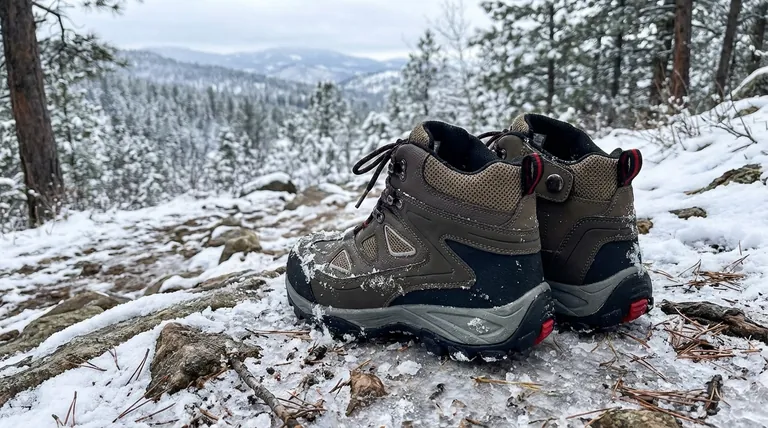
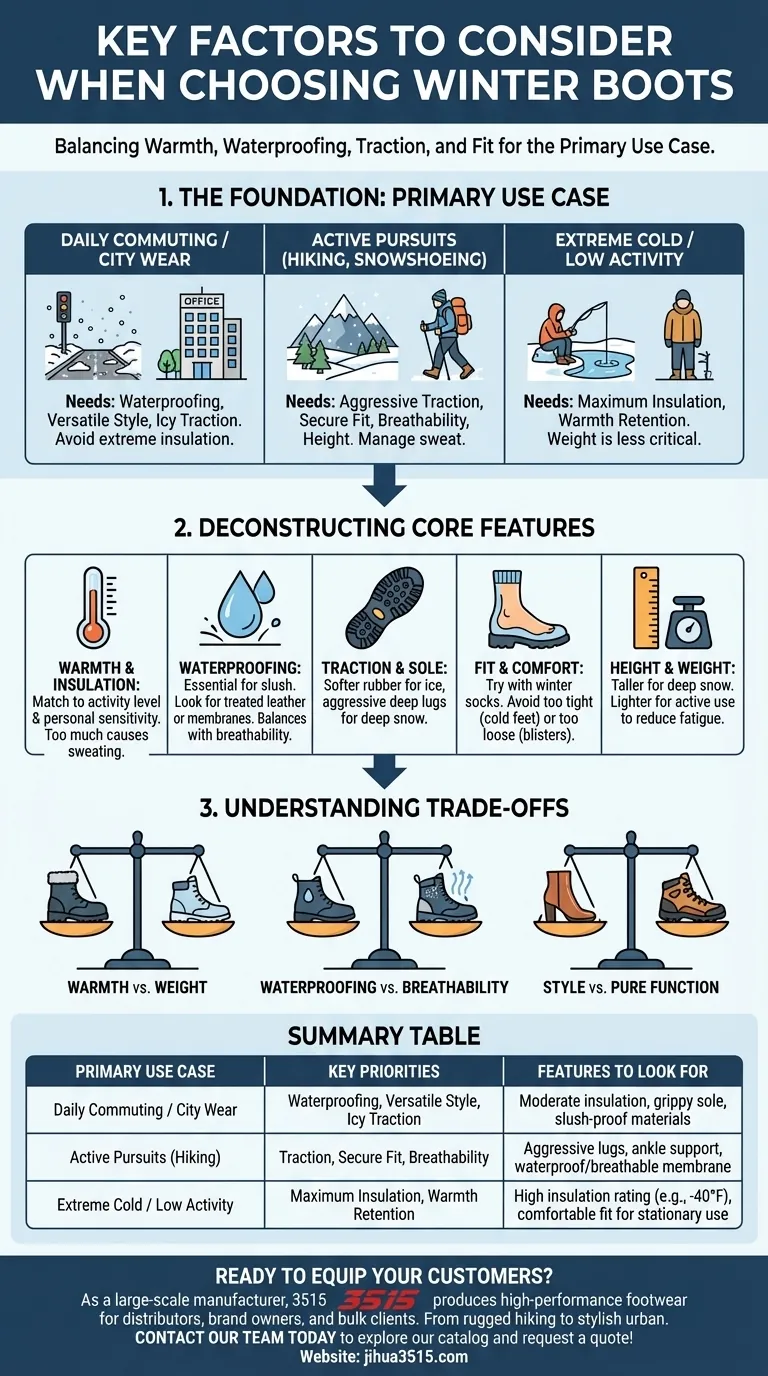
The Foundational Question: What Is Your Primary Use?
Before evaluating specific features, you must define the environment and activities the boots will face. This context dictates everything else.
For Daily Commuting and City Wear
City winters often involve slush, treated sidewalks, and fluctuating temperatures. Your primary concerns here are waterproofing to handle puddles and a versatile style.
Extreme insulation is often unnecessary and can lead to sweaty, uncomfortable feet when you move indoors. A good grip for icy patches is more critical than deep lugs for snow.
For Active Pursuits (Hiking, Snowshoeing)
If you plan to be active, your needs shift dramatically. Look for boots with aggressive, deep lugs on the sole for superior traction in unpacked snow.
Height becomes crucial to keep snow out, and a secure fit is non-negotiable to prevent blisters. You will also need a balance of waterproofing and breathability to manage sweat during exertion.
For Extreme Cold or Low Activity
For situations involving prolonged exposure to severe cold with little movement—like ice fishing or spectating at an outdoor event—maximum insulation is the top priority.
These boots often have a temperature rating. Weight and agility are less important than the boot's ability to retain heat and keep your feet warm while stationary.
Deconstructing the Core Features
Once you've defined your primary use case, you can assess a boot's specific features against your needs.
Warmth and Insulation
Insulation keeps your feet warm, but more is not always better. Excessive insulation during active use can cause sweating, which ironically makes your feet colder once you stop moving.
Consider your personal sensitivity to cold and the typical temperatures in your region.
Waterproofing
Waterproofing is essential for slushy, wet conditions, not just deep snow. Wet feet lose heat rapidly and are the fastest way to become miserable and cold.
Look for boots made with waterproof materials like treated leather or those featuring a dedicated waterproof membrane.
Traction and The Sole
The sole is your connection to the ground. For icy conditions, look for softer rubber compounds that stay flexible in the cold. For deep snow, you need deeper, more aggressive lugs to dig in.
Fit and Comfort
A poor fit can ruin even the most technically advanced boot. Always try boots on with the type of socks you'll wear in the winter.
Too tight of a fit can restrict blood flow, leading to cold feet, while a loose fit can cause blisters and instability.
Height and Weight
The height of the boot should correspond to the expected snow depth of your activities. A taller boot offers better protection in deep snow.
Weight is also a factor; a heavy boot can cause fatigue over a long day, a key consideration for hiking or long commutes.
Understanding the Trade-offs
No single boot is perfect for every situation. Being aware of the inherent compromises is key to making an informed choice.
Warmth vs. Weight
The warmest boots are often the heaviest and bulkiest due to their thick insulation. This is excellent for stationary use but can be cumbersome and fatiguing for active pursuits.
Waterproofing vs. Breathability
A completely sealed, waterproof boot will keep moisture out, but it will also trap sweat in. For high-exertion activities, this can lead to damp socks and cold feet. Many active-use boots balance these two features.
Style vs. Pure Function
Many stylish leather or suede boots offer decent performance for casual urban wear but lack the technical features for serious winter conditions. Be honest about your priority. A highly functional hiking boot may not be appropriate for the office.
Making the Right Choice for Your Goal
Ultimately, your decision comes down to aligning the boot's design with your most common winter activity.
- If your primary focus is navigating icy city sidewalks: Prioritize a boot with excellent sole traction and robust waterproofing over extreme insulation.
- If your primary focus is active winter hiking: Choose a taller, lighter boot with aggressive treads and good breathability to manage sweat.
- If your primary focus is staying warm in deep cold with low activity: Select a boot with the highest insulation rating that fits comfortably, as weight and agility are less critical.
A thoughtful assessment of your needs is the key to finding a winter boot that performs perfectly for you.
Summary Table:
| Primary Use Case | Key Priorities | Features to Look For |
|---|---|---|
| Daily Commuting / City Wear | Waterproofing, Versatile Style, Icy Traction | Moderate insulation, grippy sole, slush-proof materials |
| Active Pursuits (Hiking) | Traction, Secure Fit, Breathability | Aggressive lugs, ankle support, waterproof/breathable membrane |
| Extreme Cold / Low Activity | Maximum Insulation, Warmth Retention | High insulation rating (e.g., -40°F), comfortable fit for stationary use |
Ready to equip your customers with the perfect winter boots?
As a large-scale manufacturer, 3515 produces a comprehensive range of high-performance footwear for distributors, brand owners, and bulk clients. Our production capabilities encompass all types of winter boots—from rugged hiking boots to stylish urban commuters—ensuring your inventory meets every customer's needs.
Let's discuss how we can support your business with reliable, high-quality footwear. Contact our team today to explore our catalog and request a quote!
Visual Guide
Related Products
- Premium Insulated Safety Boots and Shoes for Wholesale & Bulk Orders
- Factory Direct Wholesale Rain Boots Durable Waterproof & Fully Customizable
- Durable Waterproof Rain Boots | Custom Manufacturer for Wholesale & Brands
- Wholesale Waterproof Tactical Boots Custom Suede & High-Traction Soles
- Premium Waterproof High-Cut Industrial Safety Boots for Wholesale and Bulk Orders
People Also Ask
- What are the recommended insulation ratings for mild winter conditions? A Guide for Active & Stationary Workers
- How does insulation thickness correlate with temperature ranges? A Guide to Choosing the Right Warmth
- What insulation level is needed for severe cold and stationary work? 1200g or Higher is Essential
- What safety advantages do insulated boots offer beyond warmth? Dielectric Protection & Superior Grip
- How does fleece lining contribute to the warmth of insulated boots? Trapping Air for Superior Cold Protection