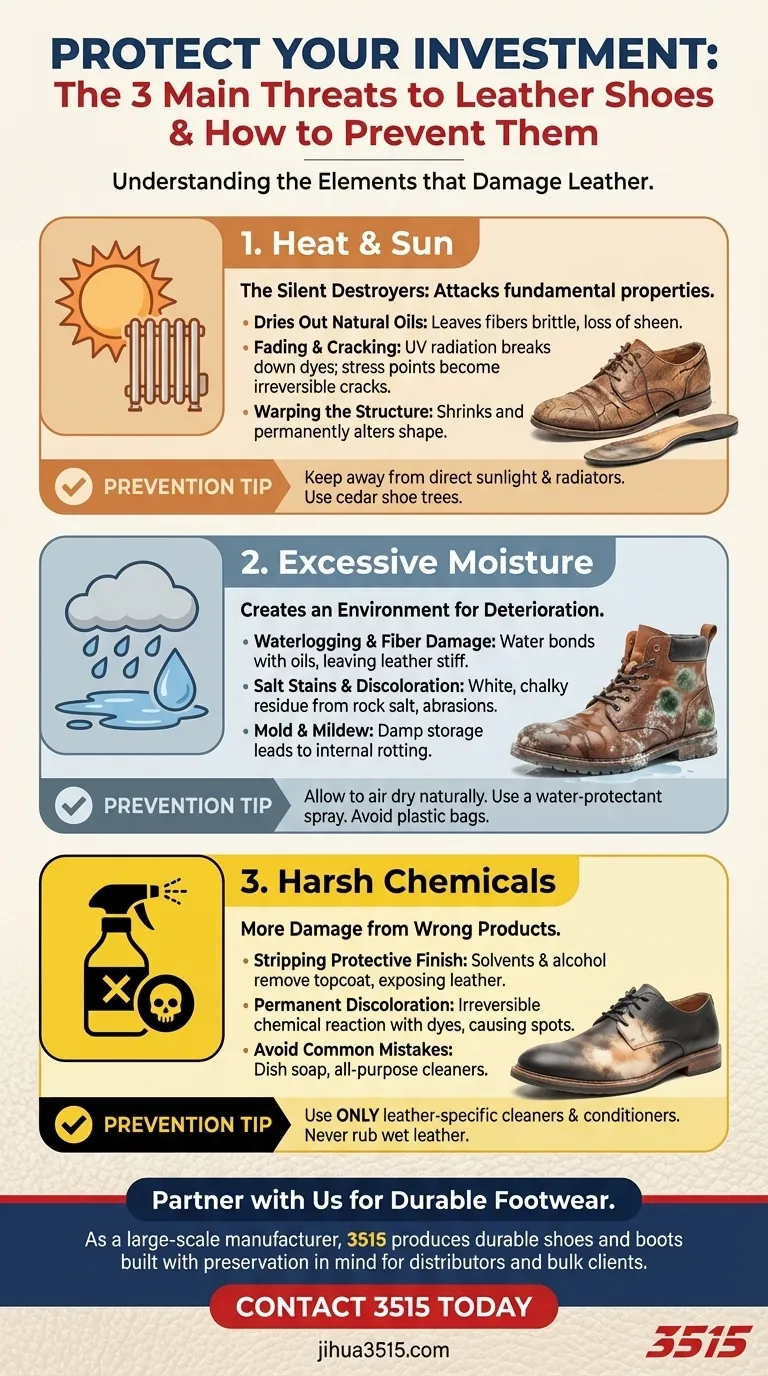
The three primary threats to your leather shoes are direct sunlight and high heat, excessive moisture, and harsh chemical cleaning agents. Understanding how each of these elements attacks the natural structure of leather is the first step toward preserving your investment and extending the life of your footwear.
Protecting leather shoes isn't about complex routines; it's about systematically shielding a natural material from its three core enemies: heat that makes it brittle, moisture that makes it rot, and chemicals that strip its protective finish.
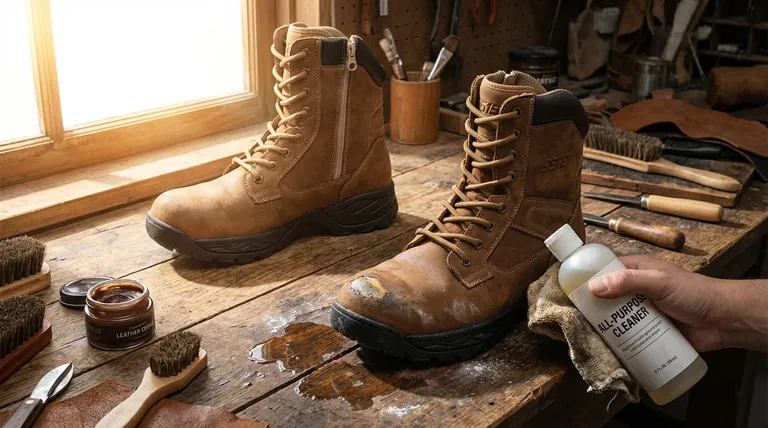
The Damaging Effect of Heat and Sun
Heat and UV radiation from the sun are silent destroyers of leather. They attack the fundamental properties that make the material both durable and supple.
Drying Out Natural Oils
Leather is a skin, and like any skin, it contains natural oils and fats that keep it flexible. High heat, whether from direct sunlight or being placed near a radiator, essentially "cooks" these oils out.
This process leaves the leather's fibers dry and brittle. The immediate result is a loss of softness and sheen.
Fading and Cracking
Prolonged exposure to the sun’s UV rays directly breaks down the dyes in the leather, causing permanent fading and discoloration.
As the dried-out fibers lose their ability to flex, simple actions like walking will cause stress points to develop. This is what leads to the fine lines that eventually become deep, irreversible cracks in the surface.
Warping the Structure
Intense heat can also cause the leather to shrink and warp, permanently altering the shape of your shoe. This is especially true if the shoe is damp when exposed to a direct heat source.
Why Moisture is Leather's Enemy
While a quick walk in the rain won't ruin your shoes, chronic exposure to moisture or improper drying creates an environment for rapid deterioration.
Waterlogging and Fiber Damage
When leather becomes saturated, water molecules bond with its natural oils and pull them out as the water evaporates. This process is called waterlogging, and it leaves the leather stiff and prone to cracking once dry.
Salt Stains and Discoloration
If you wear your leather shoes in snow or ice, they are exposed to rock salt. As the water evaporates from the shoe's surface, it leaves behind white, chalky residue known as salt stains.
These stains are not just cosmetic; the salt crystals can abrade the leather's surface and draw out even more moisture from within.
Mold and Mildew
Storing damp leather shoes in a dark, poorly ventilated space like a closet or a plastic bag is a recipe for disaster. This creates the perfect breeding ground for mold and mildew, which can stain the leather and cause it to rot from the inside out.
The Hidden Danger of Harsh Chemicals
The impulse to clean a scuff or stain can often lead to more damage if the wrong product is used. Leather requires specific care that common household cleaners cannot provide.
Stripping the Protective Finish
Most high-quality leather shoes have a protective topcoat or finish applied at the factory. Harsh chemicals, particularly those containing solvents, alcohol, or alkaline agents (like dish soap or all-purpose cleaners), will strip this finish.
Without its protective layer, the leather is left exposed and highly vulnerable to stains, water damage, and drying out.
Permanent Discoloration
Using the wrong chemical can cause an immediate and irreversible chemical reaction with the dyes in the leather. This can result in permanent light spots, dark spots, or a complete change in color in the affected area.
Common Care Mistakes to Avoid
Protecting your shoes is as much about avoiding bad habits as it is about adopting good ones. Many well-intentioned owners cause damage by making simple mistakes.
Never Use a Direct Heat Source to Dry
The single worst thing you can do to wet leather shoes is place them near a radiator, vent, or use a hairdryer. This superheats the leather, causing it to shrink, warp, and crack almost immediately.
Avoid Sealing in Plastic
Storing shoes in sealed plastic bags or containers is a common mistake. This traps any residual moisture, preventing the leather from breathing and creating a perfect environment for mold growth.
Don't Over-Condition
While conditioning is vital, using too much product can be counterproductive. Oversaturating the leather can clog its pores, making it feel greasy, attract more dirt, and prevent it from breathing properly.
Making the Right Choice for Preservation
Your maintenance strategy should align with how you use your shoes and your long-term goals for them.
- If your primary focus is maximizing longevity for heritage-quality shoes: Prioritize preventative care, use cedar shoe trees to absorb moisture and maintain shape, and never wear them two days in a row.
- If your primary focus is maintaining the appearance of daily work shoes: Focus on a consistent routine of wiping them down after wear, applying a quality cream polish weekly, and using a water-protectant spray.
- If your primary focus is recovering from minor damage: Act quickly. Blot moisture, never rub. Use a specialized salt stain remover, and allow shoes to air-dry slowly before applying a leather conditioner to restore oils.
By treating your leather shoes as the natural material they are, you can easily protect them from damage and ensure they serve you well for years to come.
Summary Table:
| Damaging Element | Primary Effect on Leather | Key Prevention Tip |
|---|---|---|
| Heat & Sun | Dries out natural oils, causes fading and cracking. | Keep away from direct sunlight and radiators. Use shoe trees. |
| Moisture | Waterlogging, salt stains, and mold/mildew growth. | Allow to air dry naturally. Use a water-protectant spray. |
| Harsh Chemicals | Strips protective finish, causes permanent discoloration. | Use only leather-specific cleaning and conditioning products. |
Ready to Source Durable, High-Quality Footwear?
As a large-scale manufacturer, 3515 produces a comprehensive range of footwear for distributors, brand owners, and bulk clients. Our production capabilities encompass all types of durable shoes and boots, built with the preservation tips above in mind.
Partner with us to offer your customers footwear that lasts. Let's discuss your needs.
Visual Guide
Related Products
- Factory Direct Wholesale Leather Comfort Shoes with Dial Closure
- Classic Leather Derby Dress Shoes Wholesale & Custom Manufacturing
- Custom Manufactured Air Cushion Leather Business Shoes for Wholesale
- Wholesale Comfort Leather Business Shoes with Dial Lacing System
- Wholesale Leather Apron Toe Derby Shoes Custom Factory Production
People Also Ask
- What are some common materials used to make men's leather shoes? A Guide to Calfskin, Cordovan & Suede
- How can you waterproof leather shoes? Choose the Right Method for Maximum Protection
- What role do auxiliary materials play in leather shoe product mix optimization? Maximize Profit & Stability
- What are the best practices for storing leather shoes? Preserve Your Investment for Years to Come
- What are the maintenance requirements for leather shoes? A Complete Guide to Longevity