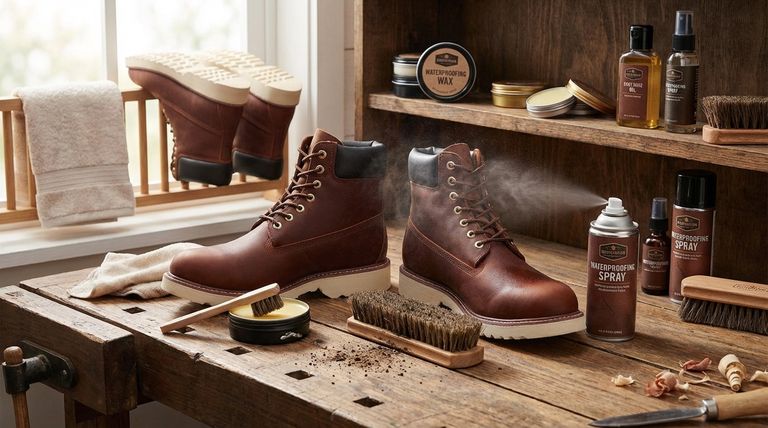
Applying a waterproofing treatment is a simple, four-step process. First, remove any loose debris and clean the boots thoroughly. Second, let them air dry completely away from direct heat. Third, apply the correct waterproofing product for your boot’s material, and finally, let the treatment cure.
True winter protection is a two-part system: the boot's inherent construction and the topical treatment you apply. Your goal is to either create a waterproof barrier on untreated boots or to maintain and enhance the existing defenses of boots with built-in waterproof membranes.
The Two Pillars of Winter Boot Waterproofing
Before you grab a can of spray, you must understand what you're working with. A boot's ability to keep you dry depends on both its fundamental design and how you maintain it.
Pillar 1: The Boot's Inherent Construction
Many high-quality winter boots come with built-in waterproofing. This is your first and most important line of defense.
These boots often feature a waterproof and breathable membrane, like Gore-Tex or a proprietary equivalent, sandwiched between the outer material and the inner lining. This technology stops water from getting in but allows sweat vapor to escape, which is crucial for keeping feet dry and warm.
The boot's assembly is also critical. Look for direct-attached soles with a waterproof seal or sewn soles (like a Goodyear welt) where the stitching is sealed. These construction methods minimize weak points where water can penetrate.
Pillar 2: The Topical Treatment You Apply
A topical waterproofing product—be it a spray, wax, or cream—serves two purposes. On boots without a membrane, it creates the primary waterproof barrier.
On boots that already have a waterproof membrane, the treatment is for maintenance. It prevents the outer material (leather or fabric) from absorbing water. This maintains breathability and prevents the boot from feeling heavy and cold, even if the inner membrane is still keeping your foot dry.
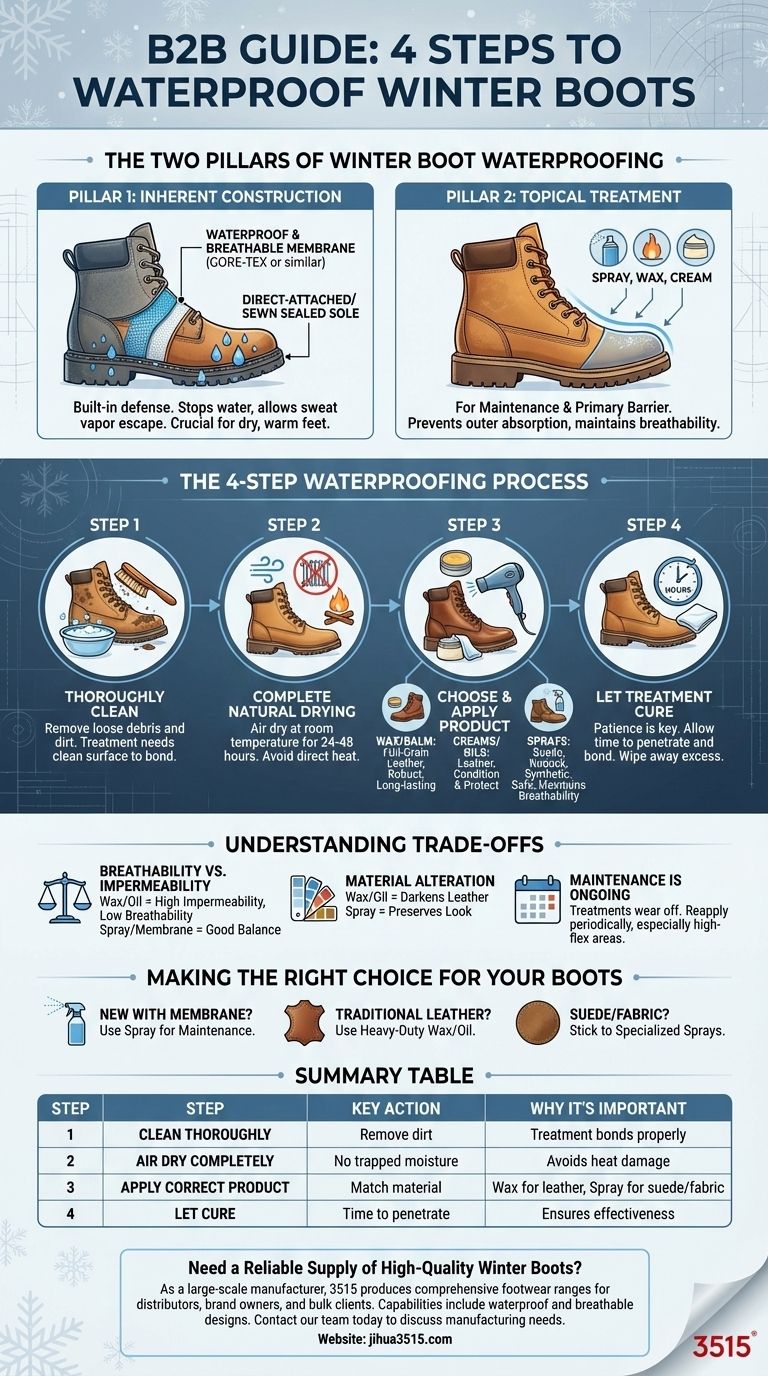
The 4-Step Waterproofing Process
Regardless of your boot type, this application process ensures the best results.
Step 1: Thoroughly Clean the Boots
You cannot waterproof a dirty boot. Any dirt or grime will prevent the treatment from properly bonding with the material.
First, remove the laces. Then, use a stiff brush to remove all dried mud and debris. For a deeper clean, use a specialized boot cleaner or a simple solution of mild soap and water, gently scrubbing the entire surface.
Step 2: Allow for Complete Natural Drying
Applying a treatment to a damp boot will trap moisture and be ineffective.
Let the boots air dry completely at room temperature. Crucially, do not place them near a direct heat source like a radiator or campfire, as intense heat can crack leather and damage adhesives. This step can take 24-48 hours.
Step 3: Choose and Apply the Right Product
The material of your boot dictates the product you must use.
- Wax or Balms: These are ideal for full-grain leather boots. They offer robust, long-lasting protection. Warm the boot and the wax slightly (a hairdryer works well), then rub the wax into the leather, paying special attention to seams and crevices.
- Creams and Oils: These also work for leather and have the added benefit of conditioning the material to prevent it from drying out and cracking.
- Sprays: This is the only safe choice for suede, nubuck, or synthetic fabric boots. Sprays provide a protective layer without matting the delicate fibers or altering the texture. They are also excellent for maintaining the water repellency on boots that already have a membrane.
Step 4: Let the Treatment Cure
Patience is key. After applying the product, let the boots sit for several hours, or as long as the product instructions recommend. This allows the treatment to fully penetrate and bond.
Once cured, wipe away any excess product with a clean, dry cloth.
Understanding the Trade-offs
Choosing a waterproofing method involves balancing protection with your boot's performance and appearance.
Breathability vs. Impermeability
Heavy waxes and oils provide the most complete waterproof barrier. However, they significantly reduce the leather's natural breathability. This can cause your feet to sweat, get damp, and ultimately feel cold.
Sprays and built-in membranes offer superior breathability, making them better for high-exertion activities.
Material Alteration
Be aware that waxes, oils, and creams will almost always darken the color of leather. If you want to preserve the original look of your boots, especially lighter-colored suede or nubuck, a spray is your only option.
Maintenance is Not a One-Time Fix
Topical treatments wear off. The waterproofing barrier will break down fastest in high-flex areas like the ankle and toe crease. Plan to reapply your treatment periodically throughout the season, especially after heavy use or a deep cleaning.
Making the Right Choice for Your Boots
Your strategy should adapt to your specific footwear.
- If your boots are new with a waterproof membrane (like Gore-Tex): Use a waterproofing spray to maintain the outer material's water repellency and prevent it from getting saturated.
- If your boots are traditional full-grain leather without a membrane: Use a heavy-duty wax or oil-based product for maximum protection, accepting that it will reduce breathability and darken the leather.
- If your boots are suede, nubuck, or synthetic fabric: Stick exclusively to specialized waterproofing sprays designed for these materials to avoid causing damage or discoloration.
Properly treating your boots is the most critical step you can take to ensure warm, dry feet all winter long.
Summary Table:
| Step | Key Action | Why It's Important |
|---|---|---|
| 1 | Clean Thoroughly | Removes dirt so the treatment can bond properly |
| 2 | Air Dry Completely | Prevents trapping moisture; avoids heat damage |
| 3 | Apply Correct Product | Matches boot material (wax for leather, spray for suede/fabric) |
| 4 | Let Cure | Allows treatment to fully penetrate and bond |
Need a reliable supply of high-quality winter boots for your customers? As a large-scale manufacturer, 3515 produces a comprehensive range of footwear for distributors, brand owners, and bulk clients. Our production capabilities encompass all types of shoes and boots, including styles designed with waterproof and breathable membranes for superior winter performance. Let us help you equip your customers with durable, weather-ready footwear. Contact our team today to discuss your manufacturing needs and get a quote.
Visual Guide
Related Products
- Premium Insulated Safety Boots and Shoes for Wholesale & Bulk Orders
- Factory Direct Wholesale Rain Boots Durable Waterproof & Fully Customizable
- Durable Waterproof Rain Boots | Custom Manufacturer for Wholesale & Brands
- Wholesale Waterproof Tactical Boots Custom Suede & High-Traction Soles
- Premium Waterproof High-Cut Industrial Safety Boots for Wholesale and Bulk Orders
People Also Ask
- What are the recommended insulation ratings for mild winter conditions? A Guide for Active & Stationary Workers
- How does insulation thickness correlate with temperature ranges? A Guide to Choosing the Right Warmth
- What insulation level is needed for severe cold and stationary work? 1200g or Higher is Essential
- What safety advantages do insulated boots offer beyond warmth? Dielectric Protection & Superior Grip
- How does fleece lining contribute to the warmth of insulated boots? Trapping Air for Superior Cold Protection