
To minimize strain while wearing a walking boot, the most effective mobility aids are crutches, walkers, and knee scooters. These devices are designed to offload weight from your injured leg, which reduces the physical toll on the rest of your body, prevents overcompensation injuries, and improves overall stability during your recovery.
While a walking boot is essential for immobilizing an injury, it often introduces new physical challenges like imbalance and fatigue. The key is to select an additional mobility aid based on your specific weight-bearing restrictions and stability needs, not just on the presence of the boot itself.
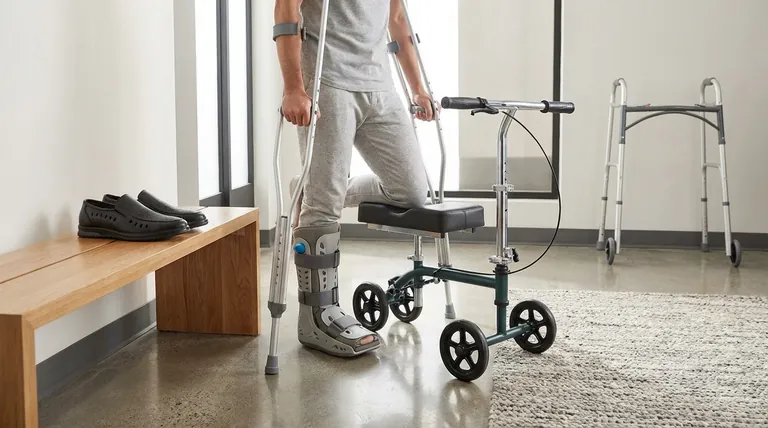
Why a Walking Boot Alone Can Cause Strain
A walking boot is an excellent tool for healing, but it fundamentally alters your body's mechanics. Understanding these changes is the first step toward counteracting them.
The Problem of Imbalance
The thick sole of a walking boot creates a leg-length discrepancy. This unevenness can tilt your pelvis and spine, often leading to secondary pain in your hip, back, or the knee of your uninjured leg.
The Burden of Overcompensation
Your body naturally tries to protect the injured limb. This causes you to shift your weight and change your gait, placing significant, unnatural stress on your healthy side.
The Factor of Fatigue
Walking boots are heavier and more cumbersome than normal footwear. The extra effort required to lift and move your leg can lead to muscle fatigue and make it harder to maintain proper posture.
Choosing the Right Mobility Aid for Your Needs
The choice of an assistive device depends entirely on your doctor's orders regarding weight-bearing and your personal need for stability.
Crutches: For Precise Weight Control
Crutches are ideal when you are instructed to be partially or completely non-weight-bearing. They give you precise control over how much pressure you put on your injured foot, allowing you to gradually increase the load as you heal.
Knee Scooters: For Non-Weight-Bearing Mobility
For injuries requiring zero weight on the foot, a knee scooter is an excellent alternative to crutches. It allows you to rest your knee on a padded platform and propel yourself with your good leg, enabling faster movement over longer distances with less upper-body strain.
Walkers: For Maximum Stability
A walker provides the most stable base of support. It is the best choice if you have concerns about balance or lack the upper body strength required for crutches. Walkers help distribute your weight evenly and significantly reduce the risk of a fall.
Canes: For Late-Stage Recovery
A cane is best suited for the later phases of healing. Once you are cleared for significant weight-bearing but still need a bit of extra support or confidence, a cane can help ease the final transition back to walking unaided.
Understanding the Trade-offs and Safety Measures
Using a mobility aid correctly is just as important as choosing the right one. Always prioritize safety to prevent further injury.
The Critical First Step: Medical Consultation
Before using any mobility aid, you must consult your healthcare provider. They will determine the appropriate device based on the severity of your injury and your specific weight-bearing limitations to ensure a safe recovery.
The Challenge of Uneven Surfaces
Any mobility aid makes navigating slippery, sloped, or uneven ground more difficult. Always move slowly and deliberately, exercising extreme caution to prevent slips and falls.
The Importance of Proper Fit
An improperly sized aid can create more problems than it solves. Ensure your crutches, walker, or cane are adjusted to the correct height to maintain good posture and avoid straining your shoulders, back, and wrists.
Making the Right Choice for Your Recovery
Your specific recovery goal should guide your choice of mobility aid.
- If your primary focus is complete non-weight-bearing: A knee scooter offers the best mobility over distance, while crutches provide precise control.
- If your primary focus is maximum stability: A walker provides the most secure base of support to prevent falls and build confidence.
- If your primary focus is transitioning back to full activity: A single crutch or a cane can provide minor support as you regain strength and balance.
Selecting the right tool for your situation is crucial for a recovery that is not only faster but also safer.
Summary Table:
| Mobility Aid | Best For | Key Benefit |
|---|---|---|
| Crutches | Partial or non-weight-bearing | Precise weight control |
| Knee Scooter | Non-weight-bearing | Hands-free mobility with less upper-body strain |
| Walker | Maximum stability | Secure base of support, ideal for balance concerns |
| Cane | Late-stage recovery | Minor support for transitioning back to normal walking |
Find the Perfect Mobility Aid for a Safer, More Comfortable Recovery
Navigating recovery with a walking boot is challenging. The right mobility aid is essential for reducing strain on your body and preventing secondary injuries. As a large-scale manufacturer, 3515 produces a comprehensive range of high-quality footwear and mobility support products for distributors, brand owners, and bulk clients. Our production capabilities ensure durable, reliable solutions tailored to your needs.
Let us support your recovery journey. Contact our experts today to discuss how our products can enhance patient comfort and mobility.
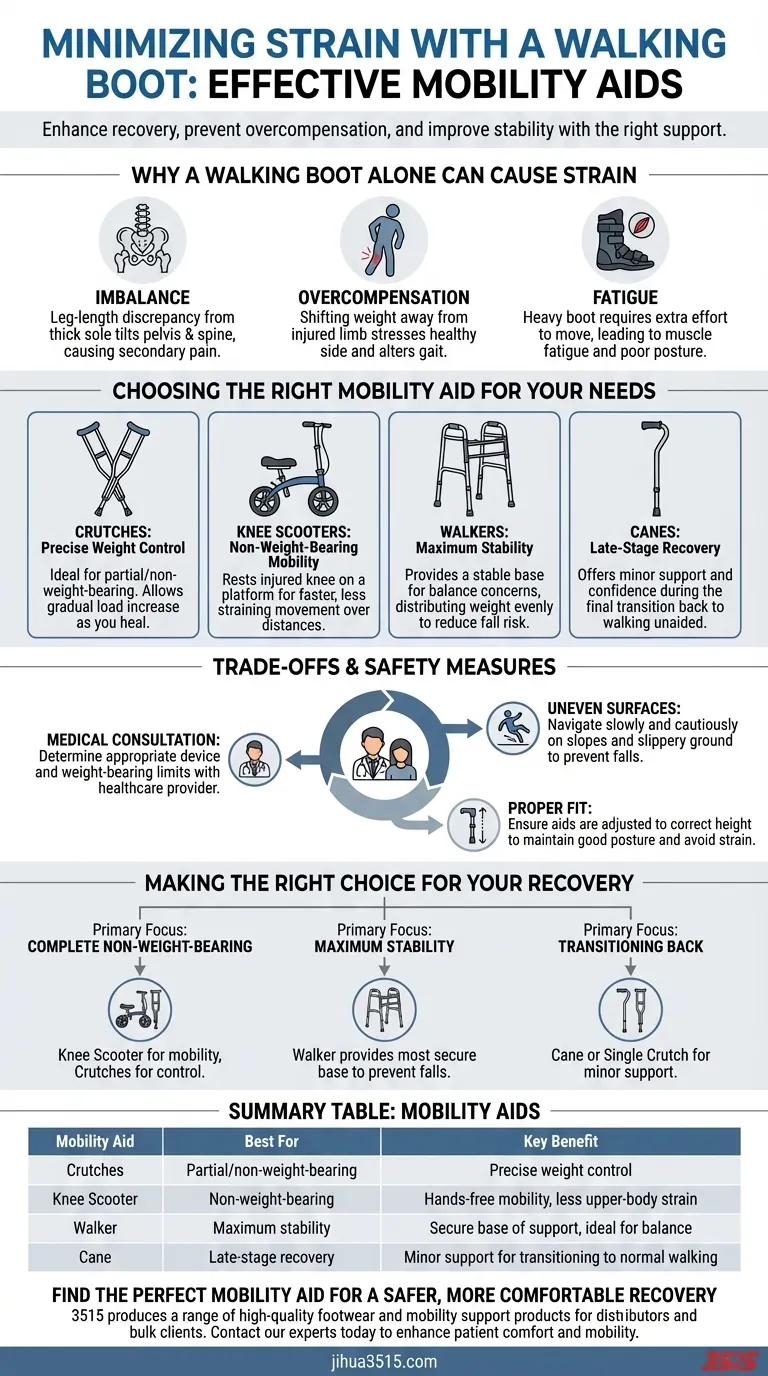
Visual Guide
Related Products
- Wholesale Durable Camouflage Canvas Shoes with High-Traction Cleated Rubber Sole
- Durable Rubber Sole Outdoor Shoes Wholesale & Custom Manufacturing
- Durable Goodyear Welt Leather Work Boots for Wholesale & Private Label
- Wholesale High-Traction Camo Boots - Custom Manufacturer for Brands
- Heavy-Duty Waterproof Nubuck Safety Boots Safety Shoes for Bulk Supply
People Also Ask
- Why is the selection of high-strength fabric materials necessary in the production of canvas shoes and training shoes?
- What are the properties of canvas as a shoe material? A Guide to Lightweight Comfort & Style
- Can canvas shoes be worn in rainy conditions? The Truth About Water Resistance
- What are some examples of vulcanized shoes? Discover the Flexibility and Board Feel of Classic Sneakers
- What are the characteristics of canvas as a shoe material? A Guide to Lightweight, Breathable Footwear



















