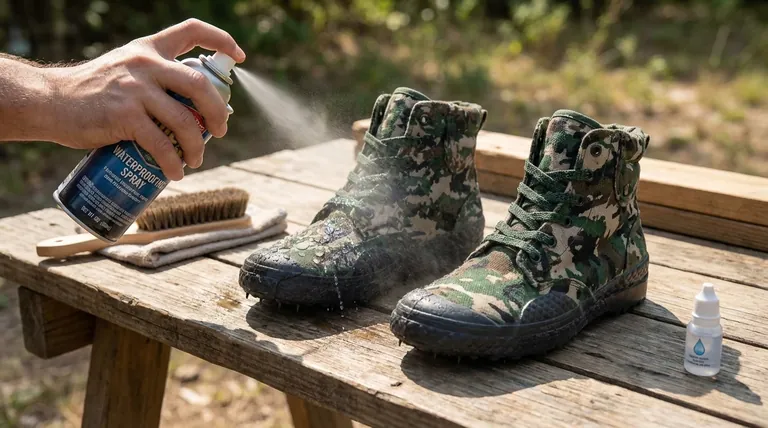
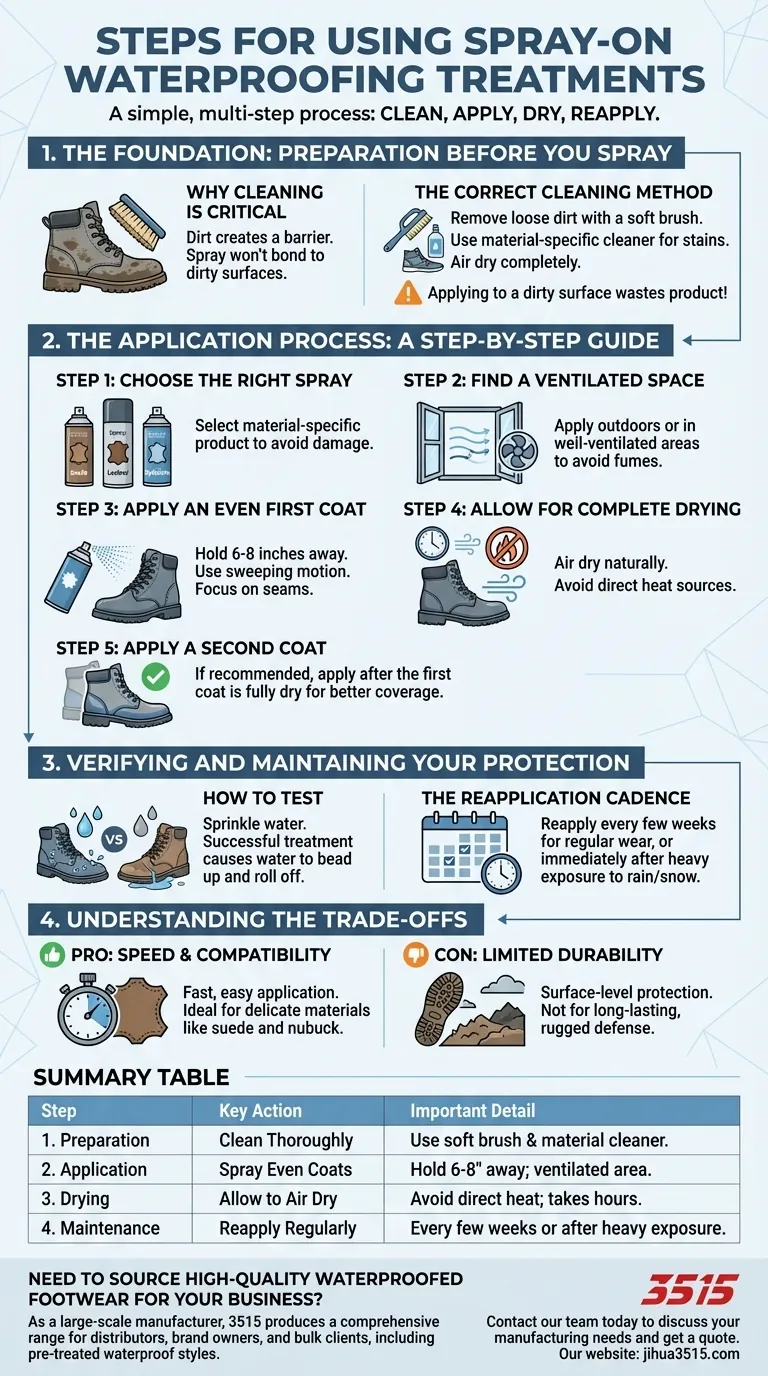
Applying a spray-on waterproofing treatment is a simple, multi-step process. The core procedure involves thoroughly cleaning the footwear, applying one to two even coats of a suitable spray in a well-ventilated area, and allowing the item to dry completely between coats and before use.
The key to success with spray-on treatments is understanding their purpose: they offer convenient, surface-level protection that is ideal for preserving the texture of delicate materials, but they are not a permanent solution and require regular reapplication.
The Foundation: Preparation Before You Spray
Applying a waterproofing treatment to a dirty surface is like painting over rust. The barrier will fail to bond correctly and will wear away almost immediately, wasting both the product and your time.
Why Cleaning is Critical
Dirt, dust, and oils create a physical barrier between the spray and the shoe's material. For the protective polymers in the spray to adhere properly, the surface must be completely clean.
The Correct Cleaning Method
First, use a soft brush to remove any loose dirt and debris. For more stubborn stains or general grime, use a cleaner specifically formulated for your shoe's material (e.g., leather, suede, or fabric) and let the footwear air dry completely.
The Application Process: A Step-by-Step Guide
With a clean and dry surface, you can proceed with the application. Precision and patience are more important than speed.
1. Choose the Right Spray
Not all sprays are universal. Select a product specifically designed for your footwear's material—suede, nubuck, smooth leather, and synthetic fabrics all have different needs. Using the wrong spray can alter the color or texture.
2. Find a Ventilated Space
These sprays release chemical propellants and fumes. Always apply them outdoors or in a very well-ventilated room to avoid inhaling the vapors.
3. Apply an Even First Coat
Hold the can at the distance recommended by the manufacturer (typically 6-8 inches). Spray in a steady, sweeping motion to apply a light, even coat across the entire surface. Pay special attention to seams, which are the most common points for water to penetrate.
4. Allow for Complete Drying
Let the footwear air dry naturally, away from direct heat sources like radiators or sunlight, which can warp materials or damage adhesives. This can take several hours depending on humidity.
5. Apply a Second Coat (If Recommended)
Many manufacturers recommend a second coat to ensure complete coverage. Only apply the second layer after the first has dried completely. This creates a more robust and uniform barrier.
Verifying and Maintaining Your Protection
A waterproof seal is not permanent. You must test its integrity and understand when it's time to reapply the treatment.
How to Test the Waterproofing
Once your footwear is fully dry, test the barrier. Sprinkle a few drops of water onto the surface. If the treatment was successful, the water will bead up and roll off. If it soaks in or darkens the material, you may need another coat.
The Reapplication Cadence
Spray-on treatments are the least durable waterproofing method. Plan to reapply the spray every few weeks for regularly worn shoes or immediately after any heavy exposure to rain or snow.
Understanding the Trade-offs of Sprays
Choosing a spray means prioritizing convenience and material safety over outright durability.
Pro: Speed and Material Compatibility
Sprays are fast and easy to apply. They are the go-to choice for delicate materials like suede and nubuck, as they form a protective barrier without matting the texture or significantly changing the appearance.
Con: Limited Durability
The barrier created by a spray is purely on the surface and wears away quickly with abrasion and use. It is not designed for the same level of rugged, long-lasting protection that a wax or cream-based product provides for heavy leather boots.
Making the Right Choice for Your Footwear
Use this guidance to align your method with your goal.
- If your primary focus is quick protection for casual shoes or delicate materials like suede: A spray-on treatment is your ideal choice for maintaining appearance and repelling light moisture.
- If your primary focus is maximum durability for rugged hiking or work boots: A spray is only a temporary measure; you should opt for a more penetrating wax or cream-based conditioner for long-term performance.
Ultimately, understanding the strengths and weaknesses of each method ensures your footwear is properly equipped for its intended use.
Summary Table:
| Step | Key Action | Important Detail |
|---|---|---|
| 1. Preparation | Clean Thoroughly | Use a soft brush and material-specific cleaner. |
| 2. Application | Spray Even Coats | Hold can 6-8 inches away; apply in a well-ventilated area. |
| 3. Drying | Allow to Air Dry | Avoid direct heat; can take several hours. |
| 4. Maintenance | Reapply Regularly | Re-treat every few weeks or after heavy exposure. |
Need to source high-quality waterproofed footwear for your business?
As a large-scale manufacturer, 3515 produces a comprehensive range of footwear for distributors, brand owners, and bulk clients. Our production capabilities encompass all types of shoes and boots, including styles pre-treated with durable waterproofing solutions. Let us help you equip your customers with reliable, high-performance footwear.
Contact our team today to discuss your manufacturing needs and get a quote.
Visual Guide
Related Products
- Lightweight Breathable Sneakers with Wet-Traction Grip for Wholesale & Private Label
- Durable Waterproof Rain Boots | Custom Manufacturer for Wholesale & Brands
- Wholesale Waterproof Tactical Boots Custom Suede & High-Traction Soles
- Factory Direct Wholesale Rain Boots Durable Waterproof & Fully Customizable
- Durable Military Combat Boots with Water Drainage for Wholesale & OEM
People Also Ask
- Why are breathable sneakers necessary for tropical commuting? Stay Cool and Dry in High Humidity
- What role do lightweight training shoes play in urban traffic? Boost Agility and Reaction for Safer City Navigation
- How do lightweight shoes provide support? The Science of Efficient Cushioning & Stability
- What are the style advantages of lightweight shoes? Sleek, Versatile & Modern Comfort
- How do lightweight shoes improve breathability? Discover the Science of Cool, Dry Feet