Ultimately, wearing multiple pairs of socks is counterproductive because it undermines the very principles of warmth. Instead of adding insulation, the extra layer typically compresses the fibers of the inner sock, eliminating the trapped air pockets that provide warmth. This compression also restricts critical blood circulation and traps sweat, a combination that actively makes your feet colder.
The core principle of staying warm is not about adding bulk, but about effectively trapping air and maintaining blood flow. A single pair of high-quality, properly-fitted socks almost always outperforms a compressed, multi-layered system.
The Counterintuitive Physics of Insulation
Many of us assume that if one layer is good, two must be better. When it comes to keeping feet warm, this logic is fundamentally flawed because it ignores how insulation actually functions.
How Insulation Works
Effective insulation, whether in your coat or in a sock, does not generate heat. Its job is to trap a layer of air next to your body. Your body heats this trapped air, which then acts as a thermal barrier, slowing the rate at which you lose warmth to the colder environment.
The Compression Effect
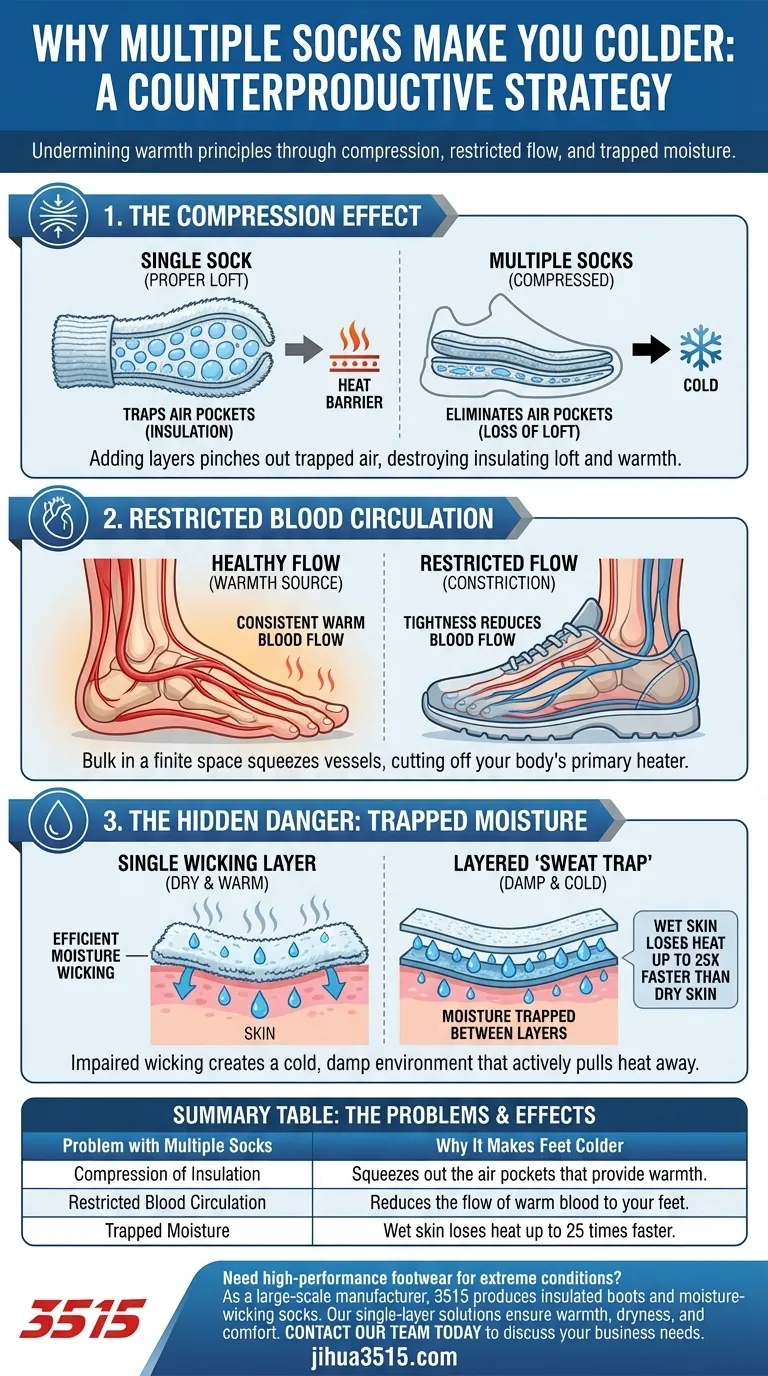
The effectiveness of this insulation depends entirely on the "loft"—the space occupied by the fibers and the air pockets between them. When you pull a second sock over the first, especially inside a shoe, you compress everything.
This pressure squeezes the air out from between the fibers of the inner sock, destroying its insulating loft. You have added more material, but you have removed the far more important layer of trapped air.
The Critical Role of Your Body's Heating System
Insulation is only half the battle. The heat itself has to come from somewhere, and for your extremities, that source is your circulatory system.
Blood Flow is Your Primary Heater
Your body keeps your toes warm by pumping warm blood to them. Consistent, unrestricted blood flow is the single most important factor in preventing cold feet.
How Layering Restricts Circulation
Adding the bulk of a second sock inside a finite space like a shoe creates a constricting effect. This tightness can squeeze the blood vessels in your feet and ankles, reducing the flow of warm blood to your toes.
Your body is now fighting a losing battle: it's trying to send heat to an area that is simultaneously being cut off from the heat source.
The Hidden Danger: Trapped Moisture
The final reason layering fails is its inability to manage moisture. Even in the cold, your feet sweat, and that moisture is a significant threat to warmth.
Why Dry Feet are Warm Feet
Water is an excellent conductor of heat. When your skin is wet, it loses heat up to 25 times faster than when it is dry. Keeping your feet dry is therefore essential for keeping them warm.
Creating a "Sweat Trap"
A single, well-designed sock is made of materials that pull (or "wick") moisture away from your skin to the outer surface where it can evaporate.
When you wear two pairs of socks, this wicking process is severely impaired. Moisture gets trapped between the layers with nowhere to go. This creates a damp, cold environment right against your skin, actively pulling heat away from your feet.
Making the Right Choice for Your Goal
To keep your feet truly warm, you must work with your body's heating and moisture-management systems, not against them. Focus on creating the ideal environment with a single, effective layer.
- If your primary focus is maximum warmth in cold, dry conditions: Choose a single pair of thick, well-insulated socks (like merino wool) that fit comfortably inside your footwear without compressing your foot.
- If your primary focus is staying warm during physical activity: Prioritize a single pair of socks made from advanced synthetic or wool blends known for their superior moisture-wicking properties.
- If you are dealing with extreme cold and must layer: Use a very thin, sweat-wicking liner sock directly against your skin, with a thicker insulating sock over it, and ensure your boots are large enough to accommodate both without any compression.
Ultimately, effective warmth comes from choosing the right tool for the job, not simply adding more layers.
Summary Table:
| Problem with Multiple Socks | Why It Makes Feet Colder |
|---|---|
| Compression of Insulation | Squeezes out the air pockets that provide warmth. |
| Restricted Blood Circulation | Reduces the flow of warm blood to your feet. |
| Trapped Moisture | Wet skin loses heat up to 25 times faster. |
Need high-performance footwear for extreme conditions?
As a large-scale manufacturer, 3515 produces a comprehensive range of insulated boots and moisture-wicking socks for distributors, brand owners, and bulk clients. Our production capabilities ensure your customers stay warm, dry, and comfortable with the right single-layer solution.
Contact our team today to discuss your specific needs and discover how we can support your business.
Visual Guide