To properly clean your Wellington boots, you need a simple, multi-step approach. First, remove surface mud with a brush and rinse the exterior with water, followed by a wash with a cloth and mild, soapy water. Use a brush for the soles, clean the interior with a separate damp, soapy cloth, and ensure they are air-dried completely away from direct heat or sunlight.
The goal is not just to remove mud, but to preserve the rubber's integrity. Proper cleaning, gentle drying, and occasional conditioning are essential to prevent the material from cracking and to keep your boots functional for years.
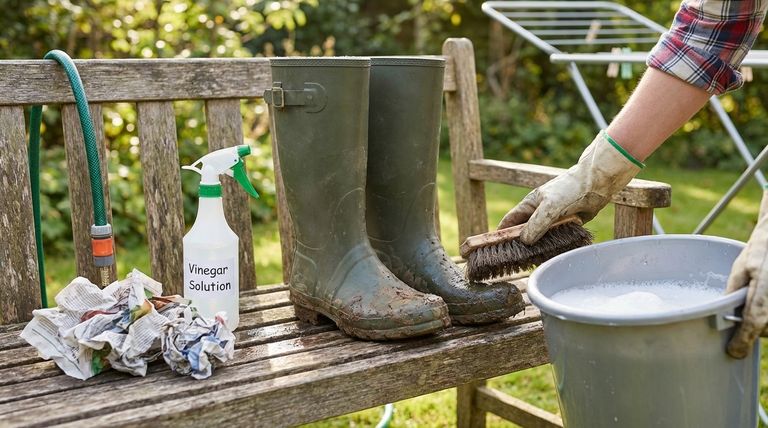
The Essential Cleaning Process (Step-by-Step)
Start with the Exterior
First, remove any caked-on mud or dirt. Use a soft brush or cloth to dislodge any loose debris.
Once the excess is gone, rinse the boots with clean, lukewarm water. For a deeper clean, use a rag dipped in hot soapy water to wipe down the entire outer surface. Mild soap, like dish or laundry liquid, works perfectly.
Tackle the Soles
The treads on the soles often hold the most stubborn dirt. Use a soft-bristled brush or an old toothbrush to scrub out any remaining mud and grit from the grooves.
Clean the Interior
The inside of your boots requires separate attention. Use a clean rag dipped in hot soapy water to wipe down the entire interior lining.
After washing, take another clean, damp cloth to "rinse" the inside and remove any soap residue.
Eliminate Odors
If your boots have developed an odor, you can neutralize it easily. Mix a 50/50 solution of white vinegar and water in a spray bottle.
Lightly mist the inside of the boots with the solution and let them air out.
The Critical Step: Proper Drying
Why Air-Drying is Non-Negotiable
This is the most important step for preserving your boots. Always air-dry your Wellingtons naturally.
Never place them near a direct heat source like a radiator, fireplace, or in direct sunlight. High heat can damage the rubber, causing it to become brittle, crack, and fade.
Using Newspaper to Speed Up the Process
To help absorb internal moisture more quickly, stuff the boots with old newspaper. The paper will draw out the dampness from the lining.
If the boots are very wet, you may need to replace the newspaper after a few hours and repeat the process until they are fully dry.
Common Mistakes That Ruin Wellington Boots
The Damage of Harsh Chemicals
Avoid using harsh chemical cleaners or solvents on your boots. These substances can degrade the rubber, stripping its natural oils and leading to premature cracking and discoloration. Mild soap and water are all you need.
The Problem with Improper Storage
Do not store your boots in direct sunlight or in areas with extreme temperature fluctuations, like a car trunk or uninsulated shed. Constant exposure to UV rays and heat will weaken the rubber over time.
Beyond Cleaning: Long-Term Maintenance
Conditioning the Rubber
To keep the rubber flexible and prevent it from drying out, periodically apply a silicone-based rubber conditioner or even a thin layer of petroleum jelly. This simple step restores moisture and protects the material.
Storing Your Boots Correctly
For long-term storage, ensure the boots are completely clean and dry. Keep them in a cool, dry, and dark place, such as a closet or a boot bag, to protect them from environmental damage.
How to Apply This to Your Goal
- If your primary focus is a quick clean after use: Brush off loose mud, rinse with water, and let them air dry away from heat.
- If your primary focus is a deep clean and odor removal: Follow all cleaning steps for the exterior, soles, and interior, and use the vinegar spray before air-drying with newspaper.
- If your primary focus is preparing boots for long-term storage: Perform a deep clean, ensure they are 100% dry inside and out, and apply a rubber conditioner before storing them in a cool, dark place.
Consistent care is the key to extending the life and performance of your Wellington boots.
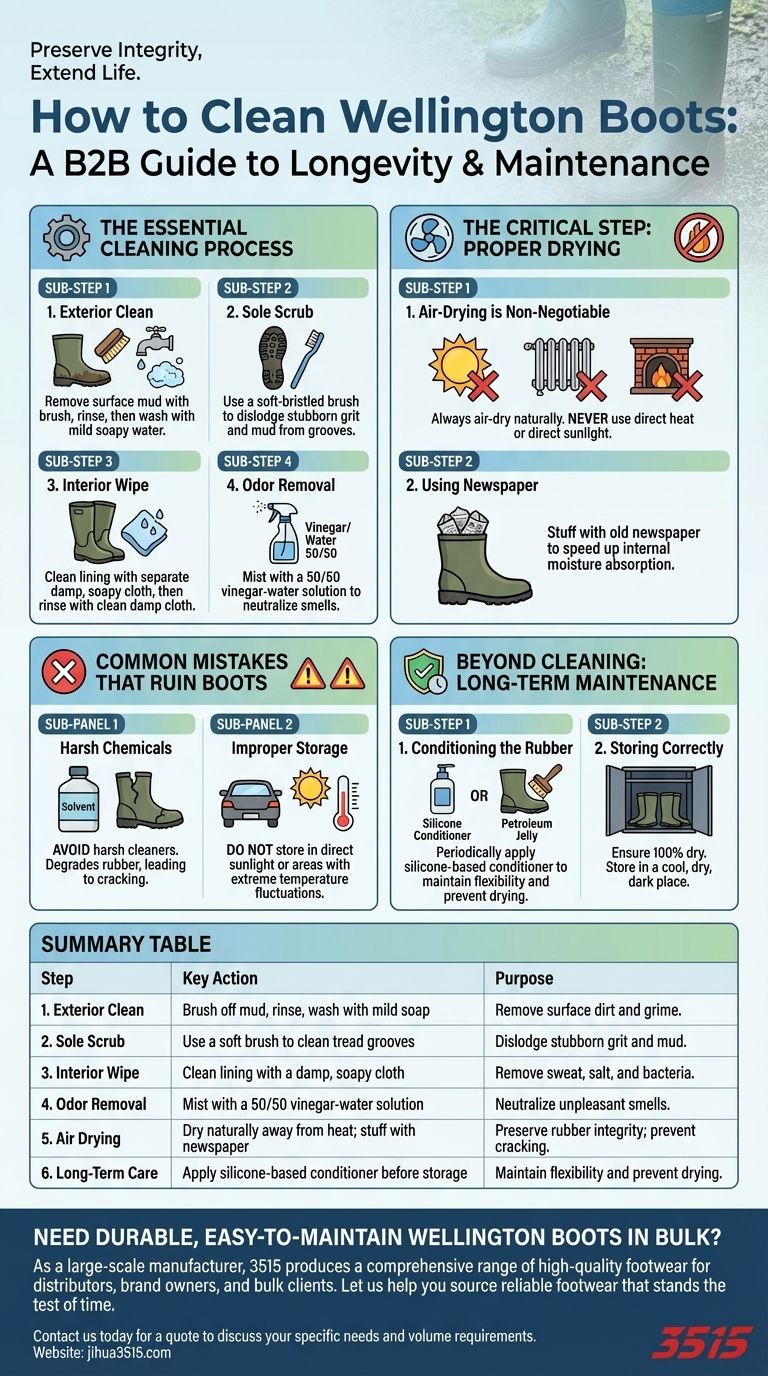
Summary Table:
| Step | Key Action | Purpose |
|---|---|---|
| 1. Exterior Clean | Brush off mud, rinse, wash with mild soapy water. | Remove surface dirt and grime. |
| 2. Sole Scrub | Use a soft brush to clean tread grooves. | Dislodge stubborn grit and mud. |
| 3. Interior Wipe | Clean lining with a damp, soapy cloth. | Remove sweat, salt, and bacteria. |
| 4. Odor Removal | Lightly mist with a 50/50 vinegar-water solution. | Neutralize unpleasant smells. |
| 5. Air Drying | Dry naturally away from heat; stuff with newspaper. | Preserve rubber integrity; prevent cracking. |
| 6. Long-Term Care | Apply silicone-based conditioner before storage. | Maintain flexibility and prevent drying. |
Need Durable, Easy-to-Maintain Wellington Boots in Bulk?
As a large-scale manufacturer, 3515 produces a comprehensive range of high-quality footwear for distributors, brand owners, and bulk clients. Our production capabilities encompass all types of durable shoes and boots, including Wellington boots designed for longevity and easy maintenance.
Let us help you source reliable footwear that stands the test of time.
Contact us today for a quote to discuss your specific needs and volume requirements.
Visual Guide
Related Products
- Durable Waterproof Rain Boots | Custom Manufacturer for Wholesale & Brands
- Durable Goodyear Welt Leather Work Boots for Wholesale & Private Label
- Wholesale Durable Leather Work Boots | 8-Inch Goodyear Welt Manufacturer
- High-Traction Suede Tactical Boots Wholesale & Custom Manufacturing
- Premium Wholesale Tactical Style Safety Shoes Boots with Quick Lacing
People Also Ask
- What are the main materials for waterproof rain boots? Choose the Right Material for Durability & Comfort
- What is the overall recommendation for choosing rain boot materials? A Guide to Rubber vs. PVC
- How does boot height affect waterproofing? Choose the Right Height for Ultimate Protection
- Why are rain boots more flexible and comfortable than snow boots? The Key Differences Explained
- What are the best types of shoes for different gardening conditions? Find Your Perfect Match.