
In short, the primary advantages of Goodyear welt construction are exceptional durability, the ability to be resoled multiple times, and a high degree of water resistance. This method creates a robust and supportive shoe by stitching a strip of leather—the welt—around the bottom edge of the upper, which is then stitched to the outsole. This two-level stitching process creates a strong, serviceable foundation that distinguishes it from more common, less durable construction methods.
While known for its toughness, the true value of a Goodyear welt is that it transforms footwear from a disposable item into a long-term, serviceable asset. You are investing in a platform that can be rebuilt, significantly extending its usable life far beyond that of a cemented or glued shoe.
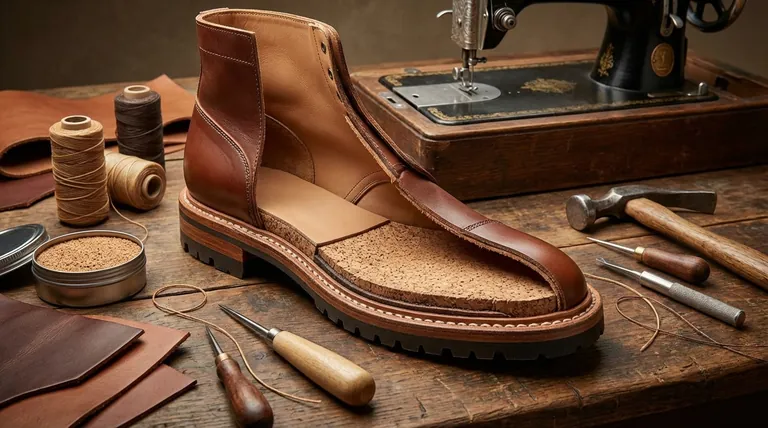
The Mechanics of a Goodyear Welt
To understand the benefits, you must first understand the process. A Goodyear welt is a complex construction method that requires skilled craftsmanship, which is why it is used in less than 1% of all shoes produced.
The Role of the Welt
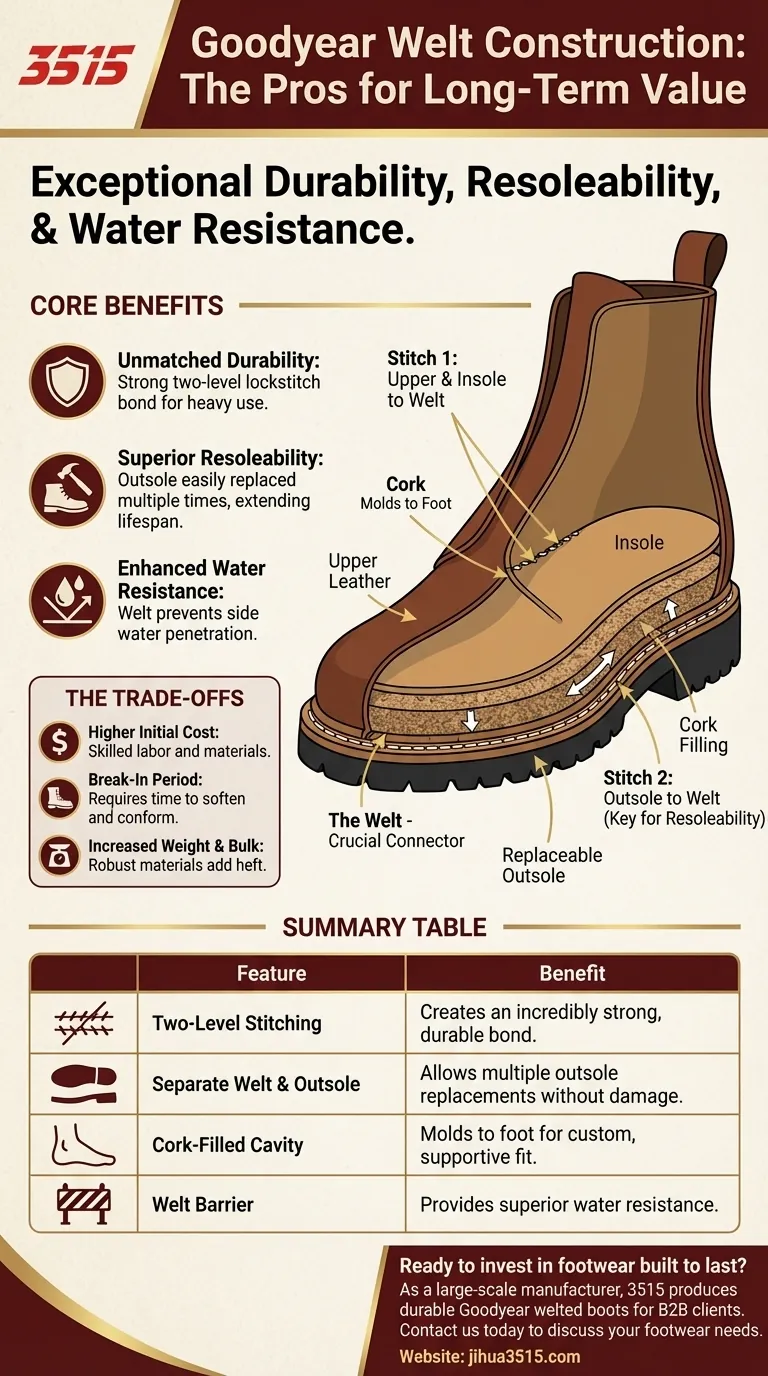
The welt is a strip of leather that is stitched to the perimeter of the shoe's upper and the insole. It acts as a crucial intermediary component, connecting the upper part of the shoe to the sole.
Creating the Foundation
This initial stitch creates a highly secure bond between the parts of the shoe that hold your foot. More importantly, it leaves a flange of the welt sticking out from the shoe, ready to receive the outsole.
The Cork-Filled Cavity
The construction process creates a cavity between the insole and the outsole. This space is filled with a layer of granulated cork. Over time, the cork compresses and molds to the shape of your foot, creating a custom-like footbed that enhances comfort and support.
Attaching the Outsole
The outsole is then attached to the shoe by stitching it directly to the welt. This second, separate stitch is the key to the entire system. Because the outsole is not stitched directly to the upper, it can be removed and replaced by a cobbler without damaging the shoe's core structure.
The Core Benefits Explained
The unique construction process directly translates into tangible, long-term advantages for the owner.
Unmatched Durability
The two-level lockstitch system creates an incredibly strong bond between all parts of the shoe. This makes Goodyear welted footwear exceptionally tough and capable of withstanding heavy, consistent use.
Superior Resoleability
This is arguably the most significant benefit. When the sole wears out, a cobbler can simply cut the stitches holding it to the welt and attach a new one. This process can be repeated multiple times, allowing a single pair of boots or shoes to last for years, or even decades, with proper care.
Enhanced Water Resistance
The welt acts as a barrier, or a "wall," between the ground and the upper. This makes it much more difficult for water to penetrate the shoe from the sides, keeping your feet drier than in shoes with simpler cemented constructions.
Stability and Support
The combination of the welt, the cork filling, and often a steel shank creates a stable and supportive platform. This construction provides excellent structure and reduces foot fatigue during long periods of wear.
Understanding the Trade-offs
No construction method is perfect for every situation. True objectivity requires acknowledging the inherent compromises of a Goodyear welt.
The Initial Cost
Goodyear welting is a labor-intensive process that requires skilled artisans and more materials. This results in a significantly higher upfront cost compared to mass-market footwear.
The Break-In Period
The multiple layers of leather, the sturdy insole, and the cork filling make the shoe quite stiff out of the box. A break-in period is almost always required for the materials to soften and conform to your foot.
Increased Weight and Bulk
The robust construction inherently adds weight and bulk. These shoes are heavier and less flexible than their sneaker-like counterparts, a trade-off for their durability and support.
Is Goodyear Welt Right for You?
Choosing this type of footwear depends entirely on your priorities and what you value in a product.
- If your primary focus is long-term value: A Goodyear welt is the superior choice, as the ability to resole the shoe dramatically lowers its cost-per-wear over time.
- If your primary focus is out-of-the-box comfort and lightness: You may be better served by a different construction method, as these shoes require a commitment to a break-in period.
- If your primary focus is durability for demanding environments: The structural integrity and stability of a Goodyear welt make it an ideal platform for work boots and rugged outdoor footwear.
Ultimately, choosing a Goodyear welted shoe is an investment in craftsmanship, serviceability, and a product designed to endure.
Summary Table:
| Feature | Benefit |
|---|---|
| Two-Level Stitching | Creates an incredibly strong, durable bond between the shoe's components. |
| Separate Welt & Outsole | Allows the outsole to be replaced multiple times without damaging the upper. |
| Cork-Filled Cavity | Molds to your foot over time for a custom, supportive fit. |
| Welt Barrier | Provides superior water resistance compared to glued constructions. |
Ready to invest in footwear built to last?
As a large-scale manufacturer, 3515 produces a comprehensive range of durable Goodyear welted boots and shoes for distributors, brand owners, and bulk clients. Our production capabilities ensure you receive footwear with superior craftsmanship, designed for long-term value and performance.
Contact us today to discuss your footwear needs and discover how we can provide durable, serviceable solutions for your market.
Visual Guide
Related Products
- Durable Goodyear Welt Leather Work Boots for Wholesale & Private Label
- Wholesale Durable Leather Work Boots | 8-Inch Goodyear Welt Manufacturer
- Durable Leather Work Boots Wholesale Manufacturer & Custom Factory
- Durable Leather Work Boots for Wholesale & Custom Manufacturing
- Durable Moc Toe Wedge Sole Work Boots for Wholesale and Private Label
People Also Ask
- What is the difference between full-grain and top-grain leather? Premium Material Guide for Boot Manufacturers
- What are the advantages of leather as an upper material for work boots? Unmatched Durability & Custom Comfort
- Why is it important to waterproof leather work boots? Protect Your Investment and Performance
- How should new leather work boots be broken in? A Guide to Comfort and Durability
- What are the advantages of leather uppers in work boots? Unmatched Durability & Protection













