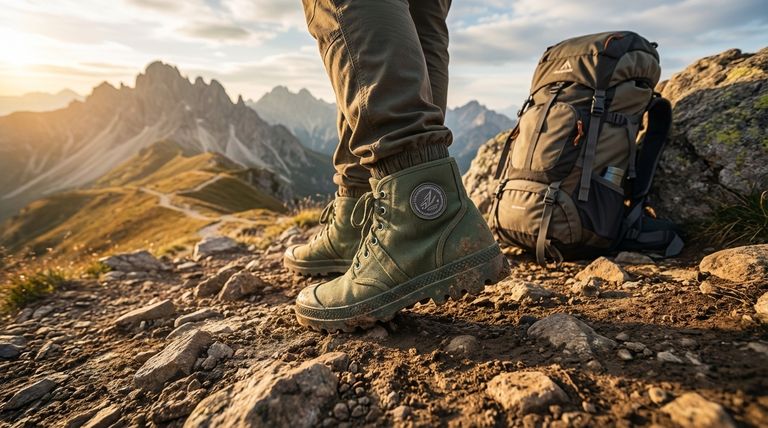
Choosing the right hiking boot is the single most important gear decision you will make. It is the critical foundation for your comfort, safety, and endurance on the trail. The wrong boot can turn an anticipated adventure into a painful ordeal, while the right one provides the stability and protection needed to hike with confidence.
Your ideal hiking boot is not determined by brand or price, but by a precise match between the boot's construction, the unique shape of your foot, and the specific demands of the terrain you plan to conquer.
The Core Functions of a Hiking Boot
A hiking boot is a piece of technical equipment designed to perform specific jobs. Understanding these functions clarifies why a generic sneaker is often inadequate and dangerous for serious trails.
Support and Injury Prevention
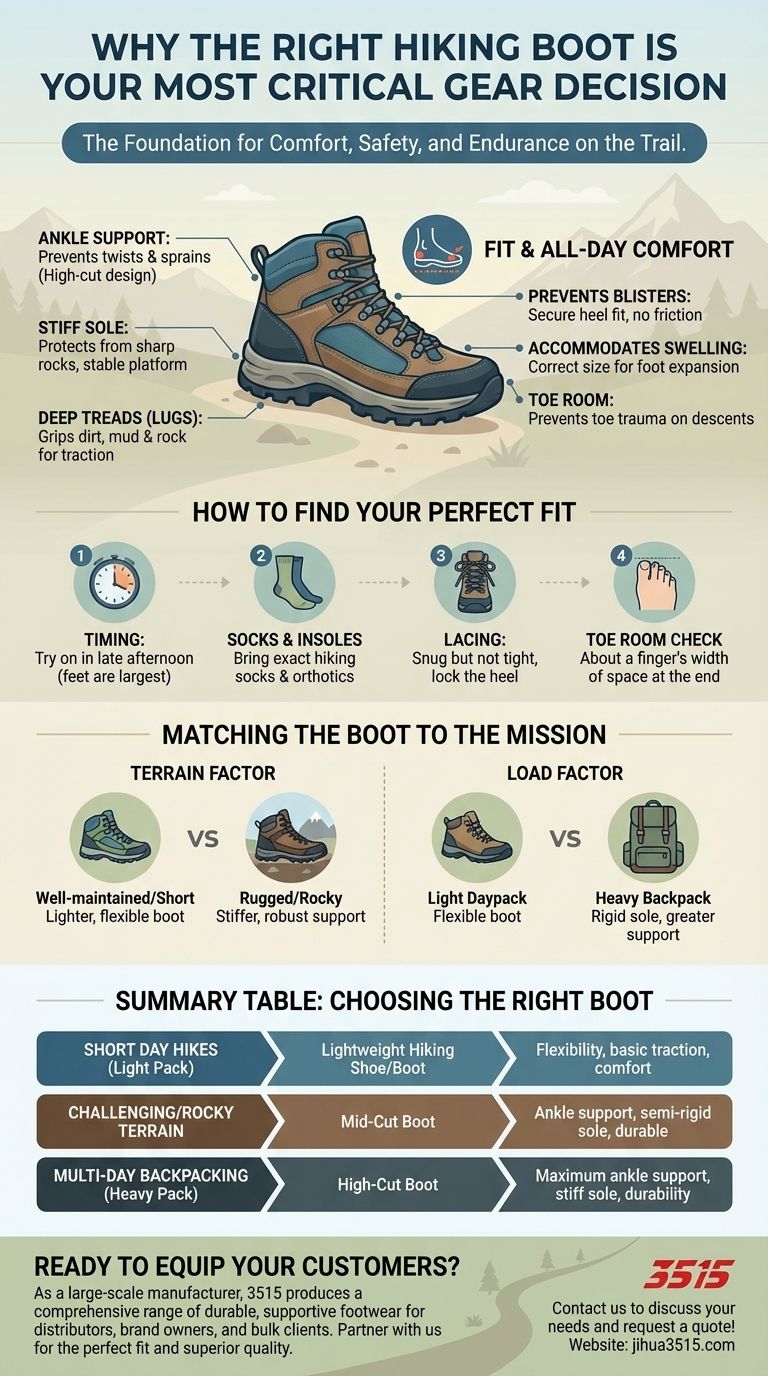
Proper hiking boots provide critical ankle support, which is essential on uneven or rocky surfaces. Their high-cut design helps prevent twists and sprains.
The sole of a boot is its engine. A stiff, sturdy sole protects your foot from sharp rocks and roots while providing a stable platform, reducing fatigue over long distances.
Finally, deep treads, or lugs, on the outsole act like teeth, gripping dirt, mud, and rock to provide reliable traction and prevent slips and falls.
Fit and All-Day Comfort
A boot’s performance is entirely dependent on its fit. An improper fit is the primary cause of blisters, hotspots, and general foot pain.
Feet naturally swell during a long hike due to increased blood flow and fluid retention. A correctly sized boot accommodates this expansion, preventing constriction and discomfort miles into your journey.
The right fit also secures your heel in place, preventing the friction that causes blisters, while allowing enough room for your toes to splay naturally without hitting the front of the boot on descents.
How to Find Your Perfect Fit
Achieving a perfect fit is a deliberate process. Your standard shoe size is only a starting point, as foot shape, width, and volume vary dramatically between individuals.
The Dynamics of Your Feet
Your feet are not static. They change shape throughout the day, typically being largest in the late afternoon or evening.
Furthermore, the size and shape of your left and right feet are often slightly different. A boot must fit your larger foot comfortably.
The In-Store Fitting Protocol
To ensure an accurate fit, always try on boots in the late afternoon when your feet are at their largest.
Bring the exact socks you plan to hike in, as sock thickness significantly impacts fit. If you use custom orthotics or specialized insoles, bring those as well.
Lace the boots snugly, but not so tight that they cut off circulation. Your heel should feel locked in place, with minimal to no slippage as you walk.
Check for adequate toe room. You should have about a finger's width of space between your longest toe and the end of the boot. Test this by walking on an incline ramp or stairs to simulate a descent.
Understanding the Trade-offs: Matching the Boot to the Mission
Not all hiking boots are created equal. The right choice depends entirely on the type of hiking you do. You must align the boot's capabilities with your intended use.
The Terrain Factor
For well-maintained trails and short day hikes, a lighter, more flexible hiking boot or shoe may be sufficient and more comfortable.
For rugged, rocky, and unpredictable terrain, a stiffer, more durable boot with robust ankle support is non-negotiable. It provides the protection and stability needed to navigate challenging ground safely.
The Load Factor
The weight of your backpack directly impacts the amount of stress on your feet and ankles.
When carrying a light daypack, a more flexible boot is often adequate. However, for multi-day backpacking trips with a heavy load, you need a sturdier boot with a more rigid sole and greater ankle support to manage the extra weight and maintain stability.
Making the Right Choice for Your Goal
Ultimately, your decision comes down to an honest assessment of your hiking style.
- If your primary focus is short day hikes on established trails: Prioritize a lightweight and flexible boot that offers good comfort and basic traction.
- If your primary focus is challenging day hikes on varied, rocky terrain: You need a boot with substantial ankle support and a semi-rigid sole for stability and protection.
- If your primary focus is multi-day backpacking with a heavy pack: Invest in a durable, high-cut boot with a stiff sole to provide maximum support and prevent fatigue.
Investing time in finding the right boot is the most critical step toward ensuring countless miles of safe and rewarding adventure.
Summary Table:
| Hiking Scenario | Recommended Boot Type | Key Features |
|---|---|---|
| Short Day Hikes (Light Pack) | Lightweight Hiking Shoe/Boot | Flexibility, basic traction, comfort |
| Challenging/Rocky Terrain | Mid-Cut Boot | Ankle support, semi-rigid sole, durable construction |
| Multi-Day Backpacking (Heavy Pack) | High-Cut Boot | Maximum ankle support, stiff sole, durability |
Ready to equip your customers with high-performance hiking boots?
As a large-scale manufacturer, 3515 produces a comprehensive range of durable and supportive footwear for distributors, brand owners, and bulk clients. Our production capabilities encompass all types of hiking boots and shoes, designed to meet the specific demands of any trail and load.
Partner with us to offer your customers the perfect fit and superior quality they need for safe, comfortable adventures.
Contact 3515 today to discuss your manufacturing needs and request a quote!
Visual Guide
Related Products
- Wholesale High-Traction Camo Boots - Custom Manufacturer for Brands
- Durable Rubber Sole Outdoor Shoes Wholesale & Custom Manufacturing
- Durable Spiked Camouflage Boots Wholesale & Factory Production
- Wholesale Lightweight Tactical Boots Custom Manufacturer for Desert & Combat Use
- Wholesale Waterproof Tactical Boots Custom Suede & High-Traction Soles
People Also Ask
- What are the key features of the new line of camo boots? Built for Extreme Cold & Rugged Terrain
- Are camo boots necessary for hunting success? Prioritize Performance Over Pattern
- What is the technical logic behind using closed-eye testing for tactical boots? Unlocking Peak Footwear Stability
- How does the Rank Score Test identify the primary causes of premature failure in tactical and work boots? Key Insights
- What shoes to wear for a security job? Durable, Protective Footwear for Long Shifts