
Thermoplastic Polyurethane (TPU) soles are a high-performance material choice for modern work boots, prized for their unique combination of properties. They are engineered to be exceptionally durable, offering superior resistance to abrasion, splitting, oils, and chemicals while remaining significantly lighter than traditional rubber.
The core reason to choose a TPU sole is for its balanced performance. It delivers the extreme toughness required for harsh environments without the weight and bulk of older materials, directly translating to less fatigue and greater agility on the job.
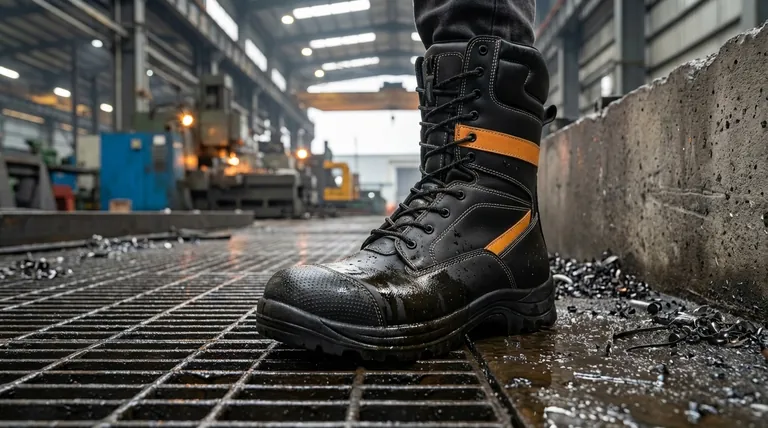
The Core Properties of TPU Soles
To understand why TPU is used in premium work boots, it's essential to break down its specific material advantages. Each property directly addresses a common challenge in demanding workplaces.
Superior Durability and Abrasion Resistance
TPU is a synthetic material designed to withstand extreme wear and tear. Its molecular structure makes it highly resistant to cuts, scrapes, and punctures from sharp debris on rugged terrain.
Unlike some materials that can become brittle, TPU resists splitting and cracking, which dramatically extends the lifespan of the outsole.
Chemical and Oil Resistance
For industrial, automotive, or manufacturing environments, exposure to various substances is a daily reality. TPU provides a reliable barrier against common oils, fuels, and chemicals.
This resistance not only protects the integrity of the boot but also contributes to maintaining its slip-resistant properties in contaminated areas.
Lightweight Performance
One of the most significant advantages of TPU is its high strength-to-weight ratio. A TPU sole can offer comparable or even superior durability to a thick rubber sole at a fraction of the weight.
This reduction in weight is critical for minimizing foot and leg fatigue over the course of a long and physically demanding workday.
Inherent Flexibility
Despite its toughness, TPU maintains a high degree of flexibility. This allows the boot to bend and move with the natural motion of your foot.
This property is especially beneficial for jobs that require frequent kneeling, crouching, or climbing, as it prevents the sole from feeling stiff and restrictive.
Understanding the Trade-offs
While TPU offers a premium feature set, no single material is perfect for every possible application. Understanding its context is key to making an informed decision.
Cost vs. Longevity
Work boots featuring advanced materials like TPU often come with a higher initial price point compared to those with basic rubber or PVC soles.
The trade-off, however, is a longer service life. The investment is in a boot that will not need to be replaced as frequently, especially under hard use.
Specialization for Specific Hazards
While TPU has excellent broad-spectrum chemical resistance, highly specialized industrial environments may require a specific type of vulcanized rubber formulated to resist a single, aggressive chemical.
Always match your boot's material specifications to the specific safety data sheets for the chemicals present in your workplace.
Feel and Traction Profile
The feel of a TPU sole can be firmer than that of a very soft rubber compound. While its traction is generally excellent and reliable, some users may have a personal preference for the ground feel of a different material on specific surfaces, like wet, polished concrete.
Making the Right Choice for Your Needs
Selecting the right sole material depends entirely on the demands of your job.
- If your primary focus is maximum durability in harsh environments: A boot with a full TPU outsole is an excellent investment due to its resistance to abrasion, splitting, and chemicals.
- If your primary focus is reducing fatigue during long shifts: The lightweight nature of TPU soles offers a significant advantage over heavier traditional rubber boots.
- If your primary focus is agility and comfort: Look for boots that leverage TPU's inherent flexibility, especially if your work involves frequent climbing or movement on uneven ground.
Ultimately, choosing a work boot with a TPU sole is a decision to prioritize engineered performance and long-term value.
Summary Table:
| Property | Key Benefit for Work Boots |
|---|---|
| Durability & Abrasion Resistance | Resists cuts, scrapes, and punctures for a longer boot lifespan. |
| Chemical & Oil Resistance | Protects against oils, fuels, and chemicals in industrial settings. |
| Lightweight | Reduces foot and leg fatigue during long shifts due to high strength-to-weight ratio. |
| Flexibility | Allows for natural foot movement, ideal for kneeling, crouching, and climbing. |
Ready to equip your workforce with high-performance work boots featuring durable TPU soles?
As a large-scale manufacturer, 3515 produces a comprehensive range of safety footwear for distributors, brand owners, and bulk clients. Our production capabilities encompass all types of work boots and shoes, ensuring you get the perfect balance of protection, comfort, and value.
Contact us today to discuss your work boot requirements and discover how we can bring long-term value to your business.
Visual Guide
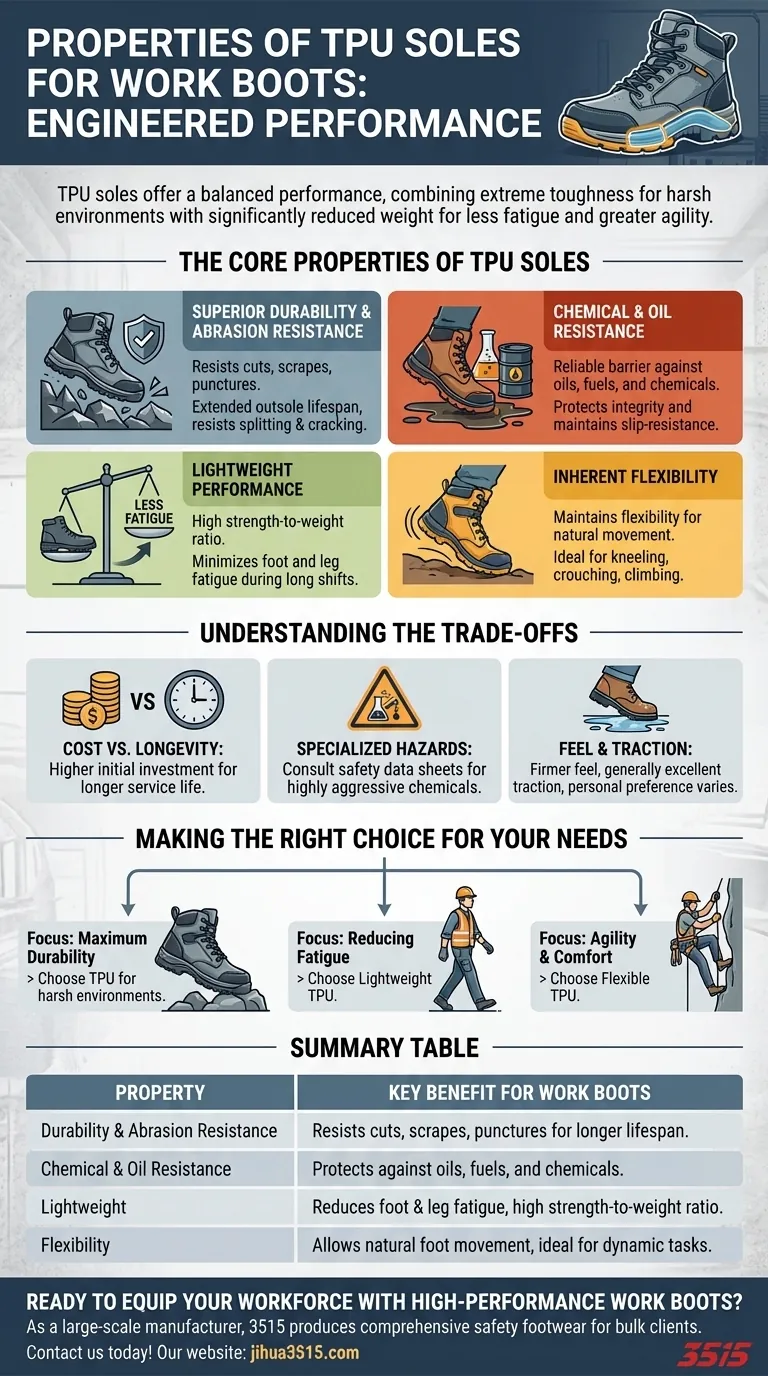
Related Products
- Durable Moc Toe Wedge Sole Work Boots for Wholesale and Private Label
- Wholesale Leather Work Boots with Customizable Wedge Sole for Brands
- Durable Leather Moc Toe Work Boots for Wholesale & Custom Manufacturing
- Durable Moc-Toe Wedge Work Boots | Wholesale Manufacturing for Brands
- Wholesale Leather Ankle Boots with Lug Soles for Custom Brand Manufacturing
People Also Ask
- What are the advantages of wedge sole work boots? Unmatched Comfort on Concrete Floors
- What are the characteristics of wedge sole work boots? Ultimate Comfort for Hard Floors
- What types of jobs are wedge sole work boots suitable for? Ideal for Ironworkers, Roofers & Factory Staff
- What are the benefits of wedge soles in moc toe boots? Superior Comfort for Hard Surfaces
- How do wedge sole work boots prevent slips and falls? Maximize Grip on Concrete & Hard Floors











