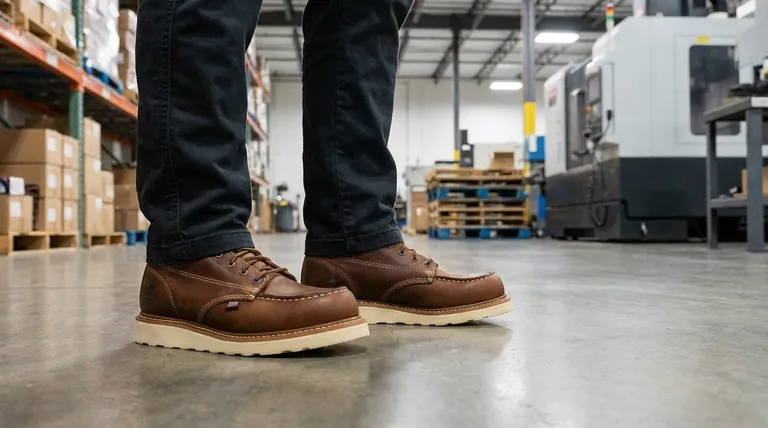
The primary benefit of a wedge sole on a moc toe boot is superior all-day comfort, specifically for those who stand or walk on hard, flat surfaces like concrete. The continuous, flat design distributes your weight evenly across the entire foot, minimizing pressure points and reducing fatigue in your feet, knees, and back.
The combination of a moc toe's spacious design and a wedge sole's full ground contact creates a boot that prioritizes shock absorption and even pressure distribution, making it an ideal choice for work on unforgiving surfaces.
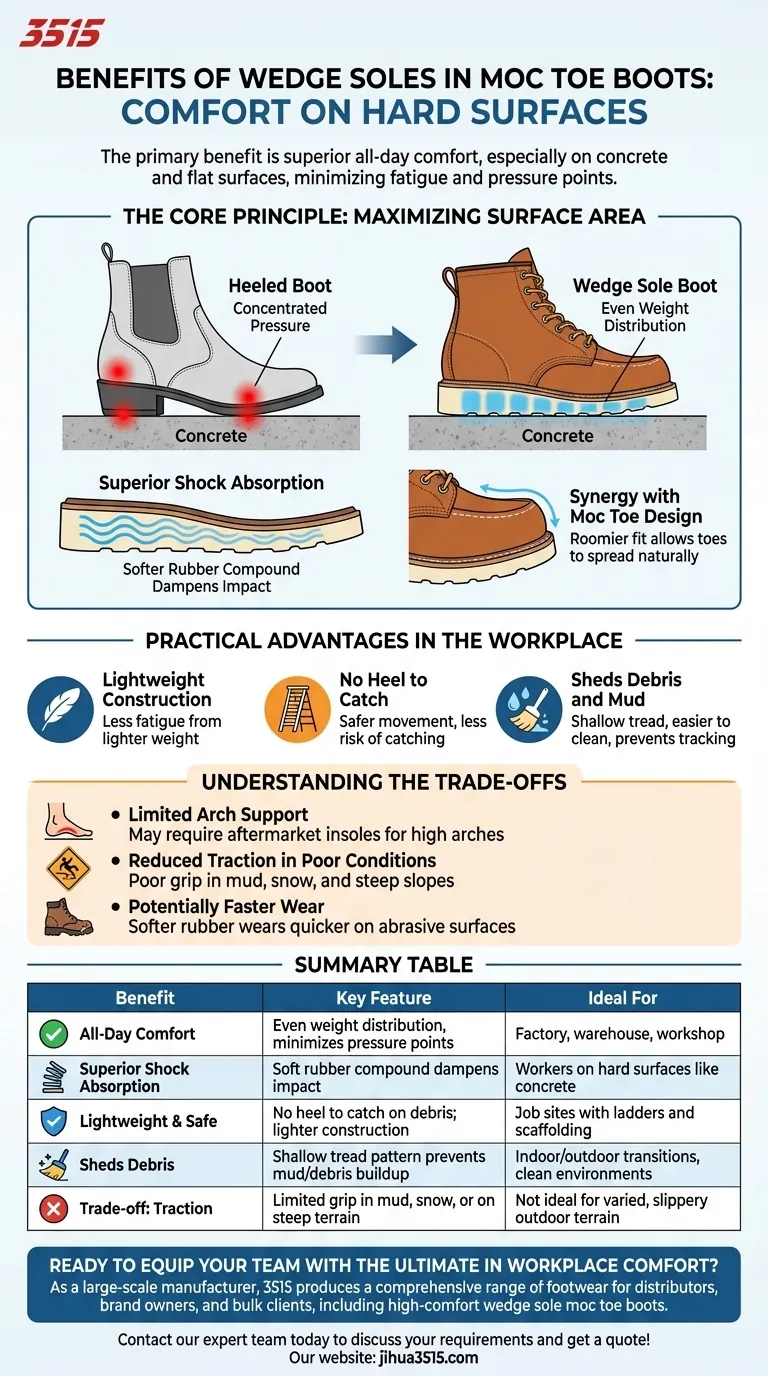
The Core Principle: Maximizing Surface Area
The defining characteristic of a wedge sole is its lack of a separated heel. This single design choice is the source of its primary benefits and its specific limitations.
Even Weight Distribution
A traditional heeled boot concentrates pressure on the ball of the foot and the heel. In contrast, the wedge sole provides a continuous, flat platform.
This design ensures your body weight is distributed evenly across the length of your foot, which significantly reduces the formation of painful pressure points during long hours of standing.
Superior Shock Absorption
Wedge soles are typically made from softer rubber or crepe compounds that excel at absorbing impact.
When walking on concrete or asphalt, this cushioning effect dampens the shock that travels up through your joints, leading to less fatigue over a full day.
Synergy with the Moc Toe Design
The moccasin-style toe box construction provides a roomier, more flexible fit than other boot types.
This allows your toes to spread naturally, which complements the even support of the wedge sole and further enhances overall comfort.
Practical Advantages in the Workplace
Beyond pure comfort, the wedge sole's design offers distinct functional benefits in specific work environments.
Lightweight Construction
Wedge sole boots are often lighter than their lug-soled, heeled counterparts. This reduction in weight means less effort with every step, which accumulates into a significant energy saving by the end of the day.
No Heel to Catch
The lack of a defined heel is a key safety and convenience feature. The flat sole is less likely to get caught on scaffolding, ladder rungs, or debris, allowing for smoother and safer movement around a job site.
Sheds Debris and Mud
The shallow tread pattern of a wedge sole doesn't have deep lugs to trap mud, dirt, or small stones. This makes the boots easier to clean and prevents you from tracking debris into finished indoor spaces.
Understanding the Trade-offs
No single boot sole is perfect for every situation. The strengths of the wedge sole on flat surfaces become weaknesses in other conditions.
Limited Arch Support
The inherently flat design of a wedge sole offers minimal built-in arch support. Individuals with high arches may find them uncomfortable without the addition of a supportive aftermarket insole.
Reduced Traction in Poor Conditions
The same large surface area that provides stability on concrete offers very poor grip in slippery mud, snow, or on steep, loose terrain. A boot with a deep lug pattern is far superior for these environments.
Potentially Faster Wear
The softer rubber compounds prized for their comfort and shock absorption can wear down more quickly than the harder rubber used on heavy-duty lug soles, especially when used on abrasive surfaces.
Making the Right Choice for Your Goal
To select the right boot, you must match the sole's design to your primary work environment.
- If your primary focus is all-day comfort on concrete: The wedge sole moc toe is an exceptional choice for factory, workshop, or warehouse settings.
- If your primary focus is traction in varied outdoor terrain: You should opt for a boot with a traditional heeled, deep-lugged outsole for superior grip.
- If your primary focus is addressing high arches: Plan to supplement a wedge sole boot with a quality supportive insole to ensure proper foot alignment.
Ultimately, choosing a wedge sole is about selecting the right tool to maximize your comfort and stability for work performed on hard, man-made ground.
Summary Table:
| Benefit | Key Feature | Ideal For |
|---|---|---|
| All-Day Comfort | Even weight distribution, minimizes pressure points | Factory, warehouse, workshop settings |
| Superior Shock Absorption | Soft rubber compound dampens impact | Workers on hard surfaces like concrete |
| Lightweight & Safe | No heel to catch on debris; lighter construction | Job sites with ladders and scaffolding |
| Sheds Debris | Shallow tread pattern prevents mud/debris buildup | Indoor/outdoor transitions, clean environments |
| Trade-off: Traction | Limited grip in mud, snow, or on steep terrain | Not ideal for varied, slippery outdoor terrain |
Ready to equip your team with the ultimate in workplace comfort?
As a large-scale manufacturer, 3515 produces a comprehensive range of footwear for distributors, brand owners, and bulk clients. Our production capabilities encompass all types of shoes and boots, including high-comfort wedge sole moc toe boots designed for durability and all-day support on hard surfaces.
Let us help you find the perfect boot solution for your needs. Contact our expert team today to discuss your requirements and get a quote!
Visual Guide
Related Products
- Durable Moc Toe Wedge Sole Work Boots for Wholesale and Private Label
- Durable Moc-Toe Wedge Work Boots | Wholesale Manufacturing for Brands
- Durable Leather Moc Toe Work Boots for Wholesale & Custom Manufacturing
- Wholesale Leather Work Boots with Customizable Wedge Sole for Brands
- Premium Grain Leather Safety Boots for Bulk Supply
People Also Ask
- What are the advantages of wedge sole work boots? Unmatched Comfort on Concrete Floors
- What are the characteristics of wedge sole work boots? Ultimate Comfort for Hard Floors
- What types of jobs are wedge sole work boots suitable for? Ideal for Ironworkers, Roofers & Factory Staff
- How do wedge sole work boots prevent slips and falls? Maximize Grip on Concrete & Hard Floors
- When should someone choose moc toe boots over round-toe boots? A Guide to Rugged vs. Versatile Footwear